The Great Nicobar Island project involves a new airport, transshipment port, township, and power plant. While strategically and economically vital for India's maritime security, it faces severe criticism for threatening the indigenous Shompen tribe, endangered marine wildlife, and primary rainforests.
The Great Nicobar Island Project faces criticism for the planned felling of nearly one million trees and potential impacts on the Shompen and Nicobarese indigenous communities.
|
Read all about: GREAT NICOBAR DEVELOPMENT EXPLAINED |
The Great Nicobar Island Development Project is an ₹81,000 crore mega infrastructure initiative conceived by NITI Aayog.
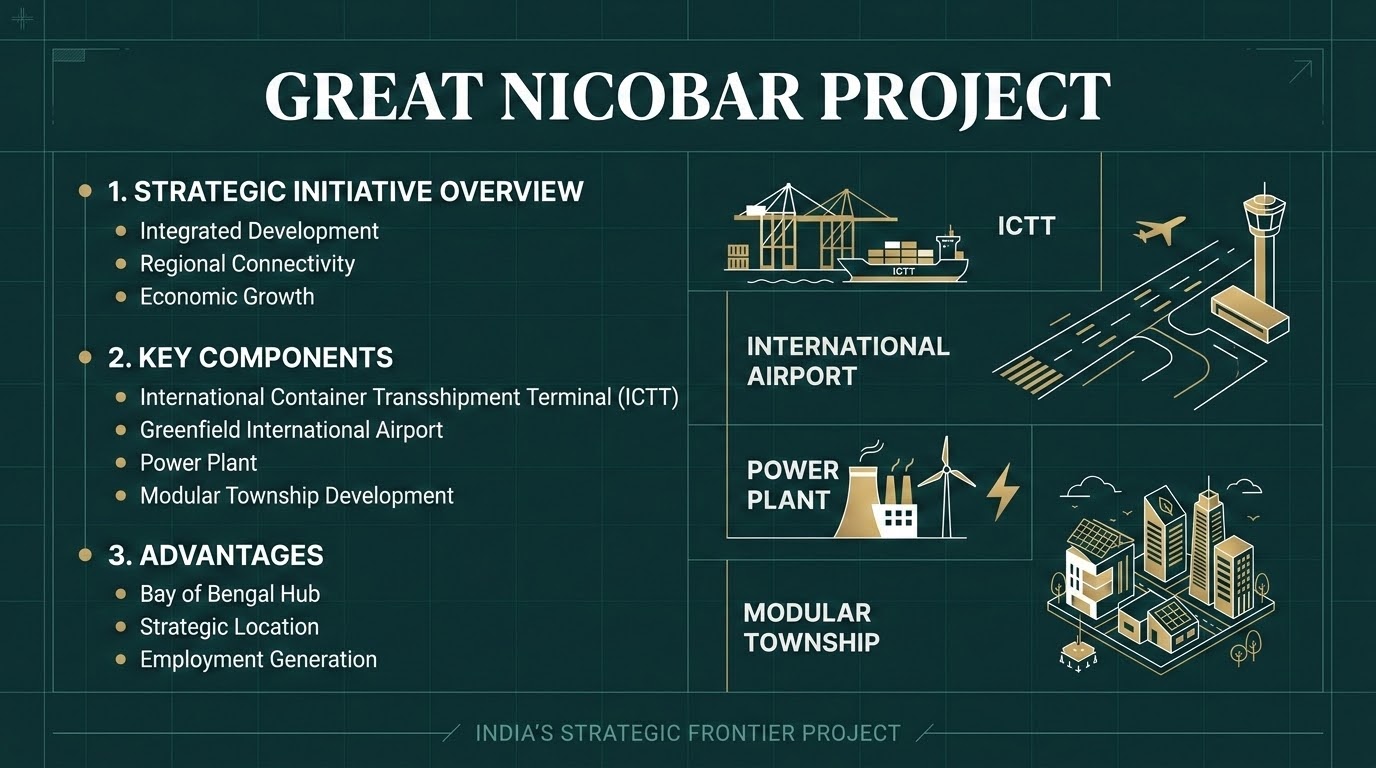
The project is planned in phases over 30 years and spans 166.10 sq km on India's southernmost island. It consists of four interlinked components:
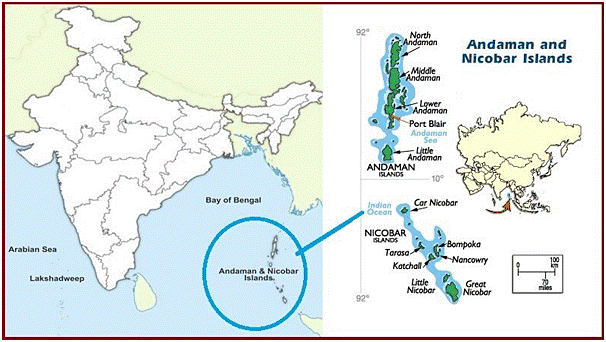 Why is the project strategically important for India?
Geostrategic Location: The island is positioned just 40 nautical miles from major international shipping routes and close to the Malacca, Sunda, and Lombok Straits. This allows India to closely monitor sea routes vital to global trade and energy supplies.
National Security: A permanent defense and naval presence facilitated by the new airport will help India counter foreign military expansion in the Indian Ocean—most notably China's "string of pearls" strategy—aligning with India's Act East Policy and the QUAD strategy.
Economic Independence: Currently, nearly 75% of India's transshipped cargo is handled by foreign ports like Colombo and Singapore. The ICTT will position India as a global transshipment hub, reducing foreign reliance, generating forex savings, and attracting foreign direct investment.
Regional Development: The infrastructure is expected to spur high-end tourism, elevate local living standards, and create over 1 lakh direct jobs for the region.
Massive Deforestation: The development will clear approximately 130 sq km of primary tropical rainforest, involving the felling of around 1 million old-growth trees.
Threat to Wildlife and Marine Ecology: The project severely threatens local biodiversity, including the nesting sites of the vulnerable giant leatherback sea turtle.
Existential Threat to Indigenous Tribes: Influx of outsiders and the reduction of tribal reserves pose threat to the uncontacted Shompen and Nicobarese communities.
Seismic and Disaster Vulnerability: Great Nicobar is situated in one of the world's most highly active tectonic zones.
Inadequate Ecological Compensation: Government's strategy of off-site afforestation in Haryana and Madhya Pradesh fails to replicate the unique island biodiversity lost to rainforest destruction.
Mitigate Ecological Impact: Conduct independent biodiversity assessments to identify habitats and find law-compliant infrastructure sites. Prioritize local forest restoration over mainland afforestation efforts.
Safeguard Tribal Rights: Minimize displacement of Shompen and Nicobarese tribes by maintaining strict buffers. Establish a community council to guarantee inclusive decisions, fair compensation, and livelihood aid.
Institutional Oversight: Establish an independent body of environmentalists and officials to ensure project accountability and regulatory compliance.
Resource Management: Utilize climate-resilient infrastructure and sustainable systems for water, food, and energy to mitigate environmental risks.
The Great Nicobar Project seeks to strengthen national security and the maritime economy, its success depends on mitigating irreversible damage to unique biodiversity, seismic stability, and indigenous ancestral lands.
Source: PIB
|
PRACTICE QUESTION Q. Analyze the strategic and economic significance of the Great Nicobar Island (GNI) Development Project. 150 words |
It is an ₹81,000 crore mega infrastructure initiative spearheaded by NITI Aayog. The project aims to build an International Container Transshipment Terminal (ICTT), a greenfield dual-use airport, a power plant, and a new township on India's southernmost island.
The island's proximity to the Malacca, Sunda, and Lombok Straits gives India a significant advantage in monitoring key global trade sea routes. It will speed up defense deployment to counter foreign naval presence (particularly China) in the Indian Ocean and aligns with India's Act East Policy and the QUAD strategy.
There is a severe threat to the Shompen and Nicobarese tribes, the original inhabitants of the island. Experts warn that the influx of an estimated 300,000 outsiders and the loss of tribal reserve land could expose these isolated communities to outside diseases, threatening them with cultural and physical extinction.




© 2026 iasgyan. All right reserved