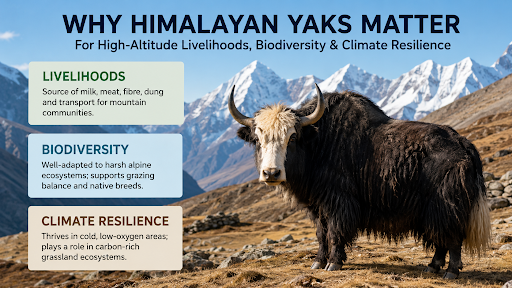
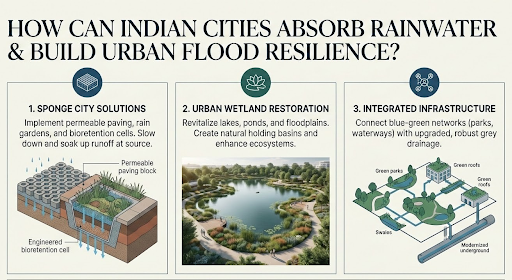
Nanaimoteuthis haggarti was a massive Cretaceous finned octopus reaching 19 metres. Known from fossilised beaks, this apex predator displayed "handedness," suggesting high intelligence and complex hunting behaviours in prehistoric oceans.
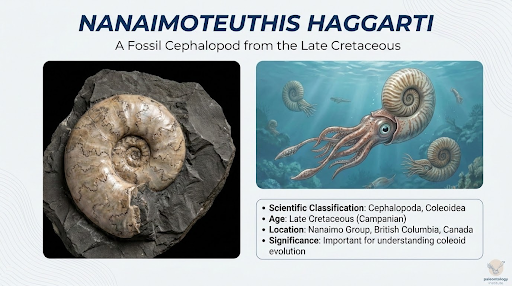
Research identifies Nanaimoteuthis haggarti, a Cretaceous-era giant octopus, as an apex predator comparable in scale to the mythical Kraken.
This giant prehistoric octopus lived 86–72 million years ago during the Cretaceous Period.
Habitat: It shared ancient oceans with massive marine reptiles like mosasaurs and plesiosaurs.
Key Characteristics
Significance
SOURCE: ECONOMICTIMES
|
PRACTICE QUESTION Q. Why has Nanaimoteuthis haggarti recently appeared in the news? A. It is the first octopus species discovered to have a hard outer shell. B. New research identifies it as a massive apex predator that rivaled marine reptiles in the Cretaceous period. C. It was discovered alive in the deep trenches of the Pacific Ocean. D. It is the missing evolutionary link between squids and cuttlefish. Answer: B Explanation: Nanaimoteuthis haggarti has recently appeared in scientific news because new research, published in Science in April 2026, identifies it as a massive, "kraken-like" octopus that existed 86 to 72 million years ago during the Cretaceous period. |
It is an extinct species of giant finned octopus that lived during the Late Cretaceous Period (86 to 72 million years ago). Ranging from 22 to 62 feet in length, it was a massive apex predator that hunted using powerful chitin beaks.
Digital fossil mining is an innovative technique combining advanced high-resolution scanning equipment with AI algorithms. It allows researchers to look inside rocks and extract hidden fossils as detailed 3D digital models non-destructively, increasing discovery rates significantly.
India possesses immense, under-protected paleontological wealth, such as the *Vasuki indicus* snake fossil and the Narmada Valley Titanosaur nests. Conserving these sites protects Earth's evolutionary history, promotes eco-tourism, and drives regional socio-economic growth.




© 2026 iasgyan. All right reserved