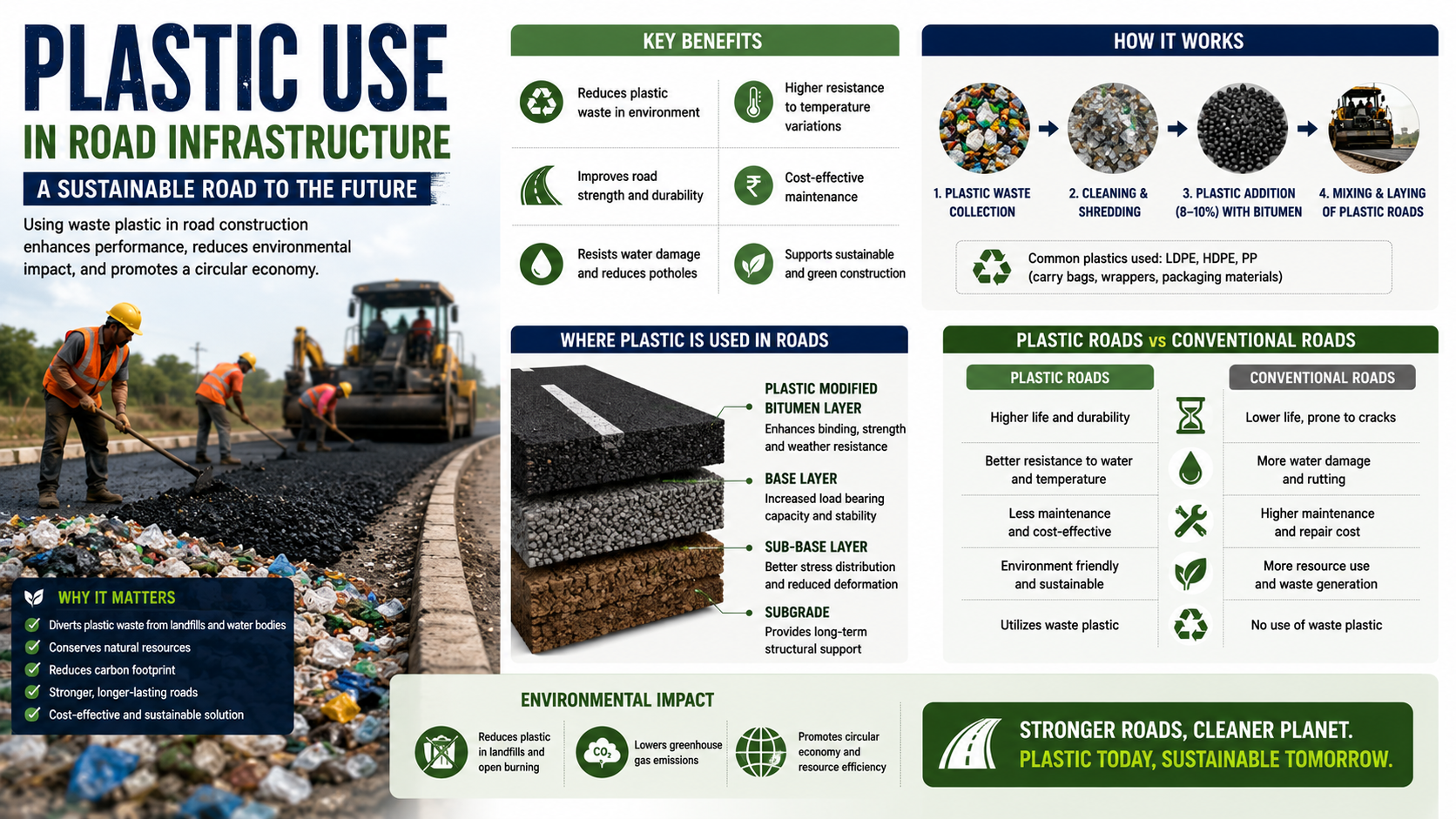
India utilizes waste plastic in road construction under PMGSY and MoRTH mandates, enhancing pavement durability. While economically beneficial, environmentalists warn of secondary microplastic pollution, emphasizing the need for upstream plastic reduction alongside innovative recycling methods for long-term ecological sustainability.
CSIR-Central Road Research Institute (CSIR-CRRI) earned recognition from Asia Book of Records for constructing the first roadblock section using technical textile geocells made from end-of-life plastic waste.
|
Read all about: What is Plastic Pollution? l Plastic pollution in India |
Plastic is used as a binder modifier to enhance the properties of bitumen, making roads more resilient to weather and heavy loads.
How Are Plastic Roads Constructed?
The construction follows the "Dry Process" developed by Dr. Rajagopalan Vasudevan:
Superior Longevity: These roads last approximately twice as long as conventional roads due to reduced oxidation of bitumen.
Water Resilience: Plastic coating prevents water from seeping into the layers, significantly reducing pothole formation.
Economic Savings: Using waste plastic lowers bitumen needs and maintenance, reducing overall life-cycle costs.
Waste Upcycling: Technology effectively diverts problematic plastic packaging from landfills and oceans into productive infrastructure.
Local Employment: Processing plastic waste generates new markets and jobs for waste-pickers and rural communities.
Heat Tolerance: Higher softening point of plastic prevents the road from melting or bleeding during extreme summers.
Microplastic Runoff: Concerns that wear and tear over time might release microplastics into the surrounding soil and groundwater.
Toxic Fumes: If the heating temperature exceeds 180°C, plastics like PVC can release dioxins and furans, which are highly toxic.
Recyclability: Some critics argue that mixing plastic with bitumen makes the materials difficult to separate for future recycling.
|
Is Plastic Road Technology Sustainable? It is considered a highly sustainable "waste-to-wealth" model. It aligns with the Circular Economy by reintegrating low-value waste into the infrastructure cycle, reducing the carbon footprint of road construction by 3.5 tonnes of CO2 per km. (Source: NITI Aayog) |
Mandatory Usage: Expanding the mandate to use plastic in all urban and rural roads, not just national highways.
Mandatory Usage: Expanding the mandate to use plastic in all urban and rural roads, not just national highways.
Strict Temperature Control: Using automated sensors in mix plants to ensure plastic never burns or releases toxins.
PVC Exclusion: Strengthening the supply chain to ensure zero PVC contamination in the shredded mix.
Incentivizing Collection: Providing financial incentives to ragpickers and SHGs for supplying high-quality cleaned plastic waste.
R&D on Microplastics: Conducting long-term independent peer-reviewed studies to monitor microplastic leaching in different climates.
Public-Private Partnerships: Encouraging companies to adopt plastic roads as part of their Extended Producer Responsibility (EPR).
Decentralized Plants: Setting up small-scale shredding units at the district level to reduce transportation costs of waste.
Plastic roads provide an innovative, economical waste management solution, however, long-term viability depends on prioritizing strict environmental protections and upstream reduction efforts.
Source: PIB
|
PRACTICE QUESTION Q. Evaluate the engineering and economic benefits of utilizing upcycled waste plastic in the construction of rural roads under the Pradhan Mantri Gram Sadak Yojana (PMGSY). 150 words |
The dry process involves cleaning, shredding, and mixing waste plastic into hot aggregates at 140-175°C before adding bitumen, creating a plastic-coated aggregate that heavily resists water damage.
Polyvinyl Chloride (PVC) and black-colored heavily recycled plastics are strictly prohibited because they release lethal dioxin gases and carcinogenic fumes when heated.
Natural wear-and-tear from traffic can abrade the plastic-infused asphalt, creating secondary microplastics and nanoplastics that can leach toxic chemical additives into surrounding environments and water streams.


© 2026 iasgyan. All right reserved