A recent scientific survey across the Western Ghats revealed a thirty-five percent shortfall in historically known Odonata species, indicating severe ecological distress. Habitat loss, pollution, and climate change heavily threaten these vital freshwater bio-indicators, urging immediate and comprehensive conservation efforts.
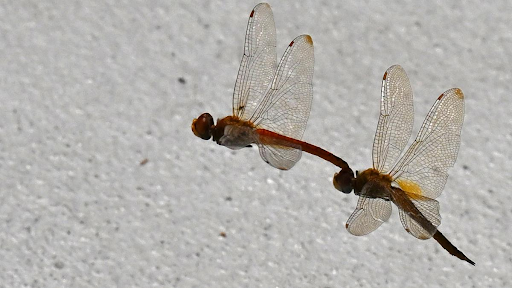
A comprehensive two-year study led by MIT-WPU across 144 sites revealed a nearly 35% shortfall in historically known Odonata species.
Odonata represents an order of carnivorous insects that includes two suborders: dragonflies (Anisoptera) and damselflies (Zygoptera).
Scientists label these insects as sensitive bioindicators or "indicator taxa" because they depend entirely on healthy freshwater ecosystems for breeding and survival.
Their presence or absence directly indicates the health of water bodies and reveals early signs of deeper ecological stress or water pollution.
Recent Western Ghats Survey
IUCN Red List Status of Recorded Species
Source: THEHINDU
|
PRACTICE QUESTION Q. With reference to the recent Odonata surveys in the Western Ghats, consider the following statements:
Which of the above statements is/are correct? (a) 1 and 2 only (b) 1 and 3 only (c) 2 and 3 only (d) 1, 2, and 3 Answer: b Explanation: Statement 1 is correct: Researchers documented only about 65% of the historically known Odonata species, pointing to a 35% shortfall in diversity. Statement 2 is incorrect: Dragonflies and damselflies belong to different suborders (Anisoptera vs. Zygoptera), though both are in the order Odonata. Statement 3 is correct: Elattoneura souteri and Protosticta sanguinostigma are classified as 'Vulnerable' on the IUCN Red List. |
Odonates, comprising dragonflies and damselflies, are critical bio-indicators of freshwater ecosystem health. Because their larvae depend entirely on clean water, their presence or absence quickly signals changes in water quality and ecological stability.
A comprehensive two-year study led by MIT-WPU across 144 sites revealed a nearly 35% shortfall in historically known Odonata species. Researchers recorded only 143 species out of approximately 222 historically known to the region.
The primary threats include linear infrastructure development, hydropower projects, severe pollution, large-scale land-use changes, unscientific waste management, unregulated tourism, recurring forest fires, and climate change.




© 2026 iasgyan. All right reserved