The 2026 U.S. naval blockade of the Strait of Hormuz has crippled global energy supplies, doubling oil prices. For India, this flashpoint triggers severe macroeconomic stress, forcing a heavy reliance on strategic reserves and a pivot toward non-Gulf energy sources.
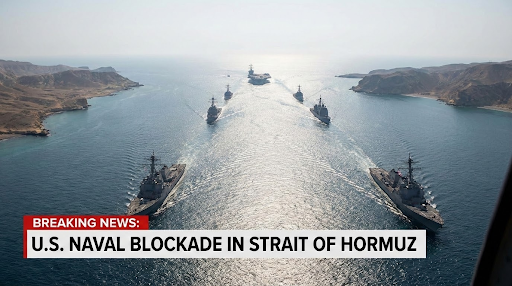
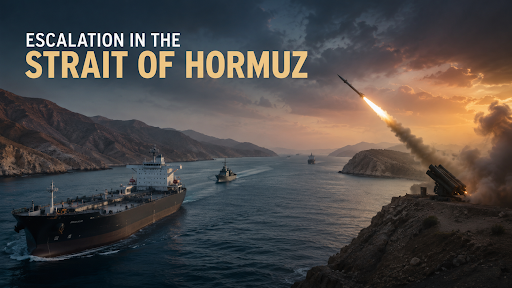
Following the collapse of the U.S.-Iran peace talks in Pakistan, the U.S. military initiated a complete blockade of all Iranian ports in the Strait of Hormuz.
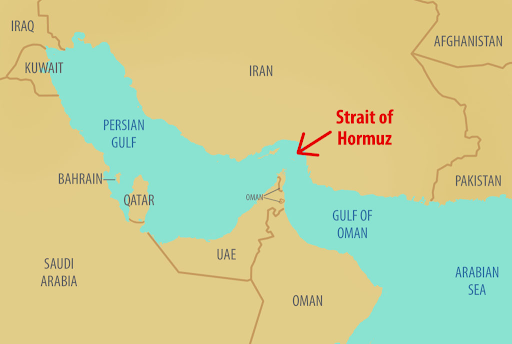
It is a narrow waterway that separates Iran (to the north) from the Arabian Peninsula (specifically Oman and the UAE to the south).
It serves as the only sea passage connecting the Persian Gulf to the open ocean (via the Gulf of Oman and the Arabian Sea).
Dimensions: It is approximately 167 km long. At its narrowest point, it is only about 33 to 39 km wide.
The "Chokepoint": The Strait's navigable shipping lanes are just 3 km wide per direction, divided by a 3 km buffer.
Oil Flow: Approximately 20–21 million barrels of oil per day pass through the strait, accounting for roughly 20–25% of total global petroleum liquids consumption.
LNG Trade: Over 20% of global LNG trade transiting the strait, primarily from Qatar, the world's second-largest LNG exporter. (Source: International Energy Agency)
Lack of Viable Alternatives: Saudi Arabia and the UAE possess pipelines to bypass the strait, but their combined spare capacity (3.5–5.5 million barrels per day) falls short of the 20 million barrels transiting daily. (Source: IEA)
No Alternative for Gas: The lack of alternative routes for most Qatari and UAE LNG exports means a strait closure would entirely strand these global supplies.
Asian Economic Dependence: Approximately 80–84% of the crude oil and condensate moving through the strait goes to Asian markets, specifically China, India, Japan, and South Korea.
Targeted "Port Blockade" vs Total Strait Closure: U.S. Central Command (CENTCOM) stated this blockade specifically targets vessels using Iranian ports, rather than a total Strait shutdown.
The "Anti-Extortion" Mandate: U.S. order to block any vessel—regardless of flag—that has paid a "transit toll" to the Iranian Revolutionary Guard Corps (IRGC).
Operational Reality: U.S. warships now enforce a physical blockade in international waters, boarding merchant vessels to cut Iran's trade routes.
Immediate Energy Market Shock
Oil Price Surge: Brent Crude and U.S. crude spiked 7–8% to over $102 and $104 per barrel respectively. Analysts warn prices could hit $150 if the standoff persists.
Insurance Freeze: Increasing war-risk premiums and insurer refusals threaten to halt all Strait traffic due to crossfire risks.
Military Escalation & "Piracy" Accusations
Iran's Stance: Tehran condemned the blockade as "piracy" and a ceasefire violation. The IRGC threatened regional ports, including Jebel Ali (UAE) and Saudi Arabia, warning that blocking Iranian access makes all regional ports unsafe.
Mine Warfare: To assert control, Iran may deploy sea mines, potentially forcing the U.S. Navy into dangerous clearing operations that could spark direct naval combat.
Global Economic Ripple Effects
Asian Supply Chain Crisis: China and India face severe exposure as the blockade threatens their energy security and Iranian oil imports.
Fertilizer & Food Security: Disrupted urea and sulfur exports could spike global fertilizer costs, increasing worldwide food prices for the next harvest.
Diplomatic Fracture
Diplomatic Fracture: The UK is not supporting the U.S. blockade, signaling a split in the Western alliance. This lack of support may undermine the blockade's legal and logistical sustainability.
The US naval blockade of the Strait of Hormuz triggers a "triple shock" for India: Energy Security, Fiscal Stability, and Strategic Autonomy.
Energy Vulnerability (The "LPG Crisis")
LPG Choke: India imports nearly 90% of its LPG through the Strait of Hormuz. Unlike crude oil, India has no strategic reserve for LPG, a prolonged blockade threatens immediate shortages.
Crude Oil Disruption: Despite diversification, 35–50% of India's crude imports still cross this chokepoint. Supply disruptions would force refiners to purchase from alternate markets at inflated prices.
Macroeconomic Shock
Fiscal Deficit Blowout: Every $10/barrel rise widens the Current Account Deficit (CAD) by roughly 0.4% of GDP and increases the annual import bill by $13–14 billion. This threatens the government’s fiscal deficit target of 4.3% for FY2027 due to fertilizer and fuel subsidies. (Source: ICRA).
Inflation & Rupee: Inflation will rise due to increased freight premiums and oil costs. The Rupee faces further depreciation as the RBI funds costly energy imports.
Operational Stranding
Maritime Hostage: Indian shipping lines face a choice: halt operations or pay "war risk" insurance premiums that have jumped ten-fold
Secure Waivers: India should use its US partnership to obtain "humanitarian exemptions" for energy vessels, mirroring the Chabahar Port model.
Infrastructure Expansion: India must expedite building underground LPG caverns to establish a minimum 15-day strategic buffer for cooking gas, addressing current storage deficits.
Supply Diversification: Shifted toward non-Hormuz sources like Russia, West Africa, and Guyana. India has already increased these imports to 70% to mitigate regional transit risks.
Cost Management: To protect the fiscal deficit, the government should allow marginal retail fuel price increases while utilizing targeted DBT (Direct Benefit Transfer) subsidies to shield the poor.
Currency Stabilization: Expanding "Rupee-Ruble" or "Rupee-Dirham" trade for non-Hormuz oil imports (e.g., Russia or UAE) will reduce Dollar demand and stabilize the Rupee.
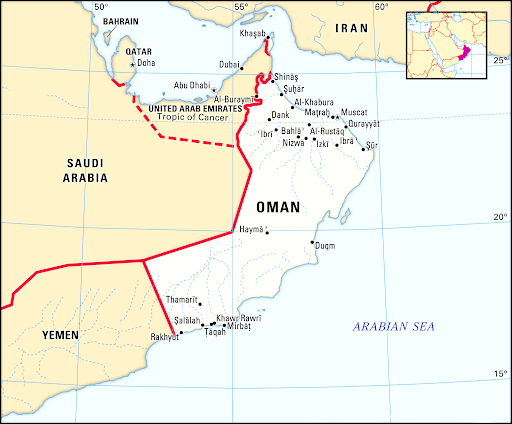
Strategic Alternative Infrastructure: India must prioritize the Oman-India corridor to bypass the Strait of Hormuz. Leveraging access to ports like Duqm for oil storage and transit offers a viable long-term strategy to avoid regional chokepoints.
The 2026 U.S. naval blockade of the Strait of Hormuz—enforced following the collapse of peace talks in Islamabad—has triggered a global energy crisis, increasing oil prices.
Source: BBC
|
PRACTICE QUESTION Q. The weaponization of global maritime chokepoints highlights the fragility of an interdependent global economy. Analyze. 150 words |
The Strait of Hormuz is the world's most critical maritime chokepoint. It facilitates the daily transit of approximately 20 million barrels of crude oil (accounting for 20% of total global petroleum consumption) and over 112 billion cubic meters of LNG annually (20% of global LNG trade).
India imports over 85% of its crude oil, therefore, the blockade causes massive price shocks. This widens India's Current Account Deficit (CAD), triggers imported inflation, depreciates the Rupee, and threatens agricultural productivity due to potential fertilizer (urea/ammonia) supply chain disruptions.
The legality is highly contested. International legal experts generally consider peacetime blockades an act of aggression under UN General Assembly Resolution 3314. Furthermore, intercepting non-belligerent vessels challenges the right of "transit passage" guaranteed by the United Nations Convention on the Law of the Sea (UNCLOS).

© 2026 iasgyan. All right reserved