Description
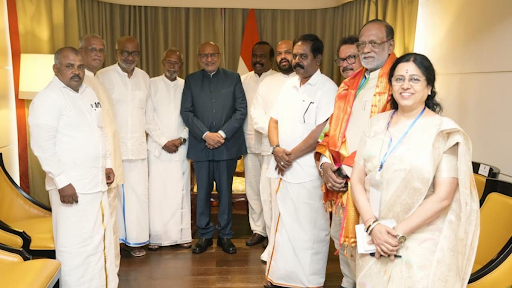
Representatives from various Tamil political outfits recently held discussions to draft a collective appeal to the Indian government.
Why in News?
Representatives from various Tamil political outfits recently held discussions to draft a collective appeal to the Indian government.
Background of the Indo-Lanka Accord
- The 1987 Agreement: Signed between Prime Minister Rajiv Gandhi and President J.R. Jayewardene, the accord aimed to resolve the Sri Lankan Civil War by establishing a framework for devolution.
- The 13th Amendment: Resulting directly from the accord, this amendment created provincial councils and made Tamil an official language, intended to grant a degree of self-governance to the North and East.
- The Indian Role: India has historically acted as a facilitator and a key stakeholder in ensuring the safety, dignity, and political rights of the Tamil community in Sri Lanka.
Key Demands of the Tamil Parties
- Full Devolution: The parties are demanding the transfer of land and police powers to the provinces, which have been withheld by successive governments in Colombo.
- Holding Elections: There is a strong call for holding long-delayed provincial council elections to restore democratic representation at the local level.
- Security and Land Rights: Concerns were raised regarding the continued military presence in civilian areas and the state-sponsored alienation of traditional Tamil lands.
- Constitutional Guarantee: The leadership seeks a permanent political solution that goes beyond the 13th Amendment to ensure meaningful power-sharing.
Strategic Importance for India
- Regional Stability: A peaceful and stable Sri Lanka is essential for India’s national security and the safety of the Indian Ocean Region.
- Domestic Factors: The welfare of Sri Lankan Tamils is a significant emotional and political issue in the Indian state of Tamil Nadu, influencing India's foreign policy approach.
- Countering External Influence: By playing an active role in the ethnic reconciliation process, India maintains its strategic footprint and ensures that external powers do not exploit internal instabilities.
Challenges in the Reconciliation Process
- Political Resistance: Significant sections of the majority community in Sri Lanka view the 13th Amendment as a threat to the unitary character of the state.
- Lack of Consensus: Differences among Tamil political parties themselves sometimes weaken the collective bargaining power required for constitutional change.
- Economic Crisis: The ongoing economic challenges in Sri Lanka have often pushed the ethnic issue to the background of the national discourse.
Way Forward
- Consistent Diplomacy: India should maintain a consistent and principled stand in its bilateral engagements, emphasizing that a meaningful devolution of power is in Sri Lanka's own interest for long-term peace.
- Institutional Capacity Building: Beyond political lobbying, focus should be placed on strengthening the administrative and economic capacity of the provincial councils.
- Inclusive Dialogue: The Sri Lankan government must initiate a transparent and time-bound dialogue with all stakeholders, including the Tamil National Alliance and other minority representatives.
Conclusion
The Indo-Lanka Accord remains the only constitutional framework that addresses the political grievances of the Tamil minority. While decades have passed since its signing, the spirit of the accord is yet to be fully realized on the ground.
Source: The Hindu
|
PRACTICE QUESTION
Q. "The Indo-Lanka Accord of 1987 remains the bedrock of India’s policy toward the Sri Lankan Tamil question." Discuss the challenges in the full implementation of the 13th Amendment four decades after its inception. (250 Words)
|
|
Key Insights
The Indo-Lanka Accord was signed on July 29, 1987, between Indian Prime Minister Rajiv Gandhi and Sri Lankan President J.R. Jayewardene to resolve the Sri Lankan Civil War. It aimed to establish a multi-ethnic society by devolving power to the provinces through the 13th Amendment and recognizing Tamil as an official language. Under the agreement, the Indian Peacekeeping Force was deployed to ensure the surrender of militant groups and maintain stability in the Northern and Eastern Provinces. However, the accord faced significant resistance from both Sinhalese nationalists and the LTTE, eventually leading to a complex military intervention and a strained period in bilateral relations.
|