India and South Korea target $50 billion in trade by 2030 through semiconductor and defense collaboration. However, a $15 billion deficit and stalled CEPA talks persist. To succeed, they must rebalance trade, accelerate deep-tech co-innovation, and align strategic Indo-Pacific goals.
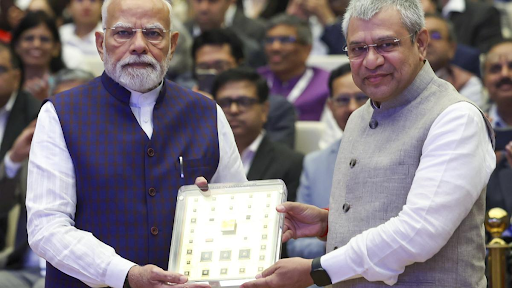
The Joint Strategic Vision (2026–2030) upgrades India-South Korea relations into a "futuristic partnership," targeting $50 billion in bilateral trade by 2030.
The relationship between India and South Korea (Republic of Korea or ROK) has evolved from ancient cultural links into a modern "Special Strategic Partnership".
Chronological Evolution
Ancient Ties (48 AD): Relationship rooted in the legend of Princess Suriratna from Ayodhya, who married King Kim Suro of Gaya.
Korean War (1950–1953): India deployed the 60th Parachute Field Ambulance, treating over 220,000 patients and playing a neutral mediation role.
Formal Ties (1962–1973): Consular relations were established in 1962, followed by full diplomatic ties at the ambassadorial level in 1973.
Strategic Upgrade (2010): Ties were elevated to a "Strategic Partnership" during President Lee Myung-bak's visit as the Republic Day Chief Guest.
Special Strategic Partnership (2015): Elevated during Prime Minister Modi’s visit to Seoul, integrating "Act East" and "New Southern" policies.
Recent Developments
In April 2026, President Lee Jae Myung's state visit led to the Joint Strategic Vision 2026–2030, shifting India-South Korea ties toward a "futuristic partnership" focused on economic security and high technology.
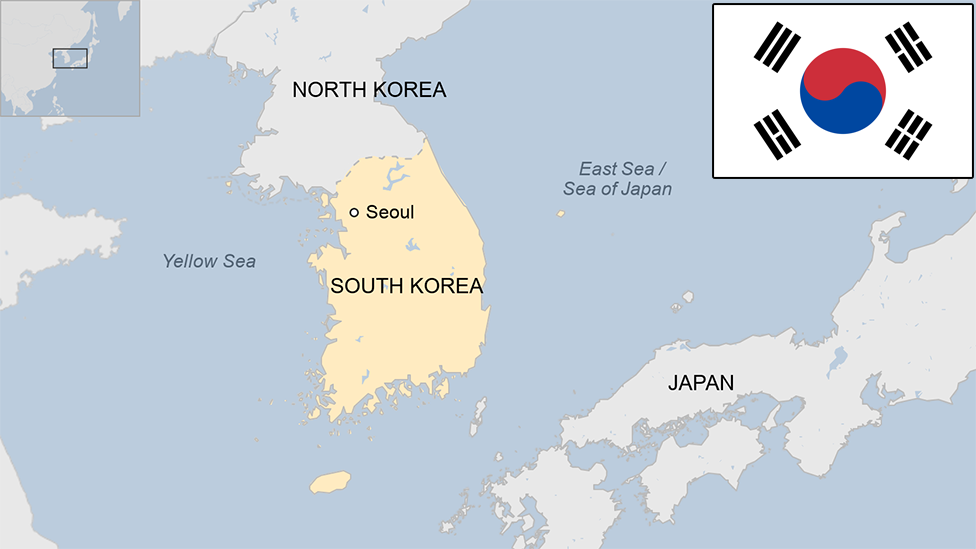 Why is South Korea important to India?
Technology and Semiconductor Hub
Strategic Autonomy: South Korea is a global leader in high-end technologies. In April 2026, both nations launched the India-Korea Digital Bridge to collaborate on AI, quantum computing, and semiconductors.
Semiconductor Mission: Korean firms like Samsung and SK Hynix are vital for India’s "Semiconductor Mission," providing the technical expertise needed to reduce dependence on China.
"Make in India" and Manufacturing Powerhouse
Industrial Clusters: Korean giants like Hyundai, Kia, and LG have turned India into a global export hub for automobiles and electronics.
New Investments (2026): POSCO and JSW Steel signed a framework for an integrated steel plant in Odisha.
Defense and "Atmanirbhar Bharat"
Advanced Equipment: South Korea is one of the few nations willing to share high-end military technology. A prime success is the K9 Vajra howitzer, produced by L&T in India using Korean expertise.
Strategic Roadmap 2026-30: The new roadmap signed in April 2026 focuses on KIND-X (India-Korea Defence Accelerator) to co-develop drone and aerospace technology.
Indo-Pacific and Geostrategic Alignment
Security Architecture: Both nations share concerns over maritime security and stability in the Indo-Pacific. South Korea’s "Indo-Pacific Strategy" closely aligns with India’s "Act East Policy".
Counterbalancing Regional Influence: While South Korea maintains deep trade ties with China, its partnership with India offers a democratic alternative for building resilient supply chains.
Energy and Space Cooperation
Green Hydrogen: India and South Korea are collaborating on green hydrogen production to meet Net Zero 2070 goals.
Space Ties (2026): ISRO and Korea’s KASA (Korea AeroSpace Administration) recently agreed on a joint lunar mapping mission to be launched by 2028.
Digital & High-Technology
Semiconductors: Joint task forces are focusing on chip design and fabrication, leveraging Korea's manufacturing lead and India's design talent.
Artificial Intelligence (AI): Collaboration is guided by the principles of "AI for All" and "MANAV" (Human-centric AI).
Digital Payments: An MoU between NPCI and Korea's KFTC now enables real-time cross-border payments, bypassing traditional clearing houses.
Maritime & Shipbuilding
A strategic pivot toward the sea has been formalized under the VOYAGES (Vision for Operation of Yard Assisted Growth with Efficiency and Scale) framework.
Defense Industry
Moving beyond buyer-seller roles, the focus is now on co-production and joint R&D.
K9 Vajra Model: Success of the K9 Vajra self-propelled howitzer serves as a template for future joint ventures in air defense and artillery.
KIND-X Accelerator: The Korea-India Defence Accelerator was launched in April 2026 to connect defense startups, investors, and researchers.
War Memorial: A memorial commemorating India's 60th Parachute Field Ambulance in the Korean War is set for joint inauguration in Seoul in May 2026.
Energy & Sustainability
Green Hydrogen & Ammonia: Large-scale export deals, such as the Reliance-Samsung green ammonia agreement, are positioning India as a clean fuel supplier for Korea's carbon-neutral goals.
Institutional Alignment: South Korea joined the International Solar Alliance (ISA) in April 2026, while India reciprocated by joining the Seoul-headquartered Global Green Growth Institute (GGGI).
Carbon Credit Trading: A framework under Article 6.2 of the Paris Agreement was established for joint emissions reduction projects.
Space Exploration
ISRO-KASA Joint Working Group: The Indian and Korean space agencies (KASA) established a working group following an India-ROK Space Day in Bengaluru.
Lunar Cooperation: Collaborative efforts focus on satellite navigation and exploring the global space economy.
Economic Rebalancing & MSMEs
CEPA Upgrade: Negotiations to upgrade the Comprehensive Economic Partnership Agreement (CEPA) were formally restarted to address India's trade asymmetry.
Industrial Cooperation Committee: A new ministerial-level committee will oversee sectors like EVs, batteries, chemicals, and telecom.
MSME Support: An MoU between ministries was signed to link small businesses and startups in both supply chains.
Structural Trade Imbalance
Deficit Scale: In 2025, India’s imports from South Korea reached approximately $21 billion, while its exports were less than $6 billion.
Stagnant Trade: Total bilateral trade has remained range-bound between $25 billion and $28 billion from FY2022 to FY2025, below the potential of two top-15 global economies.
Commodity Trap: India’s exports remain concentrated in low-value commodities (petroleum products, aluminium, iron), while imports from Korea are dominated by high-value products like semiconductors and electronic components.
Friction in Economic Agreements
The CEPA in place since 2010, is widely viewed by India as "lopsided" and ineffective.
Strategic and Geopolitical Divergence
While both nations share a vision for a "Free and Open Indo-Pacific," their regional priorities sometimes differ.
Technology and Investment Hurdles
Tech Transfer Resistance: A major sticking point in defense and industrial cooperation is the reluctance of Korean private firms to share intellectual property (IP) and advanced R&D secrets with Indian partners.
Implementation Gap: Many Memorandums of Understanding (MoUs) fail to ground due to bureaucratic delays and policy unpredictability in India, specifically regarding land acquisition and regulatory complexity.
Low Societal and Cultural Engagement
Despite the popularity of "K-Culture" (K-pop, K-dramas) in India, the people-to-people base remains thin.
Economic Rebalancing and CEPA 2.0
The persistent trade deficit (over $15 billion) is the biggest friction point.
Deepening the "Digital Bridge"
Building on the April 2026 initiative, the focus should shift to "Co-Innovation."
Defense and "Co-Production"
The relationship must transition from a "buyer-seller" model to "co-creator."
Maritime and Supply Chain Resilience
Cultural and Human Capital
The India-South Korea partnership has transitioned into a Special Strategic Partnership anchored in democratic stabilization, maritime security, and technology sovereignty through the Strategic Vision 2026–2030 and the India-Korea Digital Bridge.
Source: INDIASWORLD
|
PRACTICE QUESTION Q. Critically analyze the challenges posed by the "China Factor" in the strategic alignment between New Delhi and Seoul. 150 words |
It is an agreement that upgrades bilateral relations into a "futuristic partnership," setting a clear, time-bound target to nearly double bilateral trade to $50 billion by the year 2030.
The ties trace back to 48 AD with the cultural legend of Princess Suriratna of Ayodhya, who traveled to Korea and married King Kim Suro. Additionally, India provided crucial humanitarian aid and mediation during the Korean War (1950–1953) via the 60th Parachute Field Ambulance.
The primary hurdle is a severe structural trade imbalance. India runs a trade deficit of over $15 billion with South Korea, as it predominantly exports low-value commodities while importing high-value electronics. This is exacerbated by unresolved Non-Tariff Barriers (NTBs) under the outdated CEPA.

© 2026 iasgyan. All right reserved