🔔Join APTI PLUS Prelims Mirror 2026 | All India Open Mock Test Series on 12th April, 26th April & 3rd May 2026 |Register Now!

Strategic Implications of the West Asia Conflict on China's Influence

The escalating conflict involving Iran and its regional proxies has created a significant shift in the global geopolitical landscape. While the United States and its allies are deeply embroiled in diplomatic and military efforts to contain the crisis, China has positioned itself as a strategic beneficiary.
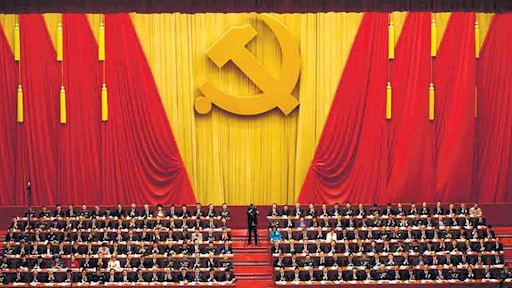
Description

As the dust settles, the real contest begins: Reconstruction. Iran and parts of the Gulf will require massive rebuilding. This is where Beijing steps in, just as Washington did in post-war Europe. For China’s slowing economy, this is a lifeline. 

Why in News?

The persistent instability in West Asia, particularly the tensions between Iran and Israel, has forced a recalibration of global foreign policies. As Western nations focus on maritime security and conflict mediation, China has continued to strengthen its Comprehensive Strategic Partnership with Iran. 

How China Benefits from the Iran Conflict

  • Strategic Diversion for the US: The conflict forces the United States to redirect its military assets and diplomatic focus back to West Asia. This pivot away from the Indo-Pacific provides China with more breathing room to assert its influence in the South China Sea and the Taiwan Strait.
  • Energy Security and Cheap Oil: Sanctions on Iran have made China its primary customer. Beijing enjoys significant discounts on Iranian crude, which is often settled in Yuan, thereby promoting the internationalization of its currency and bypassing the dollar-based financial system.
  • The Mediator Image: Following its successful mediation between Saudi Arabia and Iran in 2023, China continues to project itself as a neutral arbiter. Unlike the US, which is viewed as a partisan actor, China uses its soft power to present an alternative to Western-led security architectures.
  • Infrastructure and BRI Expansion: As part of its 25-year cooperation agreement with Tehran, China is investing in Iranian infrastructure, including ports and railways. These projects are critical nodes for the Belt and Road Initiative, linking East Asia to Europe via the Middle East.

Challenges to China's Position

  • Despite the gains, China faces a delicate balancing act. An all-out regional war would threaten the stability of global energy markets, upon which the Chinese manufacturing sector depends.
  • China must balance its deepening ties with Iran against its significant economic interests in Arab nations like Saudi Arabia and the United Arab Emirates. 
  • If the conflict spirals out of control, Beijing’s hands-off approach may be tested as its citizens and investments in the region face direct risks.

Impact on India and the Global South

  • For India, China’s rising influence in Iran is a matter of concern, particularly regarding the viability of the Chabahar Port project. 
  • A China-centric West Asia could lead to a reconfiguration of trade routes that bypass Indian interests. 
  • Additionally, the increased use of the Yuan in energy trades poses a long-term challenge to the dominance of traditional global currencies, affecting the fiscal policies of many developing nations.

Way Forward

  • India needs to reinvigorate its ‘Look West’ policy by deepening its own strategic and economic engagements with both Iran and the Arab world.
  • Promoting the India-Middle East-Europe Economic Corridor (IMEC) as a transparent and sustainable alternative to the Belt and Road Initiative is essential. 
  • On a global level, multilateral forums should be used to encourage China to take more responsibility in maintaining regional maritime security, ensuring that its influence is matched by a commitment to international stability.

Conclusion

China has skillfully turned the volatility of the Iran conflict into a strategic advantage, strengthening its energy security and geopolitical reach without firing a single shot. However, the long-term sustainability of this winner status depends on whether Beijing can maintain its neutrality if the conflict intensifies.

Source: Indian Express

PRACTICE QUESTION

Q. The Taiwan Strait, often referred to as the Formosa Strait, connects which two major bodies of water? 

a) South China Sea and East China Sea 

b) Bay of Bengal and Andaman Sea 

c) Sea of Japan and East China Sea 

d) Philippine Sea and Celebes Sea

Answer: A

Explanation:

The Taiwan Strait is a significant maritime passage separating the island of Taiwan from mainland China. It serves as a vital geographical link between the East China Sea to the north and the South China Sea to the south. Historically and strategically important, the strait is approximately 180 kilometers wide at its narrowest point and facilitates a massive volume of global trade, making it one of the most heavily trafficked shipping lanes in the world. Its location within the First Island Chain gives it immense geopolitical relevance in the Indo-Pacific region. 

Key Insights

The India Middle East Europe Economic Corridor is a multimodal infrastructure project launched at the 2023 G20 Summit to integrate Asia, the Arabian Gulf, and Europe through a network of ship-to-rail transit systems. It consists of an Eastern Corridor connecting India to the Arabian Gulf and a Northern Corridor linking the Gulf to Europe via Jordan and Israel. This strategic initiative aims to reduce transit times by 40% and logistics costs by 30% while incorporating electricity grids, green hydrogen pipelines, and high-speed digital cables. 

Free access to e-paper and WhatsApp updates

Let's Get In Touch!