Nearly 30 years after PESA, tribal self-governance remains weak. Some states like Jharkhand notified rules, while others lag. Gram Sabha consent is diluted to consultation, and mining laws override protections. Cases like Mendha Lekha and Niyamgiri show progress and struggle, highlighting the need for legal harmonisation and empowerment.
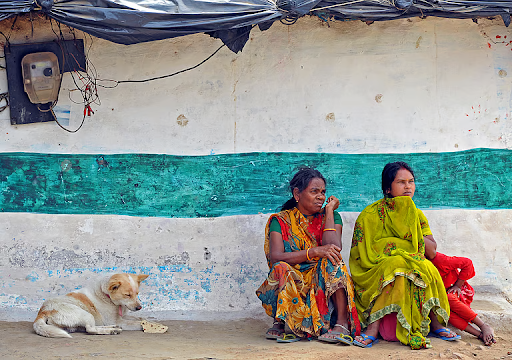
Copyright infringement not intended
Picture Courtesy: DOWNTOEARTH
Context
Implementation of the Panchayats (Extension to Scheduled Areas) Act, 1996 (PESA) remains inconsistent across Fifth Schedule Areas.
|
Read all about: Provisions of the Panchayats Act 1996 l Challenges in PESA Implementation |
What Is Panchayats (Extension to Scheduled Areas) Act 1996 (PESA)?
PESA extends the Panchayati Raj system (Part IX of the Constitution) to the Fifth Schedule Areas to empower tribal communities.
It was enacted based on the recommendations of the Dileep Singh Bhuria Committee, to establish "Gram Swaraj" (village self-rule) by recognizing the Gram Sabha as the central authority in tribal governance.
Key Provisions and Powers under PESA
Gram Sabha Sovereignty The Act empowers the Gram Sabha as the primary decision-making body for all development and governance matters within the village.
Resource Management: It grants the Gram Sabha ownership of Minor Forest Produce (MFP) and the power to manage local natural resources, including water bodies.
Reservation of Seats: In Scheduled Areas, STs must have at least 50% reservation in Panchayat seats, and the Chairpersons at all Panchayat levels must be exclusively reserved for STs.
Protection Against Alienation: The Gram Sabha is empowered to prevent the alienation of tribal land and restore any unlawfully alienated land.
Control over Local Institutions: It mandates Gram Sabha control over institutions and functionaries in all social sectors, including local plans and resources.
Mandatory Consultation & Consent: Consultation with the Gram Sabha is mandatory for land acquisition for development projects. Their consent is required for prospecting licenses or mining leases for minor minerals.
Cultural Preservation: The Act entrusts the Gram Sabha with the responsibility of preserving and safeguarding the traditions, customs, and cultural identity of the tribal communities.
Current Implementation Status
Applicability: PESA applies to 10 states: Andhra Pradesh, Chhattisgarh, Gujarat, Himachal Pradesh, Jharkhand, Madhya Pradesh, Maharashtra, Odisha, Rajasthan, and Telangana.
Rules Framework: The Act was passed in 1996, but implementation depends on state-level rules. For example, Jharkhand notified its rules as recently as January 2026, while Odisha has drafted but not yet finalized its rules.
Why has PESA Failed to Deliver "Gram Swaraj"?
Dilution of Gram Sabha's Power: Consultation vs Consent
State governments often undermine the Gram Sabha's authority by reducing mandatory "consent" to mere "consultation," as seen in Chhattisgarh's Hasdeo Arand where anti-mining resolutions were ignored.
Bureaucratic and Institutional Hurdles
Line departments (Forest, Revenue, Mining) still control resources in Scheduled Areas. The Forest Department often retains control over Minor Forest Produce (MFP), violating PESA's Gram Sabha ownership mandate.
States have failed to establish the autonomous tribal institutions, like the Sixth Schedule's Autonomous District Councils, as recommended by PESA (Section 4(o)). Instead, they have created non-autonomous, state-controlled district-level bodies.
Lack of Legal Harmonization
Existing state and central laws, such as the Mines and Minerals (Development and Regulation) Act and the use of eminent domain for land acquisition, conflict with and override PESA's protective provisions, undermining genuine tribal community consent.
What are the Consequences of Ineffective Implementation of PESA Act?
Fueling Left-Wing Extremism (LWE): The Xaxa Committee (2014) identified the failure to implement PESA, causing tribal land alienation and disempowerment, as a major factor driving Naxalism in central India.
Erosion of State Trust: Diluted constitutional rights fuel protests and erode trust. The Pathalgadi movement in Jharkhand exemplifies a direct response to the state's failure to safeguard tribal autonomy.
Case Studies
|
|
Success: Mendha Lekha (Maharashtra) |
Challenge: Niyamgiri Hills (Odisha) |
|
Context |
A village in Gadchiroli district that effectively used PESA and the Forest Rights Act (FRA). |
The Dongria Kondh tribe's resistance against bauxite mining in their sacred hills. |
|
Key Action / Judgment |
The Gram Sabha took complete control over bamboo cultivation and its commercial sale. |
The Supreme Court, in the Orissa Mining Corporation (2013) case, ruled that the Gram Sabha's consent is mandatory for any mining project in Scheduled Areas. |
|
Outcome |
Generated revenue, achieved financial self-sufficiency, and invested in local development, proving the model of community-led resource management. |
Despite the judgment, Odisha has not yet notified PESA rules, leaving tribal rights dependent on judicial intervention rather than a robust governance system. |
Way Forward
Harmonize Laws
States must amend their subject-specific laws (e.g., Land Acquisition, Excise, Mining) to align them with the spirit of PESA.
The principle from the Samatha Judgement (1997)—that government land, tribal land, and forest land in Scheduled Areas cannot be leased to private entities for mining—must be strictly enforced.
Strengthen Gram Sabha Consent
Ambiguity between "consultation" and "consent" must be removed. For projects with significant social and environmental impact, the Gram Sabha's consent must be treated as a legally binding veto.
Implement Autonomous Structures
States should act on Section 4(o) of PESA to create administrative structures at the district level that are autonomous and accountable to the tribal communities, not the state bureaucracy.
Capacity Building
Initiatives like the Rashtriya Gram Swaraj Abhiyan (RGSA) must be intensified to build the capacity of Gram Sabha members, making them aware of their legal rights and administrative responsibilities.
Conclusion
The successful implementation of PESA requires a fundamental shift to a genuine partnership, placing the Gram Sabha at the heart of governance to realize the vision of 'Gram Swaraj'.
Source: DOWNTOEARTH
|
PRACTICE QUESTION Q. With reference to the PESA Act, 1996, consider the following statements: 1. The Act extends the provisions of Part IX of the Constitution to the Sixth Schedule Areas. 2. It grants the Gram Sabha ownership of Minor Forest Produce (MFP). 3. It was enacted based on the recommendations of the Xaxa Committee. Which of the statements given above is/are correct? A) 1 and 2 only B) 2 only C)) 1 and 3 only D) 1, 2, and 3 Answer: B Explanation: Statement 1 is incorrect: The Act extends the provisions of Part IX (Panchayats) to the Fifth Schedule Areas, not the Sixth Schedule Areas. Sixth Schedule Areas (Assam, Meghalaya, Tripura, and Mizoram) are governed by Autonomous District Councils and are excluded from PESA. Statement 2 is correct: Under Section 4(m)(ii) of the PESA Act, 1996, the Gram Sabha or the Panchayats at the appropriate level are endowed with the ownership of Minor Forest Produce (MFP). This ensures the livelihood and traditional rights of tribal communities over forest resources. Statement 3 is incorrect: The PESA Act was enacted based on the recommendations of the Dileep Singh Bhuria Committee (1995), not the Xaxa Committee. The Virginius Xaxa Committee (2013) was a high-level committee formed much later to study the socio-economic, health, and educational status of tribal communities. |
The main objective of PESA is to extend the Panchayati Raj system (Part IX of the Constitution) to Fifth Schedule Areas, legalizing traditional tribal self-governance systems and empowering Gram Sabhas to manage local resources and customs.
The PESA Act was enacted on the recommendation of the Dileep Singh Bhuria Committee, which suggested a decentralized governance framework tailored to tribal areas.
There are 10 states: Andhra Pradesh, Chhattisgarh, Gujarat, Himachal Pradesh, Jharkhand, Madhya Pradesh, Maharashtra, Odisha, Rajasthan, and Telangana.


© 2026 iasgyan. All right reserved