A 15th-century Gajapati inscription found in Guntur marks the empire's expansion and Hari-Hara cultural syncretism. The discovery highlights India's heritage conservation crisis, urging reforms like AI mapping and specialized art police.
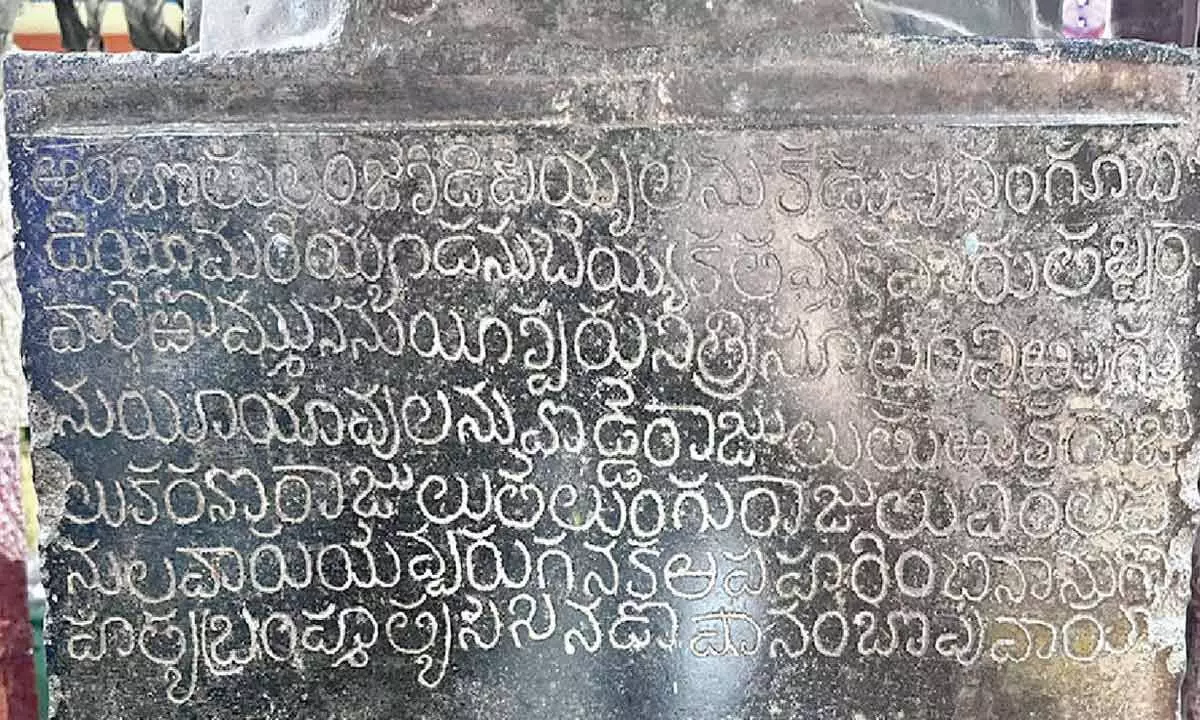
Copyright infringement not intended
Picture Courtesy: THEHANSINDIA
Context
A medieval inscription belonging to the Gajapati dynasty of Odisha has been rediscovered on a stone pillar in the Lakshmi Narasimha Swamy Temple at Ramachandrapura Agraharam in Guntur, Andhra Pradesh.
Key Details of the Inscription
Dynasty: Gajapati Dynasty of Odisha.
Ruler Mentioned: King Purushottama Deva (15th Century).
Officer Mentioned: Kumaraguru Mahapatra, a royal steward officer.
Location: Carved on a stone pillar in the ‘mandapa’ (hall) of the Lakshmi Narasimha Swamy Temple in Guntur.
Original Dedication: The inscription was originally dedicated to Lord Mulasthana Mallikarjuna of the historic Kondaveedu Fort. The pillar was likely relocated to the Guntur temple at a later date.
Content: It records arrangements for offering milk during evening worship and the entrusting of cows to pastoral communities for this ritual service.
About Gajapati Empire
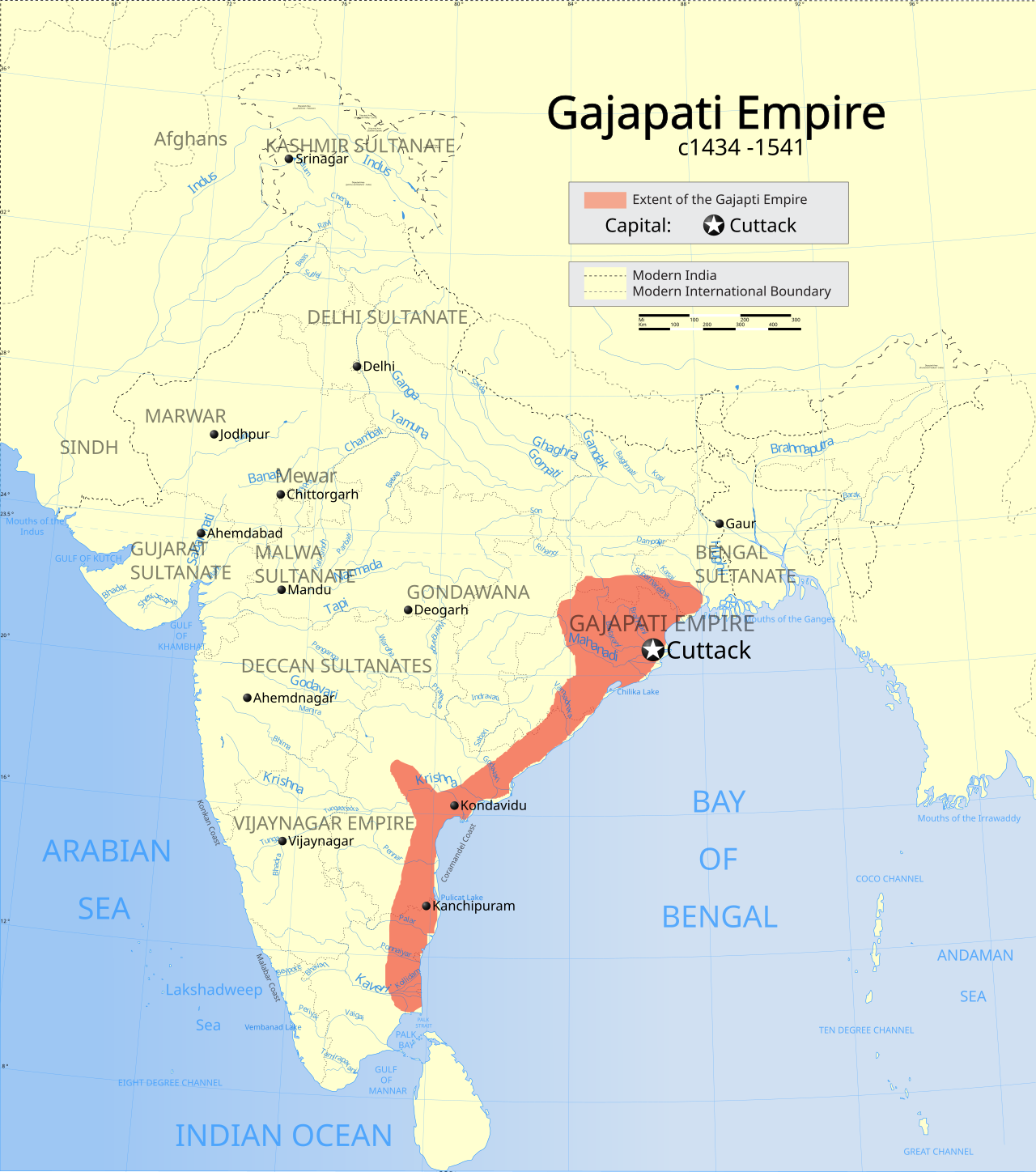
The Gajapati Empire (1434–1541 CE) was a medieval Hindu dynasty that ruled over Kalinga (modern-day Odisha) and a vast region of Andhra Pradesh, West Bengal, and parts of Karnataka and Tamil Nadu.
Founded by Kapilendra Deva, the dynasty is celebrated for its military might, architectural brilliance, and the promotion of the Jagannath Cult.
Rise and Territorial Expansion
The Gajapatis (meaning "Lords of the Elephants") rose to power after the fall of the Eastern Ganga dynasty.
Kapilendra Deva (1434–1466): Expanded the empire from the Ganges in the north to the Kaveri in the south, earning the title Gajapati Gaudesvara Navakoti Karnata Kalabargesvara.
Strategic Conquests: The recent discovery of an inscription in Guntur, Andhra Pradesh, confirms their deep administrative reach into the Krishna-Godavari delta during the 15th century.
Temple Economy & Governance
The empire operated on a robust Temple Economy model, where temples were not just religious centres but hubs of economic redistribution, land management, and social welfare.
Land Grants: Huge tracts of land (Agraharas) were donated to temples and Brahmins to ensure agricultural productivity and loyalty.
Decentralised Administration: The empire was divided into provinces called Dandapatas, managed by military governors.
Cultural Syncretism: The Hari-Hara Tradition
A defining feature of Gajapati rule was their patronisation of the Hari-Hara tradition, which harmonised the worship of Vishnu (Hari) and Shiva (Hara).
Literature and Art
The Gajapati era was a "Golden Age" for Sanskrit and Odia literature.
Decline and Legacy
Constant wars with the Vijayanagara Empire (specifically under Krishna Deva Raya) and the Bahmani Sultanate weakened the Gajapatis. The dynasty ended in 1541 when the minister Govinda Vidyadhara usurped the throne.
Source: THEHANSINDIA
|
PRACTICE QUESTION Q. The "Hari-Hara" tradition, patronized by medieval rulers like the Gajapatis, represents: a) An exclusive devotional cult dedicated solely to the worship of Lord Surya. b) An inclusive form of worship revering both Lord Shiva and Lord Vishnu. c) A revenue collection system established in strategic military forts. d) A traditional tribal dance form integrated into royal courts. Answer: b Explanation: The Hari-Hara tradition is a syncretic spiritual philosophy that promotes an inclusive worship of both Shiva (Hara) and Vishnu (Hari). |
The 15th-century inscription proves the territorial expansion of the Odisha-based Gajapati Empire deep into the Andhra region. It serves as an infallible historical record of a shared geopolitical, socio-economic, and spiritual history bridging modern state boundaries.
The Suryavamsa Gajapati dynasty (1434–1541 CE) was a powerful medieval Hindu dynasty originating in Kalinga (modern-day Odisha). Under rulers like King Purushottama Deva, they expanded their empire significantly along the eastern coast of India.
It highlights the medieval "Temple Economy" model, where temples were massive landholders and wealth distributors. It mentions the donation of an entire village for sacred food offerings (Amruta Manohi Seva) and documents the economic integration of indigenous pastoral tribes into mainstream state administration.



© 2026 iasgyan. All right reserved