

Indian cities face trapped heat from rapid urbanization and lost green cover, requiring urgent climate-resilient infrastructure.
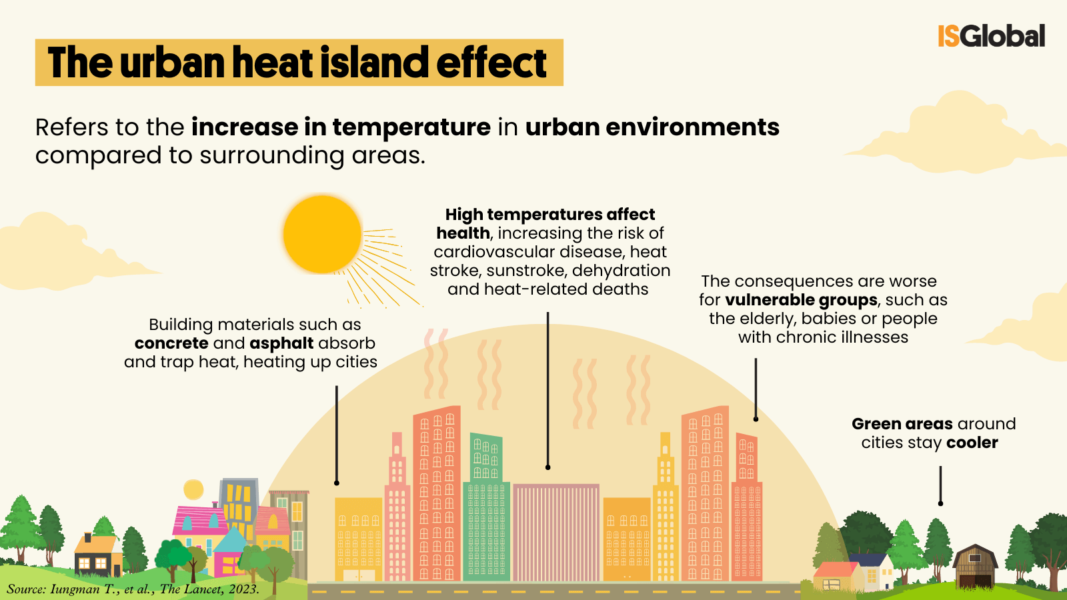
An Urban Heat Island (UHI) refers to a metropolitan or urban area that experiences higher temperatures compared to its surrounding rural or peri-urban areas due to excessive human activities and landscape modifications.
According to the Intergovernmental Panel on Climate Change (IPCC) 6th Assessment Report, urbanisation directly exacerbates the effects of global warming in cities through this phenomenon.
Across India, urban areas already run 2–10°C hotter than surrounding rural land. (Source: TERI)
 What Are the Major Causes of Urban Heat Islands in India?
Replacement of Natural Landscapes
Urbanisation replaces natural vegetation, permeable soil, and water bodies with heat-absorbing materials like concrete, steel, and asphalt, which absorb solar radiation during the day and release it slowly at night.
High-Rise Development and Urban Geometry
Developers build tall buildings close together, creating an Urban Canyon Effect that obstructs natural wind flow, reduces ventilation, and traps heat between structures.
Loss of Green Cover
Declining tree cover reduces natural cooling processes like evapotranspiration and shading. For example, urbanization in Jaipur caused a 42% decline in green cover over two decades, increasing land surface temperatures by 1.8°C. (Source: MDPI)
Vehicular and Transport Emissions
Heavy use of private vehicles and idling traffic release waste heat directly into streets, turning major transport corridors into continuous thermal corridors.
Cooling Systems and Air Conditioning
While air conditioners cool indoor spaces, they expel waste heat outdoors, raising surrounding temperatures by 1–2°C and creating a vicious cycle of urban warming.
Glass-Dominated Architecture
Modern glass-heavy buildings increase indoor heating by allowing more solar radiation inside, which subsequently drives up the dependence on artificial air conditioning.
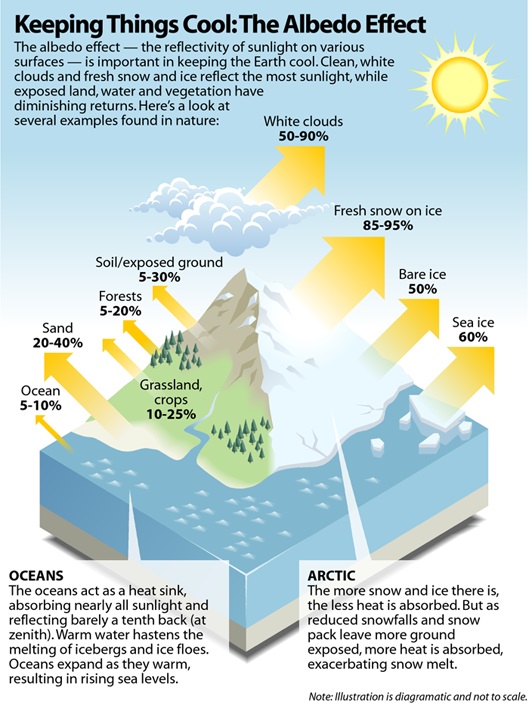
Low Albedo
Dark-coloured building materials and roads exhibit low albedo; absorb heat and reflect less solar energy.
 What Are the Impacts of Urban Heat Islands?
Intensified Heatwaves and Thermal Stress
UHIs trap hot air and prevent nighttime cooling, exposing vulnerable populations (like the elderly, children, and outdoor workers) to health risks such as heat cramps, heat exhaustion, and fatal heatstroke.
Increased Energy Consumption
Elevated temperatures drive up the demand for electricity for cooling and air conditioning, which strains power grids and increases greenhouse gas emissions from fossil fuel power plants.
Economic Productivity Losses
Extreme heat damages industrial productivity, slows supply chains, and threatens outdoor livelihoods.
Deteriorating Air Quality
Higher temperatures accelerate the production of ground-level ozone when nitrogen oxides and volatile organic compounds react in sunlight, exacerbating respiratory diseases like asthma.
Disrupted Microclimates and Local Weather
UHIs alter the local water cycle, causing increased precipitation downstream, changing wind speeds, and creating urban dryness islands with much lower humidity.
Threats to Biodiversity
Thermal pollution harms local ecosystems, disrupts breeding patterns, and forces wildlife to migrate. Heated surface runoff affects aquatic life by raising the temperature of nearby streams, lakes, and rivers.
Integrating Blue-Green Infrastructure
Design Sponge Cities by revitalizing wetlands, lakes, and mangrove corridors to naturally absorb stormwater, recharge groundwater, and prevent flash floods.
Implementing Heat-Resilient Architecture
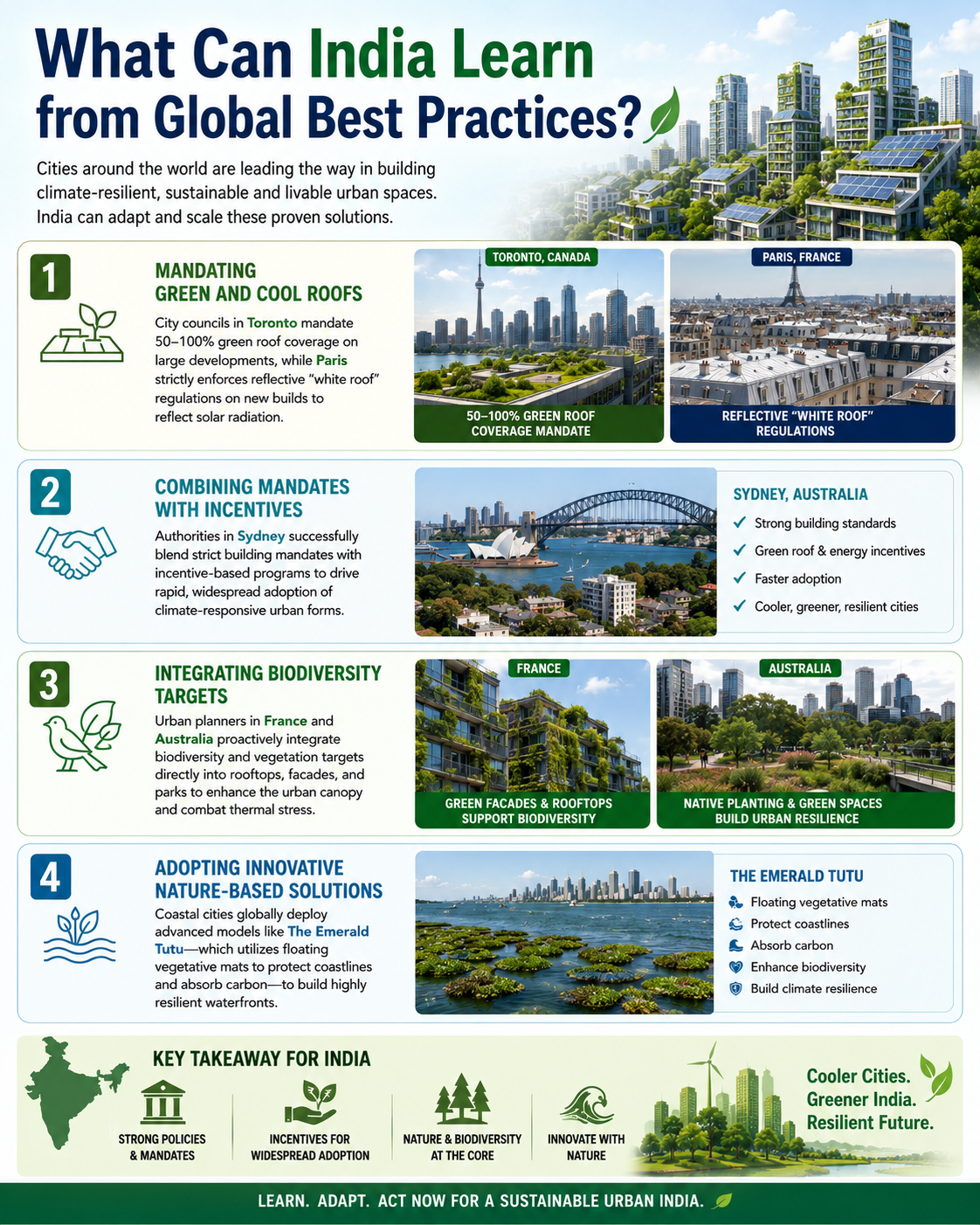
Utilize high-albedo reflective materials, cool roofs, and green roofs to minimize heat absorption, while designing street geometries to maximize natural ventilation corridors.
Developing Sustainable Mobility Systems
Prioritize Non-Motorised Transport (NMT), such as shaded cycling tracks and pedestrian pathways, alongside robust public transit networks to reduce vehicular waste heat and carbon emissions.
Establishing Early Warning Systems (EWS)
Comprehensive Hazard Risk and Vulnerability Assessments and deploy real-time sensor networks to warn and protect citizens before extreme weather strikes.
Enforcing Green Building Standards
Enforce the Energy Conservation Building Code (ECBC) and promote green building certifications to ensure modern infrastructure remains highly energy-efficient and thermally comfortable.
Implementing the National Mission on Sustainable Habitat (NMSH) 2.0
Drive low-carbon urban growth and increase climate resilience, directly integrating sustainability objectives into flagship programmes like the Smart Cities Mission and AMRUT.
Launching the ClimateSmart Cities Assessment Framework (CSCAF)
Help cities to evaluate their climate readiness and implement sustainable actions across 28 indicators, including Urban Planning, Green Cover, Energy, Mobility, and Waste Management.
Local Heat Action Plans (HAPs)
Ahmedabad Municipal Corporation (AMC) formulated India's first Heat Action Plan, which establishes an Early Warning System, builds capacity among medical professionals, and expands public awareness to protect vulnerable populations from heatwaves.
Enforcing Green Building Codes
Updated regulations like the Energy Conservation Building Code (ECBC) and the National Building Code (NBC) 2016 to mandate energy-efficient building designs, while simultaneously installing over 6 million LED streetlights across cities to reduce energy consumption.
Promoting Sustainable Urban Mobility
Shifting urban transport away from carbon-intensive models by promoting electric and CNG vehicles, expanding Bus Rapid Transit System (BRTS) corridors, and implementing the Transit-Oriented Development (TOD) policy to reduce vehicular emissions.
Integrating Urban Greening and Ecological Restoration
Cities adopt microclimate interventions; for example, Bengaluru integrates terrace gardens and vertical greening into commercial IT campuses to improve air quality and regulate local humidity.
Replacing Natural Ecosystems
Developers amplify the Urban Heat Island (UHI) effect by replacing blue-green infrastructure with heat-absorbing concrete and asphalt.
Outdated Building Codes
Municipalities enforce regulations that ignore thermal stress, permitting dense, high-rise constructions without adequate green buffers or ventilation corridors.
Financial Constraints
Urban Local Bodies (ULBs) lack funding to execute adaptations; a review of 37 Heat Action Plans showed only two secured viable finances.
Destroying Flood Defences
Rapid urban sprawl consumes wetlands and mangroves, costing Mumbai over 2,028 hectares of green cover between 2016 and 2021 alone.
Car-Centric Infrastructure
Poor public transport and inadequate last-mile connectivity prioritize private vehicles, expanding road fell mature tree canopies and increasing urban heat.
Capacity and Data Gaps
City planners lack the technical expertise, coordination, and real-time data required to execute complex Nature-based Solutions (NbS).
Adopt the Sponge City Model
Urban planners must revitalize blue-green infrastructure like neighbourhood parks, wetlands, and mangrove corridors to naturally manage stormwater and prevent urban flooding.
Mandate Cool and Green Roofs
State governments must update building codes to require high-albedo reflective surfaces and green roofs, which can reduce a building's cooling energy demand by up to 16% in compact urban clusters.
Expand Roadside Tree Canopies
Shifting away from car-centric roads to prioritize Non-Motorised Transport (NMT) and plant dense avenue trees, as street trees can lower pedestrian-level temperatures by up to 12°C. (Source: Nature)
Mainstream Nature-Based Solutions (NbS)
Cities must integrate ecological interventions into urban infrastructure by deploying vertical gardens, permeable pavements, and innovative global practices like The Emerald Tutu—floating vegetative mats that protect coastlines and absorb carbon.
Implement Heat Action Plans (HAPs)
Municipalities must establish Early Warning Systems, map high-risk thermal hotspots, and build cooling centres to protect vulnerable populations during heatwaves.
Utilize ClimateSmart Frameworks
Monitor environmental progress using standardized metrics like the ClimateSmart Cities Assessment Framework (CSCAF 3.0) to improve waste minimization, urban biodiversity, and energy-efficient infrastructure.
Deploy Data-Driven Early Warning Systems (EWS)
Disaster management authorities must conduct comprehensive, ward-level Hazard Risk and Vulnerability Assessments and establish real-time climate data portals to preemptively protect vulnerable populations from extreme weather events.
 Conclusion
To secure a sustainable future, India must enforce climate-responsive building codes and integrate blue-green infrastructure to transform vulnerable cities into heat-resilient, sustainable habitats
Source: ETEDGE
|
PRACTICE QUESTION Q. "Reimagining Indian cities as 'sponge cities' can serve as a dual solution for the Urban Heat Island effect and urban flooding." Elaborate. 150 words |
The UHI effect is a phenomenon where urbanized areas experience higher temperatures than surrounding rural landscapes. This happens because dense concentrations of pavement, buildings, and other infrastructure absorb and retain solar heat, whereas rural areas have natural landscapes and vegetation that cool the air through evapotranspiration.
High-rise buildings alter urban microclimates by blocking natural ventilation and wind corridors, trapping heat in dense urban canyons. The construction of these concrete canopies often replaces natural green cover, heavily compromising the city's ability to absorb atmospheric carbon and cool down.
A Sponge City is an urban planning concept that focuses on conserving and creating green areas, such as wetlands, marshes, and salt pans, to naturally absorb monsoon rains and mitigate flooding. These areas also help cool the local microclimate and combat the Urban Heat Island effect
© 2026 iasgyan. All right reserved