U.S. airstrikes on Kharg Island and the Hormuz closure have spiked oil past $100, threatening India’s macro-stability. India must expand strategic reserves, diversify suppliers, and accelerate green energy to ensure long-term economic and energy resilience.
Copyright infringement not intended
Picture Courtesy: THEHINDU
Context
In March 2026, the U.S. conducted targeted airstrikes on Iran’s Kharg Island oil terminal in response to regional escalations.
|
Read all about: The Iran-Israel Conflict & Impact l Israel-Iran Strike Regional Tension l Israel Attack & International Law |
About Kharg Island
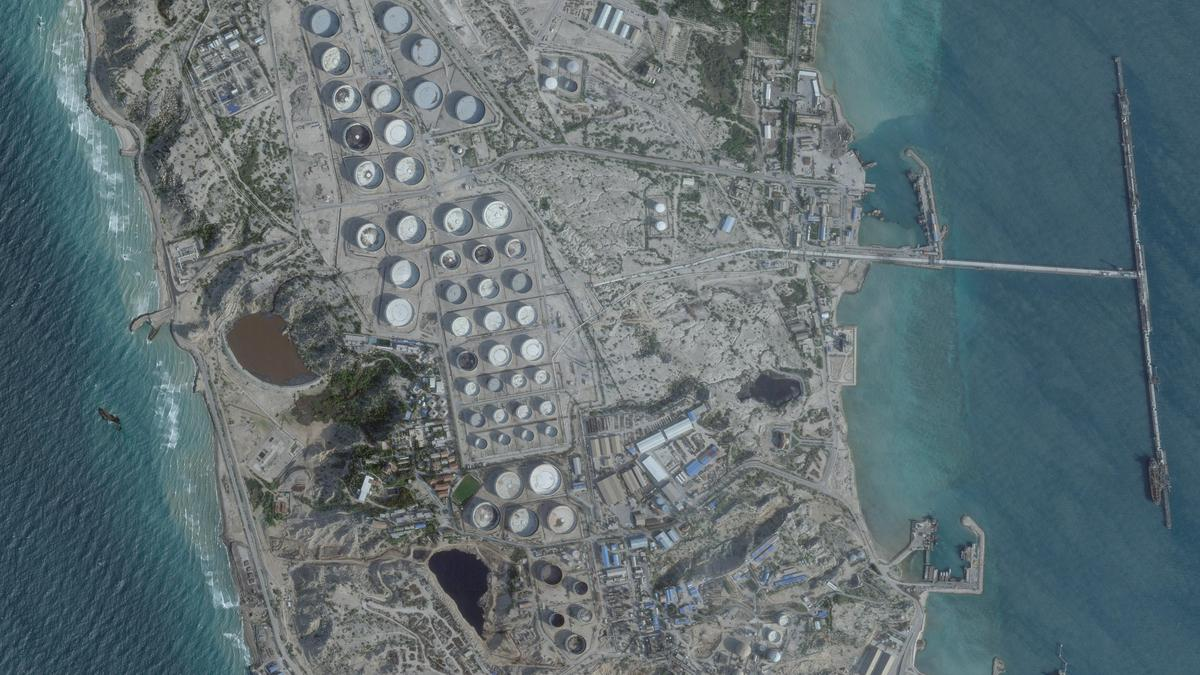
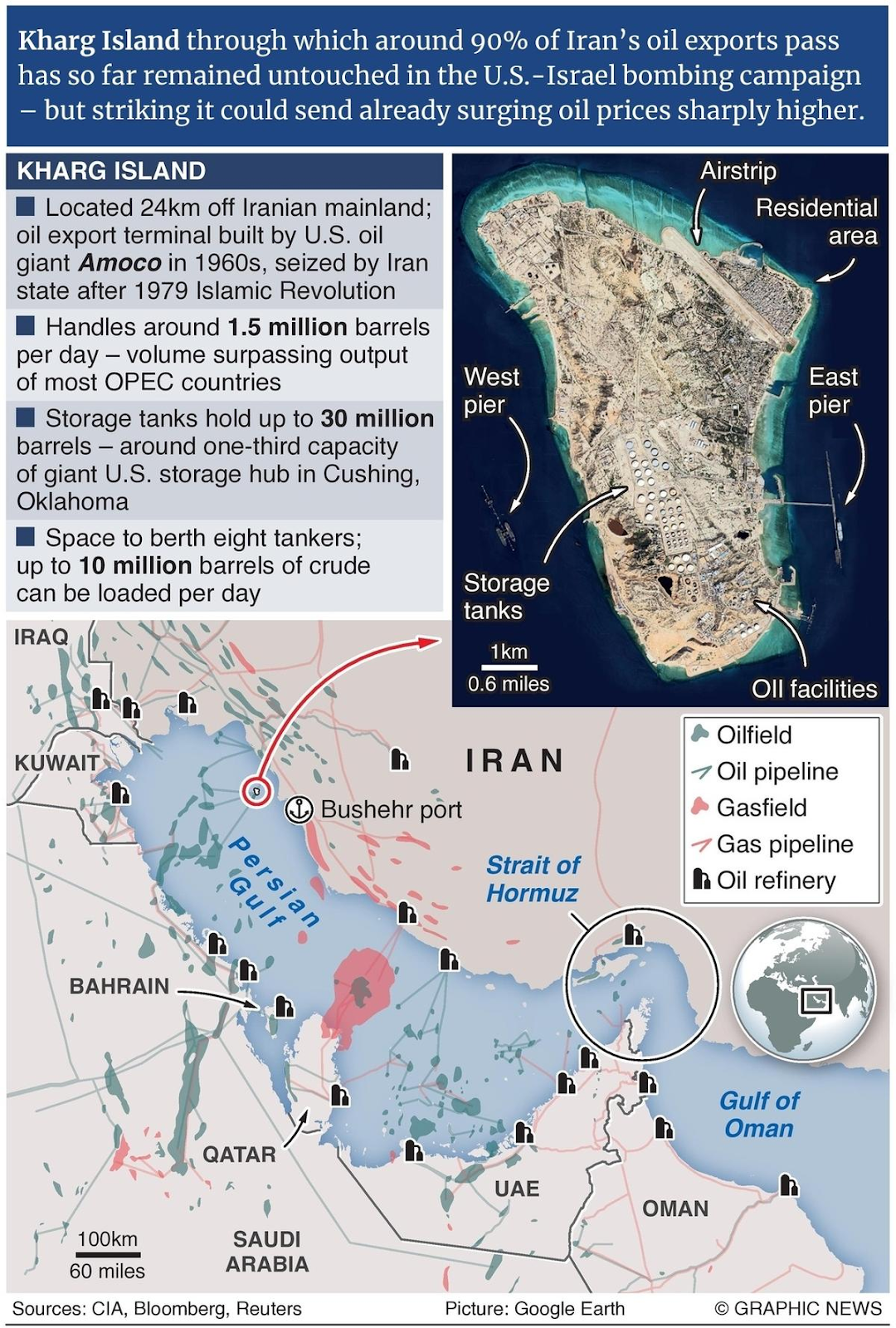
Location: A coral island in the northern Persian Gulf, situated approximately 25-30 km off the mainland coast of Iran.
Size & Topography: The island is about 8 km long, covering 20 sq. km. Its landscape is dominated by industrial facilities, including large oil storage tanks and an airstrip.
Historical Significance: Historically part of regional trade routes, it was once controlled by Dutch and British forces.
Strategic Importance for Iran and Global Markets
Central Export Hub
The island handles approximately 90% of Iran’s crude oil exports. It is the terminal point for pipelines connecting to major onshore oil fields like Ahvaz, Marun, and Gachsaran.
Deep-Water Port Advantage
Much of Iran's coastline is too shallow for supertankers. Kharg Island's location in deep waters, equipped with specialised jetties, allows Very Large Crude Carriers (VLCCs) to dock and load oil efficiently.
Significant Export and Storage Capacity:
Global Market Impact: Any disruption to the oil infrastructure on Kharg Island severely impacts Iran's export capacity, potentially leading to a sharp increase in global crude oil prices.
Source: THEHINDU
|
PRACTICE QUESTION Q. "The weaponization of maritime chokepoints in the Middle East poses a severe threat to India's macroeconomic stability." Discuss. 150 words |
Kharg Island is a small coral island located in the Persian Gulf that serves as Iran's primary oil export hub. Due to its naturally deep waters, it can accommodate supertankers and handles up to 90% of Iran's crude oil exports, making it a critical asset in the global energy market.
The Strait of Hormuz is a narrow maritime passage through which nearly 60% of India's crude oil imports and massive quantities of LNG transit. Its closure directly disrupts India's daily energy supplies, heavily impacting the nation's energy security and economy.
SPRs are massive, state-funded stockpiles of crude oil maintained by countries to ensure emergency energy security during severe supply disruptions. India currently has SPR facilities in Visakhapatnam, Mangaluru, and Padur, which provide roughly 9 days of import cover.



© 2026 iasgyan. All right reserved