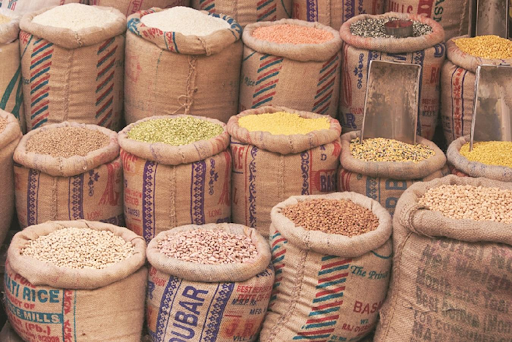
The Mission for Aatmanirbharta in Pulses (2025) targets self-sufficiency by 2030–31 through higher yields, expanded cultivation, and assured procurement. With digital tracking and cluster-based strategies, it aims to reduce import dependence, stabilize markets, and ensure sustainable nutritional and agricultural security.
Copyright infringement not intended
Picture Courtesy: business-standard
Context
The Minister of State for Agriculture and Farmers Welfare updated the Lok Sabha about the progress of the ‘Mission for Aatmanirbharta in Pulses’.
What is the Mission for Aatmanirbharta in Pulses?
The Union Government launched the "Mission for Aatmanirbharta in Pulses" in October 2025 to achieve complete self-sufficiency in pulses.
This centrally sponsored scheme, with an outlay of ₹11,440 crore, will be implemented from 2025–26 to 2030–31.
Objectives of the Mission
Ensure Nutritional Security: Pulses are vital "nutritional powerhouses," providing 20-25% of protein in Indian diets (Source: ICMR Dietary Guidelines).
Reducing Import Dependence: Despite production rising to 252.38 lakh tonnes in 2024-25, India imported 47.38 lakh tonnes in 2023-24. This mission aims to save valuable foreign exchange and protect farmers from global price shocks. (Source: DGCIS)
Correcting Policy Bias: Post-Green Revolution policies favoured rice and wheat, and with time the share of pulses in total food grain output fell from 16% in 1950 to about 8% in 2022–23, requiring a focused policy shift.
Meeting Future Demand: India's pulse demand is projected to hit 39 million tonnes by 2050. Achieving this requires a sustained annual production growth of 2.2%. (Source: ICAR)
Key Pillars and Targets of the Mission
Production & Area Expansion: The mission aims to increase pulse production to 350 lakh tonnes by 2030–31.
Assured Procurement: Focus is on key pulses like Tur (Arhar), Urad, and Masoor.
Digital Traceability: The SATHI (Seed Authentication, Traceability & Holistic Inventory) Portal, developed by the Ministry of Agriculture and National Informatics Centre (NIC).
Cluster-Based Value Addition: The government will support the establishment of 1,000 pulse mills under a cluster model, with each unit receiving a subsidy of ₹25 lakh to promote local processing and value addition.
Direct Farmer Support: A decentralized "seed to market" model will be adopted.
What are the Major Challenges to Pulse Self-Sufficiency?
Land & Crop Competition: Pulses compete for acreage with crops like rice and wheat, which have a more robust and attractive MSP procurement system.
Market Volatility (Cobweb Phenomenon): As highlighted by the Arvind Subramanian Committee (2015), high prices in one year lead to overproduction and a price crash in the next, creating income instability for farmers.
Infrastructure Deficit: Inadequate storage and processing facilities lead to high post-harvest losses of 7-10% due to pests and moisture. (Source: CIPHET)
Climate Vulnerability: Over 75% of pulse cultivation is rainfed, making it highly susceptible to erratic monsoons, droughts, and terminal heat stress. (Source: Economic Survey 2023-24)
Way Forward
Implement NITI Aayog's Directives
Adopt the "One Block–One Seed Village" model to create local seed hubs through FPOs and integrate pulses into welfare schemes like PDS and Mid-Day Meals to create stable demand.
Strengthen Decentralized Procurement
Enhance physical procurement infrastructure as recommended by the Shanta Kumar Committee (2015) by integrating MSP operations with e-NAM and building rural godowns.
Drive Technological Intervention
Accelerate R&D by ICAR to develop climate-resilient, pest-resistant, and short-duration pulse varieties. Couple the SATHI portal with AI-based weather and pest advisories for farmers.
Learn Lessons from Best Practices
|
Case Study |
Key Learning |
Lesson for India |
|
Canada (Yield Enhancement) |
Achieved an average pulse yield of 1,900 kg/ha (compared to India's 800-900 kg/ha) through intensive R&D, zero-tillage farming, and soil testing. (Source: FAOSTAT) |
Replicate this localized R&D approach via State Agricultural Universities to develop region-specific, high-yield seed varieties. |
|
Brazil (Biological Nitrogen Fixation) |
Replaced chemical nitrogen fertilizers with climate-adapted bio-inoculants for legumes, cutting input costs by 60% and improving soil health. (Source: World Bank) |
Subsidize and promote the widespread use of bio-inoculants to make pulse farming more sustainable and profitable. |
Conclusion
The Mission for Aatmanirbharta in Pulses aims to boost domestic production through targeted reforms, improving farmer incomes, reducing import dependence, and strengthening India’s nutritional and climate-resilient agricultural security.
Source: PIB
|
PRACTICE QUESTION Q. "Despite significant increases in domestic production, India's persistent reliance on pulse imports highlights systemic structural flaws in its agricultural policy." Analyze. 150 words |
A1: The primary objective is to achieve absolute self-sufficiency in pulse production in India by 2030–31. The mission targets a total production of 350 lakh tonnes by expanding the cultivation area and improving yields to curb import dependency.
The SATHI (Seed Authentication, Traceability & Holistic Inventory) Portal automates the entire seed life cycle. It ensures traceability from seed production to certification, guaranteeing that farmers receive authentic, high-yielding seeds.
Through the PM-AASHA scheme, the mission mandates nodal agencies like NAFED and NCCF to guarantee 100% procurement of specific focus crops—Tur (Arhar), Urad, and Masoor—at MSP in participating states for the next four years.



© 2026 iasgyan. All right reserved