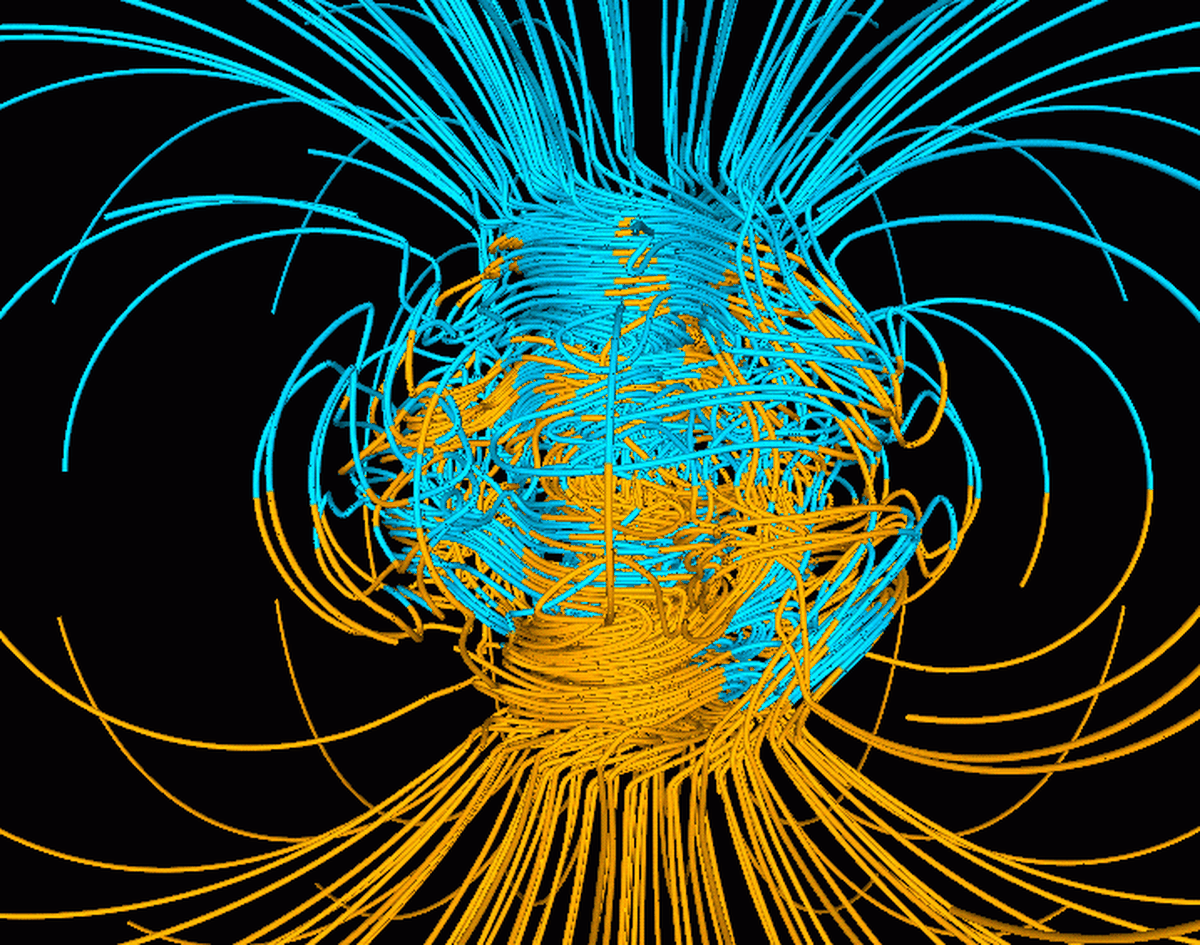
Recent research shows Earth’s magnetic field reversals can last 70,000 years, far longer than previously thought. This prolonged weakening of our magnetic shield threatens LEO satellites, global power grids, and ecosystems with intense cosmic radiation and navigational chaos.
Copyright infringement not intended
Picture Courtesy: The Hindu
Context
A recent study published in the Communications Earth & Environment has revealed that the Earth’s magnetic pole reversals can last much longer than previously thought.
What is Earth's Magnetic Field?
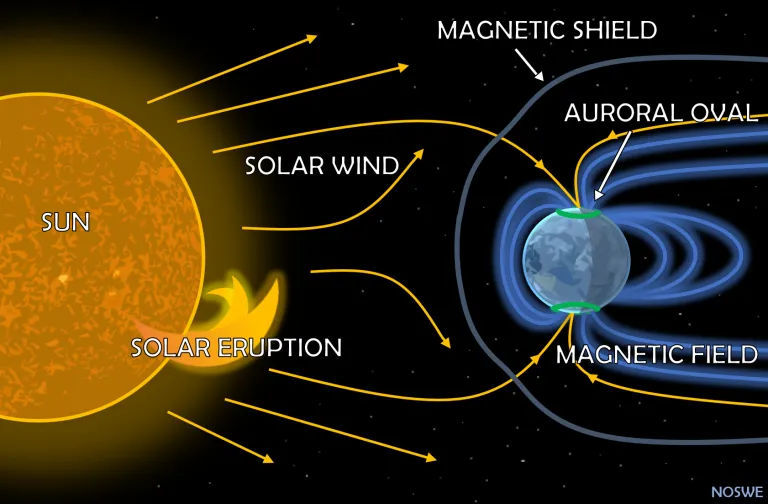
Earth's magnetic field, also known as the geomagnetic field, is an invisible magnetic force that originates from the planet's interior and extends thousands of kilometres into space.
It acts as a protective "blanket" that shields the Earth from harmful solar radiation and charged particles from the Sun.
How it is Generated?
The field is created by a process called the geodynamo, which occurs in the Earth's outer core—a layer of molten iron and nickel located about 2,900 km below the surface.
Structure and Protection
Dipole Shape
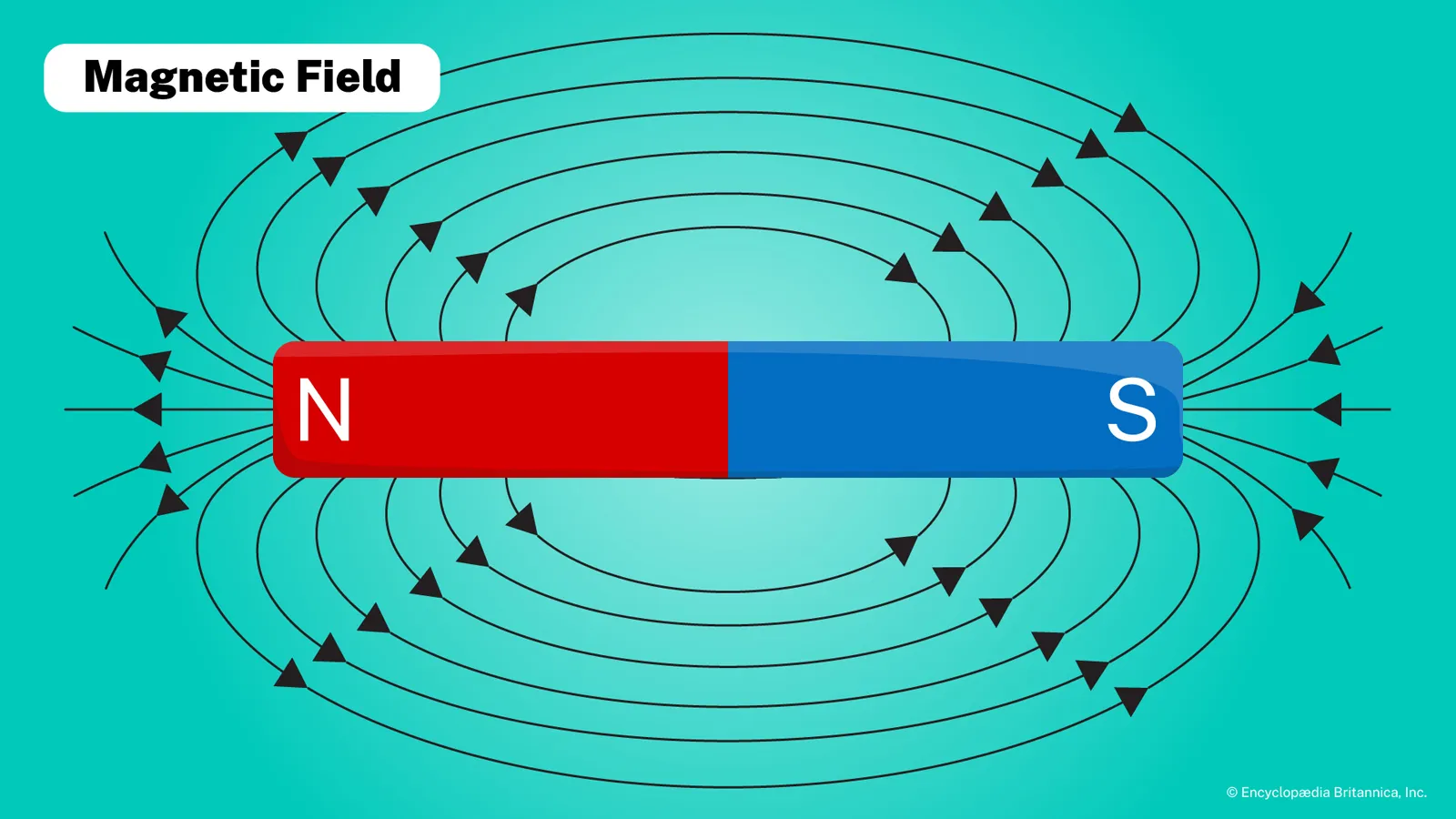
At the surface, the field resembles that of a giant bar magnet tilted at an angle of approximately 11 degrees relative to Earth's rotational axis.
The Magnetosphere
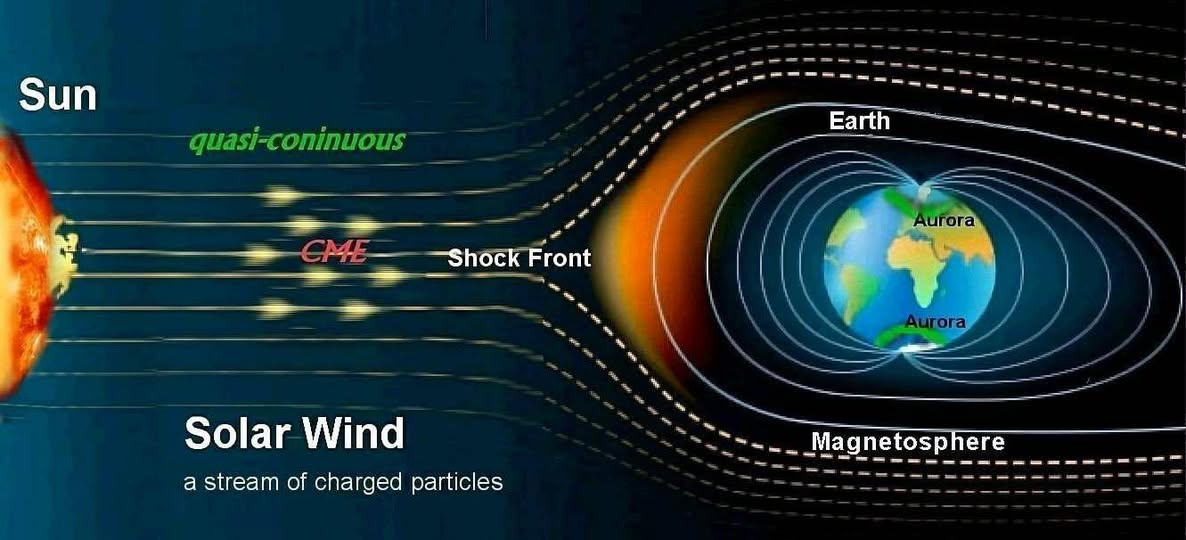
This is the region of space dominated by Earth's magnetic field. It is compressed on the side facing the Sun and stretched into a long "tail" on the opposite side by the pressure of the solar wind.
Auroras
When charged particles from the Sun are captured by the field and funnelled toward the poles, they collide with atmospheric gases to create the Northern and Southern Lights.
Dynamics Nature
Wandering Poles
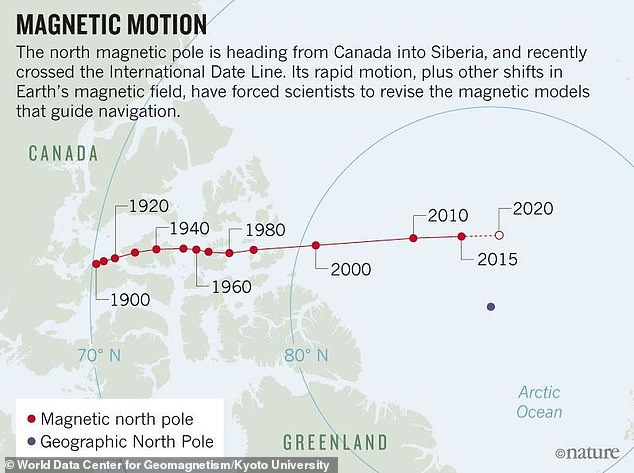
Unlike the fixed geographic poles, the magnetic poles are constantly moving. The North Magnetic Pole is currently drifting from Canada toward Siberia at about 40-55 km per year.
Field Reversals
At irregular intervals—averaging every 200,000 to 300,000 years—the magnetic north and south poles "flip" places. The last full reversal occurred approximately 780,000 years ago.
What are the potential Impacts of a Weakened Magnetic Field?
Technological and Economic Paralysis
Satellite Vulnerability: A weaker field allows solar radiation to heat and expand the upper atmosphere, increasing atmospheric drag on Low Earth Orbit (LEO) satellites.
Economic Devastation: Critical infrastructure, including power grids, GPS navigation, aviation, and global financial systems, is highly vulnerable.
Environmental and Ecological Disruption
Ozone Depletion
Increased solar radiation could severely damage the ozone layer, leading to higher surface UV levels, crop failures, and increased skin cancer rates.
Impact on Evolution
Elevated radiation increases genetic mutation rates. Past events of weakened magnetic fields, like the Laschamp excursion (42,000 years ago), have been linked to climate shifts and megafauna extinctions.
Navigational System Collapse
Disruption of Supply Chains
Failure of Global Navigation Satellite Systems (GNSS) like GPS would cripple global aviation and maritime trade.
Harm to Biodiversity
Many species, such as migratory birds, whales, and sea turtles, use magnetoreception for navigation. A chaotic magnetic field would cause mass disorientation and disrupt ecosystems.
Source: The Hindu
|
PRACTICE QUESTION Q. Consider the following consequences of a weakened Earth's magnetic field due to a geomagnetic reversal: 1. Increased atmospheric drag on Low Earth Orbit (LEO) satellites. 2. Enhancement of the stratospheric ozone layer. 3. Disorientation of migratory species like sea turtles and birds. How many of the above statements are correct? a) Only one b) Only two c) All three d) None Answer: B Explanation: Increased atmospheric drag on Low Earth Orbit (LEO) satellites: Correct. A weakened magnetic field allows for increased interaction between solar wind and Earth's atmosphere, which heats and expands the thermosphere, thereby increasing atmospheric density at LEO altitudes and causing higher drag on satellites. Enhancement of the stratospheric ozone layer: Incorrect. A weakened magnetic field reduces the shielding against solar winds and cosmic rays, leading to enhanced ionisation in the upper atmosphere. This process produces NOx compounds that destroy ozone, resulting in ozone layer depletion, not enhancement. Disorientation of migratory species like sea turtles and birds: Correct. Many migratory species rely on magnetoreception (sensing the Earth's magnetic field) to navigate. A weaker, unstable magnetic field disrupts these mechanisms. |
A geomagnetic reversal is a planetary phenomenon where the Earth's magnetic North and South poles swap places. During this transition, the Earth's magnetic field significantly weakens, leaving the planet more exposed to high levels of cosmic and solar radiation.
Recent research analyzing deep-sea sediment cores from the Eocene epoch reveals that a geomagnetic reversal can take up to 70,000 years to complete. This challenges the previous geological consensus, which assumed flips occurred relatively quickly, over about 10,000 years.
The Earth's magnetic field is generated by the "geodynamo effect." It is driven by the continuous convection of molten iron and nickel in the Earth's liquid outer core, coupled with the planet's rotation (Coriolis force), which creates powerful electrical currents.



© 2026 iasgyan. All right reserved