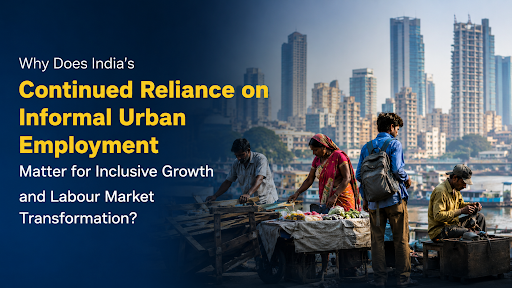
The Periodic Labour Force Survey (PLFS), conducted by the NSO, tracks India's employment trends. Recently revamped to provide monthly data, it measures LFPR, WPR, and Unemployment Rates using Current Weekly and Usual Status, highlighting key shifts towards formalization and female participation.

Why In News?
The National Statistics Office (NSO) released the May 2026 PLFS bulletin, reporting that India’s overall unemployment rate climbed to an 11-month high of 5.5%.
What is the PLFS?
The Periodic Labour Force Survey (PLFS) serves as India’s primary official mechanism for tracking workforce dynamics and employment structures.
The Government of India launched the PLFS in 2017 to replace outdated quinquennial employment surveys, effectively closing critical data gaps.
The National Statistical Office (NSO), under the Ministry of Statistics and Programme Implementation (MoSPI), executes the survey.
In January 2025, the NSO shifted the reference period from the agricultural year (July–June) to the calendar year (January–December) to align with global reporting standards.
Key Objectives
Measuring Employment: The survey tracks the percentage of the population engaged in economic activities and monitors the structural transition from traditional agriculture to manufacturing and tertiary sectors.
Measuring Unemployment: It identifies individuals actively seeking work, providing a barometer for immediate economic distress.
Labour Market Analysis: The PLFS evaluates the quality of employment, specifically tracking the shift toward regular wage/salaried employment.
Methodology of PLFS
Usual Status Approach: This captures long-term employment trends using a 365-day reference period, incorporating both Principal Activity Status (ps) and Subsidiary Economic Activity Status (ss).
Current Weekly Status (CWS): This captures short-term fluctuations using a 7-day reference period. It classifies individuals as employed if they work for at least one hour during the reference week.
Sample Size: The survey covers approximately 2.72 lakh households nationwide, ensuring robust and geographically representative data for policy formulation.
Key Highlights of May 2026 Data
Overall Unemployment Rate (UR): The national UR (15+ years) climbs to an 11-month high of 5.5%.
Urban Unemployment: Urban areas record a decline to 6.4%, marking the lowest level in one year.
Labour Force Participation Rate (LFPR): The national LFPR drops to an 11-month low of 54.4%, down from 55.0% in April 2026.
Worker Population Ratio (WPR): The national WPR falls to 51.4% from 52.2% in the previous month, indicating softer national labour market conditions.
Major Trends and Labour Market Analysis
Urban Economic Resilience: Urban employment conditions remain strong, with the urban WPR holding stable at 46.6% and the urban male UR steady at 5.9%.
Rural Seasonal Easing: The decline in national LFPR and WPR stems from the agricultural lean period, where rural workers temporarily exit the active labour force, driving the national unemployment spike.
Female Workforce Participation: Urban female UR declines to 8.2%, signaling improved formal job absorption for women in city centers.
Source: PIB
|
PRACTICE QUESTION Q. Evaluate the challenges in measuring informal employment and the gig economy in India. 150 words |
The Periodic Labour Force Survey is a national household survey that generates frequent, high-fidelity employment indicators—such as the worker-population ratio and unemployment rates—for both rural and urban areas across India.
The National Sample Survey Office (NSSO), functioning under the Union Ministry of Statistics and Programme Implementation (MoSPI), designs and executes this nationwide labor survey.
The Labour Force Participation Rate measures the percentage of the total population that is actively employed or currently seeking work during a specified reference period.
The survey measures unemployment using two distinct metrics: the Usual Status (US) approach, which tracks a person's activity over a 365-day window, and the Current Weekly Status (CWS) approach, which assesses their employment status over a shorter 7-day recall period.





© 2026 iasgyan. All right reserved