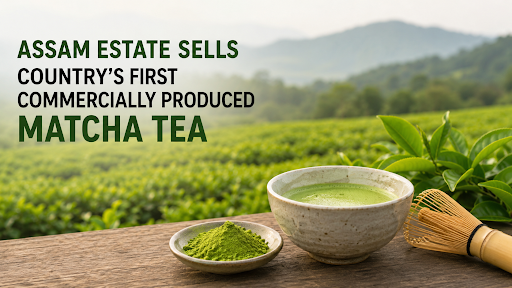
India pioneers commercial Matcha tea production in Assam, transitioning from bulk black tea to premium value-added markets. This strategic shift boosts agricultural incomes, creates lucrative export opportunities, and strengthens India’s global competitiveness through sustainable, shade-grown cultivation and advanced processing techniques.
Why In News?
Assam’s Chota Tingrai Tea Estate in the Tinsukia district manufactures and sells India’s first commercial Matcha tea batch.
What is Matcha Tea?
Matcha is a finely powdered green tea derived from Camellia sinensis leaves, traditionally associated with Japan and produced exclusively from shade-cultivated plants.
Unlike conventional green tea, Matcha involves consuming the entire powdered leaf, which provides higher concentrations of antioxidants, L-theanine, and essential nutrients.
Cultivators aim to promote value-added products to combat stagnating bulk tea prices, expand global wellness market exports, increase farmer incomes, and diversify the industry beyond CTC (Crush, Tear, Curl) dependencies.
Why is Matcha Tea Important for Indian Tea Sector?
Premium Market Expansion: Matcha shifts focus from low-margin bulk tea (averaging ₹191 per kg) to premium segments fetching ₹3,000 per kg.
Agricultural Diversification: Diversifying output insulates the agrarian economy from global price shocks that impact black tea.
Export Potential: India currently exports only 10.3% of its tea in value-added formats, trailing behind Sri Lanka’s 54.6%. Matcha targets a global market projected to reach USD 5.5 billion by 2027.
Rural Empowerment: Small Tea Growers (STGs), who produce over 52% of India’s tea, capture higher margins through these specialty products.
Global Competitiveness: Integrating Assam’s tea heritage with advanced Japanese processing elevates "Brand India" on the global stage.
What are the Key Features of Matcha Tea Production?
Shade-Grown Cultivation: Growers shroud plants to block 90% of sunlight for 3-4 weeks, suppressing photosynthesis to boost chlorophyll and amino acid levels.
Specialized Processing: Facilities steam young leaves to halt oxidation, followed by precise drying, de-stemming, and stone-grinding into a fine powder.
Nutrient Density: The whole-leaf consumption delivers a smooth umami flavor and high levels of catechins and natural caffeine.
Market Positioning: Brands market Matcha as a "wellness superfood" to attract health-conscious consumers and younger demographics.
Tertiary Processing: This process transforms raw green leaf into a retail-ready commodity with substantial gross profit margins.
Significance
Profit Margins: Matcha beverage gross profit margins reach 80-85% per unit in the retail food service sector.
Export Diversification: Specialty manufacturing penetrates markets in North America, Europe, and East Asia.
Employment Generation: Automated Japanese-style facilities create advanced agro-manufacturing jobs requiring specialized labor.
Agro-Processing Growth: The shift catalyzes secondary sectors, including eco-friendly packaging and organic certification bodies.
Source: THEHINDU
|
PRACTICE QUESTION Q. With reference to the cultivation and processing of Matcha tea, consider the following statements: 1. It is traditionally grown under direct, intense sunlight to maximize chlorophyll content. 2. The entire powdered tea leaf is consumed rather than just steeping it in water. Which of the statements given above is/are correct? A) 1 only B) 2 only C) Both 1 and 2 D) Neither 1 nor 2 Answer: B Explanation: Statement 1 is incorrect: Matcha tea is not grown under direct, intense sunlight. Instead, it is a traditional Japanese practice to shade the tea plants for about 20 to 30 days before harvest. Depriving the plants of sunlight forces them to overproduce chlorophyll in order to maximize light absorption. This shading is what gives matcha its vibrant green color and rich, smooth flavor. Statement 2 is correct: Unlike traditional loose-leaf teas where the leaves are steeped in water and then thrown away, matcha processing involves taking the entire leaf (stem and veins removed) and grinding it into an ultra-fine powder. When you prepare matcha, you whisk this powder directly into hot water or milk, meaning you ingest the entire tea leaf. |



© 2026 iasgyan. All right reserved