The Kirthai-II Hydroelectric Project is a 930 MW run-of-river hydropower project on the Chenab River in Jammu & Kashmir. It strengthens renewable energy generation, enhances India's utilization of Indus basin waters, and supports regional development, energy security, and strategic infrastructure growth.
Why In News?
The Union Government fast-tracks the long-stalled 930 MW Kirthai-II Hydroelectric Project on the Chenab River in Kishtwar district, Jammu & Kashmir.
What is Kirthai-II Hydroelectric Project?
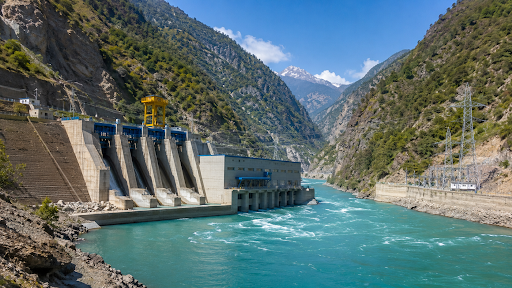
The Kirthai-II HEP is a 930 MW run-of-river hydroelectric project planned on the Chenab River in Kishtwar district, Jammu & Kashmir.
The project was first conceived in 1984 and remained stalled for decades due to Pakistan's objections under the Indus Water Treaty (IWT) at the Permanent Indus Commission.
It is being developed by Chenab Valley Power Projects [P] Ltd. (CVPPPL), a joint venture between National Hydroelectric Power Corporation (NHPC) (51%), Jammu & Kashmir State Power Development Corporation (JKSPDC) (39%), and PTC India (10%).
The Ministry of Power approved updated terms of reference in May 2026, allowing detailed investigations and land acquisition to proceed.
|
Chenab River
|
Strategic Importance of Kirthai-II Hydroelectric Project
Water Security Assertion: The project's revival signals India's strategic intent to maximize permissible water utilization on Western Rivers after suspending IWT participation post-Pahalgam attack (April 2025).
Energy Surplus for J&K: Contributes to the 7,000 MW hydro capacity target for J&K over the next 8-10 years; transforms J&K into an energy-surplus Union Territory.
Reduced Pakistani Leverage: Eliminates Pakistan's veto power over Indian hydro projects on the Chenab that had stalled Kirthai-II since the 1990s.
Regional Development: Creates employment for 2,100 workers during peak construction; supports infrastructure development in remote Kishtwar district.
Run-of-River Compliance: Respects IWT Annexure D criteria — limited pondage, no large storage, and mandatory water releases downstream — making it legally defensible even if treaty negotiations resume.
Source: newindianexpress
|
PRACTICE QUESTION Q. Under the Indus Water Treaty 1960, India has unrestricted rights over which of the following rivers? (a) Indus, Jhelum, and Chenab (b) Ravi, Beas, and Sutlej (c) Jhelum, Sutlej, and Chenab (d) Chenab, Beas, and Ravi Answer: (b) Ravi, Beas, and Sutlej Explanation: The Indus Water Treaty allocates Eastern Rivers (Ravi, Beas, Sutlej) to India for unrestricted use, while Western Rivers (Indus, Jhelum, Chenab) are allocated to Pakistan with limited Indian usage rights for domestic, non-consumptive, agricultural, and hydro-electric purposes. |
The 930 MW Kirthai-II project is located on the Chenab River within the Kishtwar district of Jammu and Kashmir.
The Chenab River is vital for energy generation due to its steep alpine drops, massive seasonal discharge, and rapid glacial-melt flows that offer immense, untapped run-of-the-river potential.
The project was recently accelerated following India's 2025 decision to place the Indus Waters Treaty in abeyance, which effectively bypassed historic regulatory delays and design objections continuously raised by Pakistan.
The primary operational and upcoming power strongholds along the river basin include the Salal, Baglihar, Dulhasti, Pakal Dul, Kiru, and Ratle hydroelectric installations.




© 2026 iasgyan. All right reserved