The UNICEF Children's Climate Risk Report 2026 reveals that 1.1 billion children globally face overlapping climate hazards. In India, 392 million children are exposed to extreme heat. The report urges governments to phase out fossil fuels and build child-centric, climate-resilient social infrastructure.
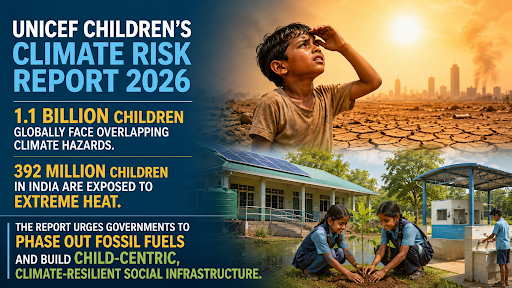
The UNICEF Children's Climate Risk Report 2026 warns that 1.1 billion children globally face at least three overlapping climate hazards.
Global Assessment: UNICEF publishes this comprehensive assessment using the UNICEF Global Child Hazard Database.
High-Resolution Mapping: The report utilizes pixel-level, 100-metre resolution mapping to analyze hazards across areas as small as 100 square kilometres.
Comprehensive Metrics: It evaluates vulnerabilities across seven dimensions: WASH, nutrition, protection, health, education, poverty, and child survival.
Hazard Tracking: The report maps exposure to eight primary threats—coastal floods, droughts, extreme heat, fires, heatwaves, riverine floods, sand and dust storms, and tropical storms—alongside climate-sensitive risks like air pollution and vector-borne diseases.
Key Findings of the 2026 Report
Heatwave Prevalence: Globally, 296 million children live in areas facing the overlapping trio of drought, extreme heat, and heatwaves. In the Sahel region, over 4 million children face a triple threat of heatwaves, extreme heat, and sand/dust storms.
Flood Risks: Coastal and riverine floods destroy safe learning facilities and disrupt critical health infrastructure.
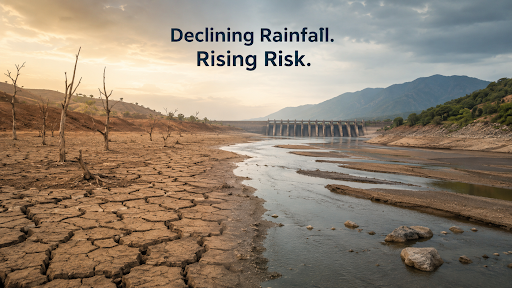
Water Scarcity: High-income nations are not immune; for instance, 6 million children in Italy face prolonged heatwaves and drought. Fragile states like the Central African Republic and Chad suffer from extreme water scarcity.
Air Pollution: This acts as a threat multiplier, worsening respiratory health for nearly every child globally.
Extreme Weather: Children in 24 Small Island Developing States (SIDS) face tropical storms that disrupt national service grids. Globally, over 4 million children endure up to six overlapping climate threats simultaneously.
Biological Susceptibility: Developing bodies and immune systems lack the capacity to handle extreme physical and psychological stresses.
Health Risks: Shifting climate patterns expand the reach of diseases; 1 billion children currently face exposure to malaria.
Nutritional Challenges: Climate-induced droughts destroy crop yields, exacerbating the double burden of malnutrition.
Educational Disruptions: Extreme weather destroys school infrastructure, forcing marginalized children out of formal learning systems.
Climate Hazards Affecting Children
Extreme Heat: Acts as a "silent killer," triggering dehydration and heatstroke in infants.
Drought: Compromises access to clean water, increasing WASH-related diseases.
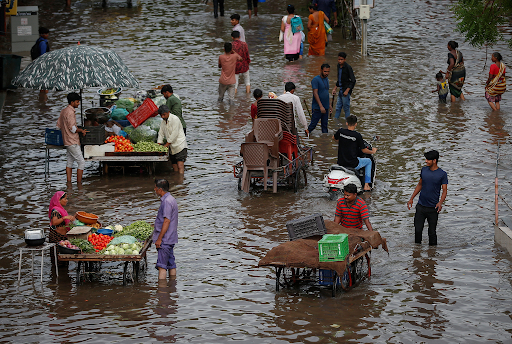
Floods: Cause displacement and create breeding grounds for lethal pathogens.
Vector-Borne Diseases: Rising temperatures expand mosquito habitats, exposing new populations to malaria.
Food Insecurity: Drought and heat affect 115 million children, decimating agricultural livelihoods and causing acute hunger.
Heatwave Exposure: 392 million Indian children (92% of the child population) face extreme heat, with 89 million experiencing recurrent, severe heatwaves. India holds a maximum risk score of 10/10 for extreme heat.
Hazard Ranking: India records a high hazard exposure score of 9.21/10, trailing behind Pakistan (9.44) and Bangladesh (9.38).
Vulnerability Factors: India registers a drought risk score of 8.84/10 and an air pollution exposure score of 9.94/10.
Regional Crisis: The Sundarbans region faces cascading vulnerabilities, including increased child labor, unsafe migration, and child marriage.
Policy Gaps: India lacks child-centric measures in state-level Heat Action Plans, specifically regarding schools, Anganwadis, and night-time heat management.
Child-Centred Adaptation: Governments must integrate child-critical social services into national adaptation and loss and damage strategies.
Resilient Education: Invest in green learning facilities capable of withstanding extreme weather.
Climate-Resilient Healthcare: Prioritize infrastructure that remains operational during disasters to ensure uninterrupted immunization and emergency care.
Social Protection: Develop shock-responsive systems to disburse aid quickly, preventing families from resorting to negative coping mechanisms.
Vulnerability Mapping: Governments must use high-resolution data to tailor policy responses to the intersection of poverty and climate exposure.
Infrastructure Upgrades: Enhance the structural integrity of WASH services to prevent disease outbreaks.
Disaster Preparedness: Establish multi-hazard early warning systems accessible to social services.
Youth Empowerment: Invest in climate education and respect the right of youth to participate in decision-making.
Addressing Violence: Humanitarian action must secure communities to prevent post-disaster spikes in sexual violence and child exploitation.
By officially mapping the severe, overlapping climate threats facing 1.1 billion children, UNICEF's 2026 report demands that global governments immediately phase out fossil fuels and integrate child-centric resilience into all macroeconomic and disaster adaptation planning.
Source: THEGUARDIAN
|
PRACTICE QUESTION Q. "The climate crisis does not manifest as a single event, but as a complex combination of overlapping hazards." Discuss. 150 words |
The report introduces a global, data-driven analytical index that ranks nations based on children's exposure to climate shocks combined with their systemic vulnerabilities to basic service deficits.
Children face extreme vulnerability because their developing bodies possess lower physiological tolerance to toxic pollution, severe dehydration, vector-borne infections, and climate-induced nutritional deprivations.
The assessment highlights that prolonged marine heatwaves, catastrophic coastal floods, severe water scarcity, and toxic wildfire smoke plumes present the most dangerous threats to youth survival.
The document explicitly demands that global governments scale up climate adaptation financing for schools and healthcare networks, aggressively cut emissions, and include youth representatives in environmental policy formulation.

© 2026 iasgyan. All right reserved