India faces a severe electrical fire crisis driven by outdated wiring, high appliance loads, and regulatory gaps. Mitigating these risks requires stringent enforcement of safety codes, advanced forensic investigations, upgraded infrastructure, and the mandatory use of modern circuit protection devices.
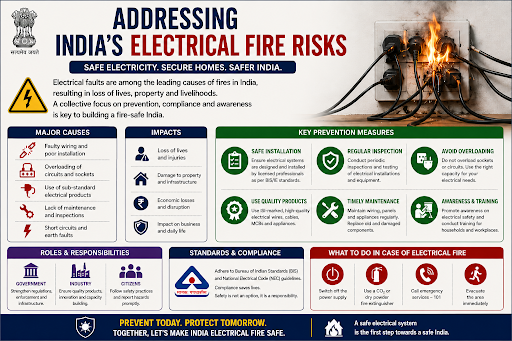
Extreme summer heat and surging air-conditioner usage are overloading outdated electrical infrastructure, turning minor technical faults into fatal urban fire hazards.
Electrical fires represent energy release events caused by uncontrolled electrical faults, reflecting weaknesses in design, protection, and asset maintenance.
They occur when malfunctioning wiring, overloaded circuits, and substandard components ignite, transitioning from a preventable technical failure to a disaster.
Outdated Wiring vs Modern Loads
Legacy buildings designed for low loads currently power heavy, high-load appliances like 1.5-tonne inverter ACs and EV chargers, triggering circuit overloads.
Harmonic Distortion
Inverter-driven appliances inject harmonics into the electrical system, overheating the neutral wire, which lacks the sizing to handle such loads.
Counterfeit Components
Substandard wires, breakers, and switches bypass ISI safety standards, melting under the high start-up currents of heavy appliances..
Loose Connections and Poor Maintenance
Neglected maintenance and oxidized connections create hot spots that burn insulation for months before sparking into flames.
Absence of Mandatory AFCIs
Indian residential codes lack prescriptive mandates for Arc-Fault Circuit Interrupters (AFCIs), allowing hazardous micro-arcing (the cause of 4 out of 5 electrical fires) to go undetected.
Urban Densification
Rapid urban load growth, aging distribution infrastructure, and increased load density in commercial complexes place stress on local power grids.
The AC Surge
India expects the installed base of Air Conditioners to jump from 93 million in 2024 to 240 million by 2030, placing massive non-linear loads on unprepared circuits. (Source: International Energy Agency)
Severe Infrastructure Shortage
India faces a 96% shortage in fire infrastructure and an acute deficit of forensic fire engineers to audit these hazards. (Source: Fire and Security Association of India)
Chimney Effect in Vertical Shafts
High-rise residential buildings feature enclosed electrical shafts that act as vertical chimneys, facilitating the extremely rapid spread of heat, smoke, and toxic gases across multiple floors.
Underground Cabling Risks
Congested urban corridors use underground cables, which experience moisture ingress, improper jointing, and thermal runaway.
High Fatality Rates
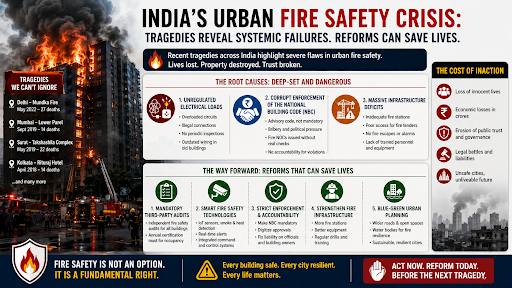
Electrical faults serve as the single largest category of urban fires, causing over 80% of fires in Delhi and 75% in Mumbai. (Source: NCRB)
Toxic Gas Emissions
Burning cable insulation heavily depletes oxygen and releases deadly concentrations of Carbon Monoxide (CO) and Carbon Dioxide (CO2), restricting visibility and causing rapid asphyxiation.
Evacuation Bottlenecks
Dense smoke and high temperatures compromise escape routes, causing a situation where the Required Safe Egress Time (RSET) exceeds the Available Safe Egress Time (ASET).
Environmental and Economic Damage
Substation and transformer fires destroy infrastructure, cause massive financial losses, and result in environmental pollution like transformer oil spills.
Mandatory Load Audits
Enforce periodic electrical load audits via certified independent engineers, especially when building owners add heavy consumer technology like EV chargers or rooftop solar.
Deploy Smart Protection Devices
Update building laws to require Arc-Fault Circuit Interrupters (AFCIs) and smart circuit breakers that send automated alerts when detecting overloads.
Enhanced Suppression and Ventilation
High-rises require active mechanical ventilation, pressurized staircases, and automatic sprinkler systems to dilute toxic smoke and cool temperatures.
Advanced Smart Technology
Adopt IoT-based temperature sensors, AI anomaly detection, and Arc-Fault Detection Devices to proactively identify risks before ignition.
Institutionalise Fire Forensics
Establish a dedicated National Forensic Fire Investigation Agency to transition the system from post-disaster affidavits to rigorous scientific root-cause investigations.
India must transition to an electrical safety paradigm from treating short circuits as unavoidable accidents to managing them as preventable technical failures.
Source: THEHINDU
|
PRACTICE QUESTION Q. Discuss the systemic failures contributing to the rising electrical fire incidents in India's urban areas. 150 words |
According to the National Crime Records Bureau (NCRB), electrical faults account for over 80% of fires in Delhi and nearly 75% in Mumbai, making them the single largest category of urban fires.
Enclosed vertical electrical shafts act like chimneys, facilitating the rapid spread of smoke, toxic gases (like carbon monoxide), and heat across multiple floors, causing low visibility and severely hindering evacuation processes (Source: Civil Engineering and Architecture Journal).
AFCIs are advanced circuit protection devices designed to detect hazardous micro-arcing and sparking, which standard breakers cannot detect. They are essentially absent in Indian residential codes.



© 2026 iasgyan. All right reserved