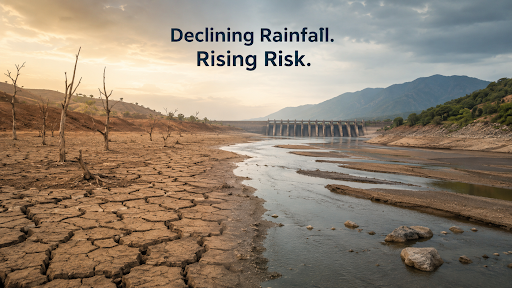
The India Meteorological Department (IMD) recently updated its seasonal forecast, indicating that the cumulative rainfall for the upcoming monsoon season is likely to be below normal. Despite this projection, weather experts and agricultural scientists suggest that there is no immediate cause for alarm regarding food security or economic stability.
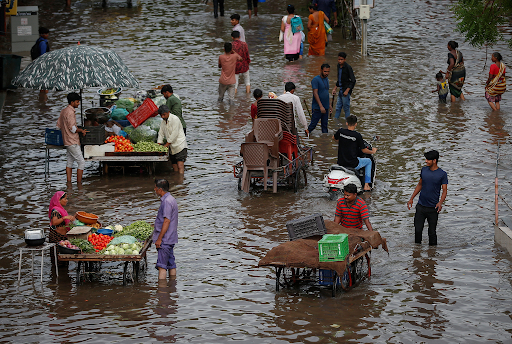
The India Meteorological Department (IMD) has released its Long-Range Forecast (LRF) for the 2026 Southwest Monsoon, predicting a below-normal rainfall season.
The India Meteorological Department (IMD) has released its Long-Range Forecast (LRF) for the 2026 Southwest Monsoon, predicting a below-normal rainfall season. This announcement has sparked concerns regarding agricultural output and water security; however, meteorological experts and the government suggest that there is currently no cause for immediate alarm.
While a below-normal monsoon forecast warrants caution and proactive planning, it does not necessarily translate to a drought or an economic crisis. India’s improved agricultural resilience and healthy reservoir levels provide a safety net. The focus must now shift from the total rainfall figure to the efficient management of available water resources and providing timely support to the farming community.
Source: Indian Express
|
PRACTICE QUESTION Q. Which of the following pressure belts is primarily responsible for the Monsoon Trough over Northern India? a) Subtropical High-Pressure Belt b) Equatorial Low Pressure Belt (ITCZ) c) Polar High-Pressure Belt d) Sub-polar Low Pressure Belt Answer: B Explanation: The Monsoon Trough is essentially the regional manifestation of the Equatorial Low Pressure Belt, also known as the Inter-Tropical Convergence Zone (ITCZ), as it shifts northward during the summer months in the Northern Hemisphere. During this period, intense solar heating over the Indian subcontinent and the Tibetan Plateau causes the ITCZ to move from its position near the equator to the Indo-Gangetic plains, creating a low-pressure zone that draws in moisture-laden winds from the southern Indian Ocean. This shift is critical for the onset of the South-West Monsoon, as the pressure gradient between the high-pressure area over the Mascarene Islands and the low-pressure trough over Northern India drives the atmospheric circulation responsible for seasonal rainfall. |





© 2026 iasgyan. All right reserved