Winter heatwaves, driven by jet-stream weakening, atmospheric blocking, and global warming, are emerging risks for India. They threaten rabi crops, ecosystems, and winter tourism. Despite steps under the National Action Plan on Climate Change, India needs stronger mitigation, better early warnings, and adaptive water and farm management to respond effectively.
Copyright infringement not intended
Picture Courtesy: DOWNTOEARTH
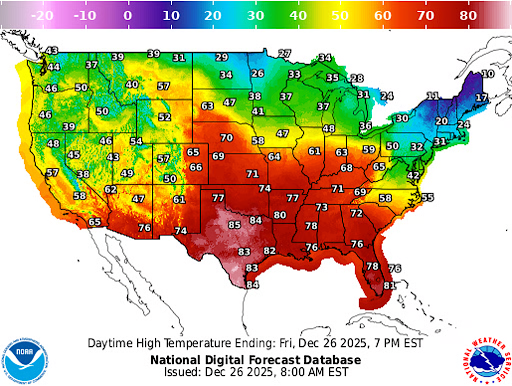
The United States and parts of Europe are experiencing anomalously high winter temperatures, prompting climate scientists to describe the conditions as winter heatwaves.
A winter heatwave is an anomalous, prolonged period of unusually high temperatures during the winter months, exceeding historical averages and disrupting normal weather patterns.
Key Drivers Behind Winter Heatwaves
Winter heatwaves are not caused by a single factor but result from a combination of atmospheric dynamics and long-term climate change.
Atmospheric Blocking & Heat Domes
The most immediate cause of sustained high temperatures is the formation of strong high-pressure systems in the upper atmosphere, called a 'heat dome', which traps air, causing it to sink, warm, dry out, and prevent cooler air from moving in.
Weakening of Jet Streams
Changes in the Arctic, driven by global warming, can weaken the polar jet stream. A weaker jet stream is more prone to meandering, allowing these high-pressure blocking patterns to remain stationary over a region for extended periods.
Anthropogenic Global Warming
The continuous emission of greenhouse gases raises the Earth's baseline temperature, making it easier to break temperature records and increasing both the frequency and intensity of extreme heat events, including those in winter.
Reduced Snow Cover
Lower-than-normal snow cover in winter reduces the reflection of solar radiation (albedo effect), allowing the ground to absorb more heat and further amplify warming.
Ecosystem Disruption and Wildlife
Unexpected warmth can prematurely break the dormancy of plants, leading to early budding that makes them vulnerable to subsequent frosts.
In mountains, species like ptarmigan and mountain hares, which change color to camouflage in snow, become highly visible and vulnerable to predators when snow melts too early.
Glacial and Sea Ice Melt
Winter heatwaves in polar regions like Antarctica and the Alps accelerate ice mass loss and glacier melting. This leads to a feedback loop where less white ice is available to reflect sunlight (albedo effect), causing the Earth to absorb more heat.
Societal and Economic Consequences:
Health and Disease
Winter heatwaves can increase the survival rates of overwintering pathogens and insect vectors, such as Aedes albopictus mosquitoes, leading to earlier or more widespread disease outbreaks in the following spring and summer.
Hydrological Changes
Rapid snowmelt caused by sudden heat can trigger flooding and alter the timing of water availability for reservoirs and hydroelectric power.
Source: DOWNTOEARTH
|
PRACTICE QUESTION Q. With reference to the drivers of winter heatwaves, which of the following statements is correct? (a) El Niño universally leads to colder and wetter winters across India. (b) The weakening of the polar jet stream is caused by the cooling of the Arctic region. (c) A meandering and slow-moving jet stream can allow high-pressure blocking patterns to persist for longer durations. (d) The primary cause of winter heatwaves is natural climate variability, with a negligible contribution from anthropogenic global warming. Answer: C Explanation: Global warming weakens the polar jet stream, causing it to meander. This slower movement allows weather patterns, including the high-pressure systems (atmospheric blocks) that cause heatwaves, to remain in place for extended periods. |
A winter heatwave is a period during the winter season when temperatures are abnormally high compared to the long-term average for a specific region. It disrupts the essential cold conditions required for various ecological and agricultural cycles.
The main causes are a combination of factors:
Winter heatwaves are particularly damaging to wheat, a major Rabi crop. High temperatures during the crucial grain-filling stage can cause the crop to mature too quickly, resulting in shriveled grains, reduced quality, and significant losses in yield, thereby threatening food security.


© 2026 iasgyan. All right reserved