India’s aging dams pose serious safety risks, with most over 25 years old. The Dam Safety Act, 2021 creates a national framework, but climate stress, weak operations, and interstate disputes limit impact. Effective enforcement, modernization under DRIP, risk-based planning, and advanced technology are vital for water and citizen security.

Copyright infringement not intended
Picture Courtesy: PIB
Context
The National Dam Safety Authority (NDSA) is reviewing the Dam Safety Act, 2021, implementation and has warned several states about non-compliance with safety protocols for large dams.
|
Read all about: SAFETY OF DAMS l DAM SAFETY ACT 2021 |
Dam Safety in India
India is the third-largest dam-owning country in the world, after China and the USA.
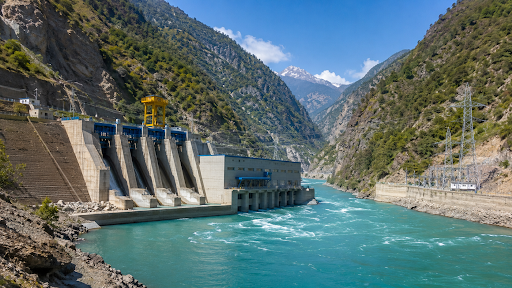
Dams are critical infrastructure for ensuring water security, providing irrigation for agriculture, and generating hydroelectric power.
Current Status of Dams in India
Total Large Dams: India has 6,545 completed large dams, with another 83 under construction. (Source: National Register of Large Dams)
Ageing Infrastructure:
Dam Safety Act, 2021
Prior to 2021, dam safety was managed by individual states, leading to inconsistent standards and weak enforcement.
The Act was introduced to establish a uniform, nationwide legal framework for the surveillance, inspection, operation, and maintenance of all specified dams in India.
It applies to dams over 15 meters in height, or between 10-15 meters with specific design conditions.
Key Institutional Mechanisms
Key Mandates for Dam Owners
Under the Act, dam owners (primarily state governments and central agencies) are legally obligated to:
Penalties for Non-Compliance
The Act includes strict penalties for obstructing its implementation or failing to comply with safety directions:
Major Challenges in Ensuring Dam Safety
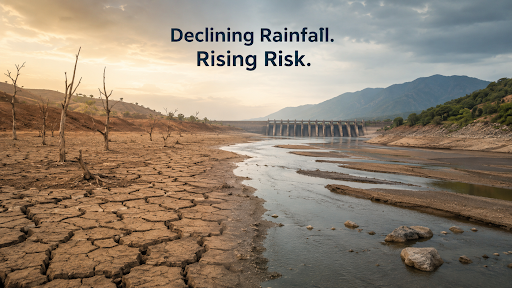
Climate Change Impact: Increased frequency of extreme weather events, such as Glacial Lake Outburst Floods (GLOFs), places stress on dams not designed for such conditions.
Structural and Operational Issues: Many dams suffer from siltation (reducing storage capacity), structural weaknesses, inadequate maintenance, and a lack of modern instrumentation for real-time monitoring.
Interstate Disputes: Conflicts over water rights and dam maintenance often delay critical safety work.
Lack of Data and Emergency Plans: Many dams lack comprehensive Emergency Action Plans (EAPs) and inundation maps, which are crucial for mitigating the impact of a potential failure.
Global Best Practices & Lessons for India
India can learn from established international dam safety programs to strengthen its own framework.
|
Country |
Key Feature |
Lesson for India |
|
United States |
The National Dam Safety Program (NDSP), led by FEMA, promotes a strong federal-state partnership, focusing on risk management, EAPs, and public awareness. |
Adopt a collaborative federal-state model with a strong emphasis on risk-based decision-making and preparedness. |
|
China |
Implemented comprehensive legislation and large-scale "Reservoir Reinforcement Projects" to upgrade and rehabilitate thousands of at-risk dams using modern techniques. |
Prioritize large-scale, systematic rehabilitation of high-risk dams with dedicated funding and advanced engineering solutions. |
Way Forward
Strict Enforcement of the Act: Ensure all states establish functional SDSOs and comply with the directives of the National Dam Safety Authority (NDSA) without delay.
Modernization and Rehabilitation: The Dam Rehabilitation and Improvement Project (DRIP) is a critical initiative.
Adopting a Risk-Based Approach: Prioritize funds and attention on dams that pose the greatest risk to downstream populations and infrastructure, rather than using a one-size-fits-all approach.
Investing in Technology: Utilize modern tools like remote sensing, AI-based monitoring, and early warning systems to predict and manage potential threats proactively.
Capacity Building: Conduct regular training for dam operators and involve downstream communities in disaster preparedness drills and the formulation of Emergency Action Plans.
Conclusion
The Dam Safety Act, 2021 provides a strong framework for ageing water infrastructure. Its success requires diligent state implementation, sustained central funding, and modern technology integration.
Source: PIB
|
PRACTICE QUESTION Q. Evaluate the significance of the Dam Safety Act, 2021, in addressing the structural and non-structural vulnerabilities of India’s aging dams. (150 words) |
The main purpose of the Dam Safety Act, 2021 is to provide a comprehensive and uniform national framework for the surveillance, inspection, operation, and maintenance of specified dams in India to prevent dam failure-related disasters.
The Act has established a two-tiered institutional framework: at the national level, the National Committee on Dam Safety (NCDS) for policy-making and the National Dam Safety Authority (NDSA) as a regulator. At the state level, it mandates the formation of State Committees on Dam Safety (SCDS) and State Dam Safety Organisations (SDSO).
The Dam Rehabilitation and Improvement Project (DRIP) is a government initiative, supported by the World Bank and AIIB, aimed at improving the safety and performance of selected dams through structural rehabilitation and modernization of monitoring equipment. The program is currently in its Phase II and Phase III.


© 2026 iasgyan. All right reserved