The Himalayas face a snowless winter due to weakened Western Disturbances and El Niño. This disrupts the cryosphere, threatens Indo-Gangetic water security and apple farming, highlights Arctic amplification, accelerates glacier retreat, raises forest fire risks, and endangers ecological and economic stability.
Copyright infringement not intended
Picture Courtesy: INDIANEXPRESS
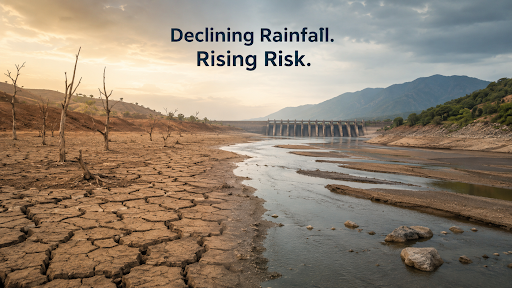
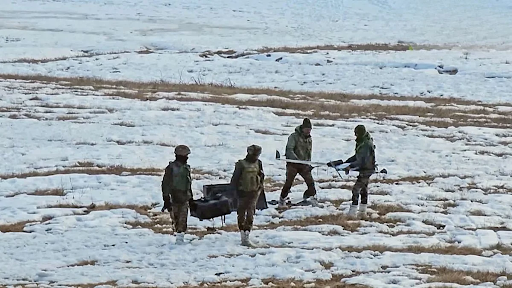
Uttarakhand received no December-January rainfall; Himachal Pradesh recorded its sixth-lowest December rainfall since 1901; and Jammu & Kashmir received minimal rain and snow in January, per India Meteorological Department (IMD).
Weakening Western Disturbances (WDs): Frequency and intensity of these extra-tropical storms, which bring winter moisture from the Mediterranean region, have declined.

Rising Temperatures: Faster warming in the Himalayas is causing more rain instead of snow at higher elevations, thus raising the snowline.
Lower Albedo Effect: Reduced snow cover leads to darker ground, which absorbs more heat and accelerates warming and melting in a positive feedback loop.
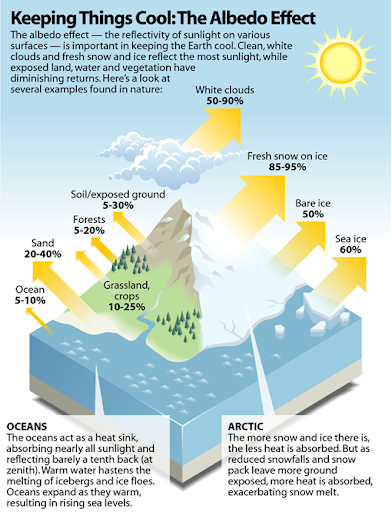
Black Carbon Deposition: Soot (black carbon) from agricultural burning in the Indo-Gangetic plains and industrial pollution settles on glaciers, darkening their surface and speeding up melting.
Water Security
Threatens the perennial flow of major rivers like the Ganga, Indus, and Brahmaputra, which provide water for over a billion people.
Leads to reduced groundwater recharge and drying of springs, causing acute water shortages in mountain communities.
Agriculture & Economy
Devastates horticulture, especially apple and saffron cultivation, which require a specific number of "chilling hours" provided by snow cover.
Cripples the winter tourism and sports industry in states like Jammu & Kashmir, Himachal Pradesh, and Uttarakhand.
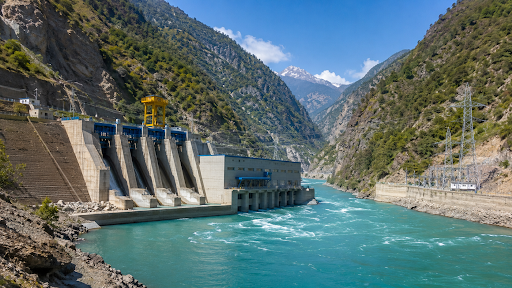
Reduces hydropower generation due to inconsistent river flows.
Ecological Stability
Accelerates glacier retreat. The Hindu Kush Himalaya (HKH) region could lose up to 80% of its glacier volume by 2100 under a high-emissions scenario (Source: ICIMOD).
Increases the risk of disasters like Glacial Lake Outburst Floods (GLOFs), forest fires, and landslides due to permafrost thaw.
Disrupts high-altitude biodiversity, affecting species like the Snow Leopard.
Geopolitical & Security
Acts as a "threat multiplier" by increasing the potential for transboundary water disputes with China and Pakistan.
Affects military operations and border management in strategically sensitive high-altitude areas.
Policy & Governance
Strengthen the National Mission for Sustaining the Himalayan Ecosystem (NMSHE) under the National Action Plan on Climate Change (NAPCC).
Promote regional cooperation through platforms like International Centre for Integrated Mountain Development (ICIMOD) for data sharing and joint mitigation strategies.
Integrate climate resilience into all infrastructure development, adopting a "Himalayas-sensitive" approach.
Technological & Scientific Intervention
Enhance monitoring and establish robust Early Warning Systems for GLOFs and landslides.
Promote climate-resilient agriculture (e.g., drought-resistant crop varieties) and water conservation techniques like rainwater harvesting and 'ice stupas'.
Invest in high-resolution climate modeling to improve regional forecasts.
Community-Led Adaptation
Integrate Traditional Ecological Knowledge (TEK) with modern scientific methods for sustainable resource management.
Empower local communities through capacity building and incentivize their participation in conservation efforts and sustainable tourism.
The snowless winters in the Himalayas are a serious warning that demands immediate, coordinated action to protect the "Third Pole," which is fundamental to water, food, and energy security, and regional stability.
Source: INDIANEXPRESS
|
PRACTICE QUESTION Q. "A snowless winter in the Himalayas is not just a weather anomaly but a systemic threat to India's water and food security." Evaluate. (150 words) |
The primary causes are a combination of weak and infrequent Western Disturbances (the main source of winter precipitation), prevailing El Niño conditions which further weaken these disturbances, and accelerated regional warming in the Himalayas which pushes the freezing line to higher altitudes.
El Niño, which is the warming of surface waters in the eastern tropical Pacific Ocean, has been linked to warmer and drier winters in northwest India. It tends to weaken the intensity of Western Disturbances, reducing the probability of significant snowfall in the Himalayan region.
NMSHE is one of the eight missions under India's National Action Plan on Climate Change (NAPCC). It aims to build national capacity to assess the health of the Himalayan ecosystem by enhancing glacier monitoring, studying biodiversity, and promoting community-based management to build resilience.

© 2026 iasgyan. All right reserved