Hydropower expansion has shrunk the Balkans’ last wild rivers by 2,450 km, endangering biodiversity and livelihoods. While successes like Albania’s Vjosa park offer hope, the crisis highlights environment–development tensions and offers lessons for India’s Himalayan hydropower and river conservation policies.
Copyright infringement not intended
Picture Courtesy: DOWNTOEARTH
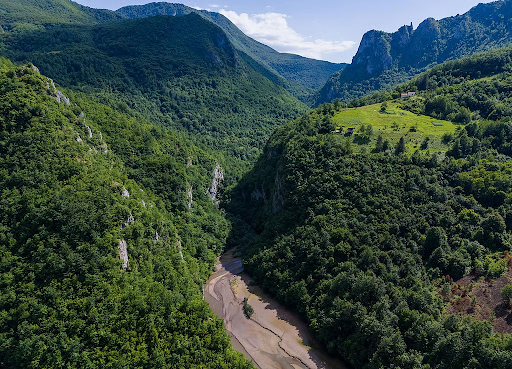
The "The Hydromorphological Status of Balkan Rivers 2025" study reveals the rapid degradation of the 'Blue Heart of Europe' (Balkan rivers) due to a rise in hydropower projects and river regulation.
The report provides a data-driven analysis of the decline in the health of the Balkan river network, covering 83,824 km of rivers across 11 countries.
Loss of Pristine Rivers: "Nearly natural" or pristine river stretches decreased from 30% in 2012 to 23% in 2025, a loss of 2,450 km of wild rivers.
Increase in Modified Rivers: Severely modified river sections have increased significantly, with impoundments on major rivers growing by 18% since 2012.
Albania as a Degradation Hotspot: Albania is identified as a degradation hotspot; its pristine river stretches dropped from 68% to 40% over the 13-year period.
Major Rivers Affected: The most severe ecological alterations are concentrated in the Drina, Neretva, Vardar/Axios, Devoll, and Drin river basins.
The Hydropower 'Tsunami': There is a massive surge in hydropower construction, with over 3,000 projects planned or underway across the Balkan region.
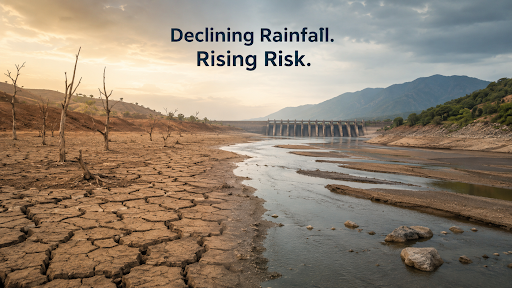
Small Hydropower Plants (SHPPs): These projects divert water into pipes, leaving long stretches of riverbeds dry. While marketed as "green," they destroy aquatic habitats and disrupt downstream water supplies for minimal energy gain.
River and Floodplain Modification: Uncontrolled river regulation for flood management and large-scale water abstraction for irrigation alter natural river functions.
Sediment Extraction: Extensive gravel mining disrupts the hydromorphology and ecological balance of river systems.
Environmental Impacts
Socio-Economic Impacts
The challenges in the Balkans offer crucial lessons for India as it navigates the complex balance between development and river conservation.
Prioritizing Seismic Risk in Hydropower
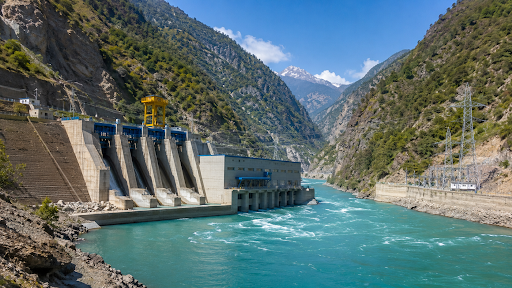
Himalayan hydropower expansion risks disasters like the 2021 Chamoli incident, similar to the Balkans. Future projects need rigorous geological assessments, as per the Himdhara Environmental Collective Report.
Adopting Basin-Wide Governance
To effectively balance competing needs (irrigation, industry, conservation) under the Namami Gange Programme, India must adopt integrated river basin management, like the EU's Water Framework Directive, replacing current fragmented state-level control.
Scaling Community-Led Conservation
Grassroots initiatives, like those forming the Vjosa National Park, prove effective. Similarly, local efforts in India's Ganges basin led to a documented rise in the Gangetic Dolphin population by 2024, as confirmed by the Wildlife Institute of India.
Legal Protections for Wild Rivers
Establishing legal safeguards for "wild" or free-flowing rivers, rather than viewing them solely as energy sources, can preserve biodiversity and provide natural flood protection.
Source: DOWNTOEARTH
|
PRACTICE QUESTION Q. The term 'Blue Heart of Europe' is often used to refer to the intact and biodiverse river systems of which region? (a) The Scandinavian Peninsula (b) The Iberian Peninsula (c) The Balkan Peninsula (d) The Italian Peninsula Answer: c Explanation: The term "Blue Heart of Europe" is used to refer to the Balkan Peninsula because it is home to some of the continent's last wild, pristine, and highly biodiverse river systems |
The 'Blue Heart of Europe' is a term used to describe the river systems of the Balkan Peninsula. These rivers are considered Europe's most intact and biodiverse, serving as crucial reference sites for science due to their largely wild and free-flowing nature, unlike most other heavily modified European rivers.
The primary threats are a massive boom in hydropower development, with over 3,000 projects planned or under construction, and extensive river regulation projects. These activities lead to dam construction, water diversion, and alteration of natural river flows, which severely degrade the ecosystem.
Despite being promoted as 'green' energy, SHPPs cause disproportionately high environmental damage. They divert water into pipes, leaving long stretches of the riverbed dry. This fragments habitats, destroys aquatic life, blocks fish migration, and can negatively affect the water supply for local communities dependent on the river.

© 2026 iasgyan. All right reserved