The Union Ministry of Health and Family Welfare has launched SAHI and BODH, with IIT Kanpur and the National Health Authority, to enable ethical, evidence-based AI in healthcare. SAHI sets guardrails, while BODH validates models securely, advancing precision health while addressing bias and privacy concerns.
Copyright infringement not intended
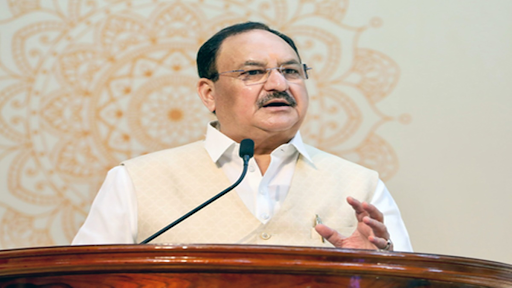
Picture Courtesy: DDNEWS
Context
The Union Ministry of Health and Family Welfare launched SAHI and BODH initiatives to integrate Artificial Intelligence (AI) into the public health system.
|
Read all about: AI IN HEALTHCARE EXPLAINED l INDIA AND WHO LAUNCH GLOBAL CALL FOR AI IN HEALTH |
What are SAHI and BODH initiatives?
SAHI and BODH are two interconnected initiatives, unveiled by the Union Health Minister at the India AI Impact Summit 2026 to promote a safe, ethical, and high-quality AI ecosystem for public health.
|
|
Strategy for Artificial Intelligence in Healthcare for India (SAHI) |
Benchmarking Open Data Platform for Health AI (BODH) |
|
Primary Role |
The "Rulebook" or national guidance framework. |
The "Testing Lab" or validation platform. |
|
Objective |
Ensure safe, ethical, evidence-based, and inclusive AI adoption. Provides strategic direction on governance and data management. |
Enable developers to securely test and benchmark AI models using real-world health data. |
|
Key Function |
Guides state governments in deploying AI solutions that align with their specific public health needs (e.g., managing vector-borne diseases). |
Solves the "black box" problem by providing a standard for quality assurance before an AI tool is used on patients. |
|
Developed By |
Ministry of Health and Family Welfare. |
IIT Kanpur in collaboration with the National Health Authority (NHA). |
|
Status |
National Policy Framework. |
Positioned as a Digital Public Good (DPG) under the Ayushman Bharat Digital Mission (ABDM). |
Why is AI Integration Necessary for Indian Healthcare?
AI acts as a force multiplier to address deep-rooted structural challenges in the Indian healthcare system that conventional methods cannot solve alone.
Bridging the Doctor-Patient Gap
While India's doctor-to-population ratio is 1:834 (better than the WHO's 1:1000 norm), distribution is heavily skewed towards urban areas. (Source: MoHFW)
Personalized care: AI enables tailored treatments based on individual health profiles and predicts health risks for proactive intervention and early disease detection.
Administrative Relief
AI can automate routine tasks such as appointment scheduling, data entry, and documentation, freeing up healthcare professionals to focus on more complex patient care.
Upskilling Health Workers
AI-driven tools can empower nurses and mid-level practitioners to perform basic screenings and triage, effectively extending specialized care to underserved regions.
Reduced human error
AI algorithms can double-check and verify human decisions, minimizing errors in diagnosis, treatment, and administrative tasks.
Portable Diagnostics
AI-powered Clinical Decision Support Systems and enabled devices can empower rural health workers like ASHAs for preliminary screenings and on-the-spot detection of conditions like tuberculosis.
Reducing Out-of-Pocket Expenditure (OOPE)
AI can drastically lower treatment costs by enabling early and accurate detection of diseases like cancer and diabetes, avoiding expensive late-stage diagnoses.
Managing the Health Data Explosion
With over 80 crore Ayushman Bharat Health Accounts (ABHA), India generates massive health data. AI is crucial for analyzing this "Big Data" to inform policy and governance.
What are the Expected Impact of SAHI-BODH Framework?
Standardised Governance
SAHI provides a national framework for the safe, ethical, and inclusive adoption of AI, setting clear standards and data rules aligned with public health priorities.
Privacy-Preserving Innovation
BODH enables rigorous testing and benchmarking of AI models using real-world health data without sharing underlying datasets, protecting patient privacy and ensuring technical reliability.
Enhanced Trust and Quality
Positioned as a Digital Public Good under ABDM, these initiatives boost transparency and quality assurance in AI-driven healthcare.
Structured Scaling
The frameworks move India from fragmented AI pilots to a coordinated ecosystem, supporting scalable, evidence-based AI implementation across states.
Global Leadership
India is hosting the India AI Impact Summit 2026 to promote international partnerships and establish itself as a leader in responsible AI for the Global South.
What are the Challenges in implementation of AI in healthcare?
Data Issues: Medical records are fragmented, non-standardized (often handwritten), and siloed, hindering the creation of high-quality datasets.
Algorithmic Bias: Training data must be diverse (representative of all demographics) to prevent an "AI divide," in line with NITI Aayog’s ‘Responsible AI’ principles.
Data Privacy and Security: The risk of re-identifying anonymized health data is a concern; a breach violates the right to privacy (K.S. Puttaswamy vs Union of India, 2017).
The "Black Box" Dilemma: Doctors need to understand AI reasoning. SAHI must promote "Explainable AI" (XAI) to build clinical trust.
Infrastructure & Cost: Rural areas suffer from the Digital Divide—lacking high-speed internet, stable power, and modern diagnostic hardware.
Regulatory challenges: There is no clear framework for liability ambiguity in case of AI diagnostic error.
Way Forward
Mandating a "Human-in-the-Loop" System: AI should act as a diagnostic assistant, with the final decision resting with a qualified medical professional. Clear liability frameworks must be established under SAHI.
Ensuring Data Diversity: The BODH platform must actively source and curate health datasets from aspirational districts, tribal areas, and other underrepresented communities to mitigate bias.
Capacity Building: Medical and nursing curricula must be updated to train the next generation of healthcare professionals to work effectively with AI tools.
Structured EMR Generation: Accelerating the creation of Electronic Medical Records (EMRs) is a priority to provide high-quality, structured data for clinical precision.
Offline-Capable AI: Developing tools that function in low-connectivity areas or on lightweight mobile applications is essential for rural reach.
ASHA Worker Training: Equipping frontline workers with AI-enabled portable diagnostics (like handheld X-rays) effectively extends specialist expertise to every village.
Vernacular AI: Implementing voice-based and multilingual interfaces ensures technology is accessible to those with lower digital literacy.
Conclusion
By balancing technological innovation with robust ethical safeguards, India can leverage AI to achieve the goal of Universal Health Coverage (UHC) and fulfill constitutional mandate under Article 47 to improve public health.
Source: DDNEWS
|
PRACTICE QUESTION Q. With reference to the 'BODH Platform' recently seen in the news, consider the following statements: 1. It is developed by IIT Kanpur in collaboration with the National Health Authority (NHA). 2. It requires all patient data to be pooled into a central server for AI model training. 3. It is positioned as a Digital Public Good (DPG) under the Ayushman Bharat Digital Mission. Which of the statements given above is/are correct? A) 1 only B) 1 and 3 only C) 2 and 3 only D) 1, 2, and 3 Answer: B Explanation: Statement 1 is correct: The BODH (Benchmarking Open Data Platform for Health AI) platform was developed by IIT Kanpur in collaboration with the National Health Authority (NHA). Statement 2 is incorrect: The platform utilizes federated learning, which allows AI models to be trained on data located at various healthcare facilities without needing to pool it into a central server. This ensures patient privacy and data security by keeping the data at its source. Statement 3 is correct: The initiative is specifically designed to create Digital Public Goods (DPG) that include a quality-preserving database and benchmarking platforms to support the Ayushman Bharat Digital Mission (ABDM). |
SAHI stands for Strategy for Artificial Intelligence in Healthcare for India. Its purpose is to act as a national regulatory framework to ensure that AI adoption in healthcare is safe, ethical, evidence-based, and aligned with public health priorities.
The BODH (Benchmarking Open Data Platform for Health AI) was developed by IIT Kanpur in collaboration with the National Health Authority (NHA).
BODH uses Federated Learning technology. Instead of moving sensitive patient data to a central server, the AI model travels to where the data is stored, learns from it, and returns without ever seeing or extracting personal details, complying with the DPDP Act 2023.
The "Black Box" problem refers to the lack of transparency in how an AI model arrives at a specific diagnosis. Doctors may hesitate to trust AI if they cannot understand its reasoning. SAHI aims to solve this by mandating "Explainable AI" (XAI).


© 2026 iasgyan. All right reserved