ISRO's Shukrayaan-1, set for a March 2028 launch, is India's first dedicated Venus Orbiter Mission. Budgeted at ₹1,236 crore, it utilizes international payloads like Sweden’s VNA to study Venusian atmospheric chemistry, geological hotspots, and solar wind interactions for planetary science.
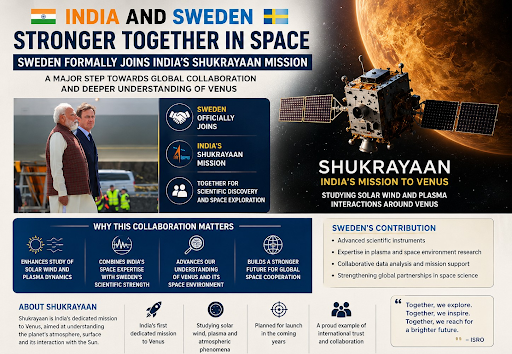
Sweden formally joined India's Shukrayaan mission to study solar wind and plasma interactions around Venus.
The Indian Space Research Organisation (ISRO) plans Shukrayaan-1, India's first dedicated planetary mission to explore Venus.
The name comes from Sanskrit, where "Shukra" means Venus, and "Yaan" means Craft.
The Union Cabinet approved the mission in September 2024, allocating a total budget of ₹1,236 crore (with ₹824 crore specifically funding the spacecraft).
Mission Specifications
Core Scientific Objectives
Geological Mapping: Investigates surface and shallow subsurface stratigraphy, mapping active volcanic hotspots, lava flows, and impact craters.
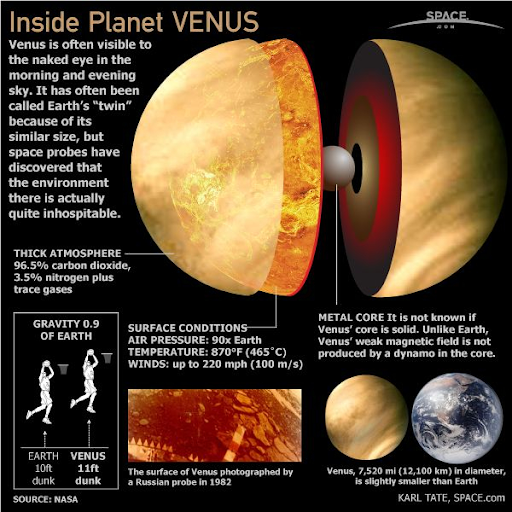
Atmospheric Study: Analyze the planet's thick, carbon dioxide-rich atmosphere, its sulfuric acid clouds, and the mysterious super-rotation of its winds.
Solar Wind Interaction: Studies how solar winds and solar irradiance interact with the Venusian ionosphere, analyzing how these forces strip away atmospheric particles.
Climate Evolution: Evaluate greenhouse conditions to understand how Earth's "twin sister" became hostile, which helps experts model Earth's future climate.
Key Payloads & International Collaboration
The mission carries a total of 19 scientific payloads, including 16 Indian, 2 collaborative, and 1 international instrument.
VSAR (Venus S-Band Synthetic Aperture Radar): ISRO uses this high-resolution radar to penetrate thick clouds and capture detailed images of the Venusian surface in any weather, day or night.
VARTISS: A low-frequency radar sounder probes the subsurface up to a depth of 1 kilometer to investigate geological structures.
Sweden: The Swedish Institute of Space Physics contributes the Venusian Neutrals Analyzer (VNA) as part of the VISWAS payload. This sensor measures how solar winds cause the planet to slowly lose its atmosphere.
Russia: The Russian Space Research Institute provides the VIRAL (Venus InfraRed Atmospheric Gases Linker) payload to study atmospheric gases.
Germany: A German team collaborates on the RAVI (Radio Anatomy of Venus Ionosphere) payload to study the atmosphere's thermal structures.
Strategic Significance
Planetary Science: The mission helps scientists study the evolution of Earth-like planets and assess conditions on Earth-sized exoplanets.
Global Space Leadership: Shukrayaan-1 positions India as a trusted leader in deep-space planetary exploration, demonstrating highly cost-effective and indigenous space science capabilities to the world.
Source: INDIATODAY
|
PRACTICE QUESTION Q. Consider the following statements about the Shukrayaan-1 mission:
Which of the statements given above are correct? A) 1 and 2 only B) 2 and 3 only C) 1 and 3 only D) 1, 2, and 3 Answer: A Explanation: Statement 1 is correct: The Venus Orbiter Mission, widely known as Shukrayaan-1, is India’s first dedicated interplanetary mission to study the planet Venus and its dense atmosphere. Statement 2 is correct: The spacecraft will carry the Venusian Neutrals Analyzer (VNA) payload, which has been contributed by the Swedish Institute of Space Physics (IRF). Statement 3 is incorrect: The spacecraft is scheduled to be launched using the heavy-lift LVM-3 rocket, not the PSLV. |
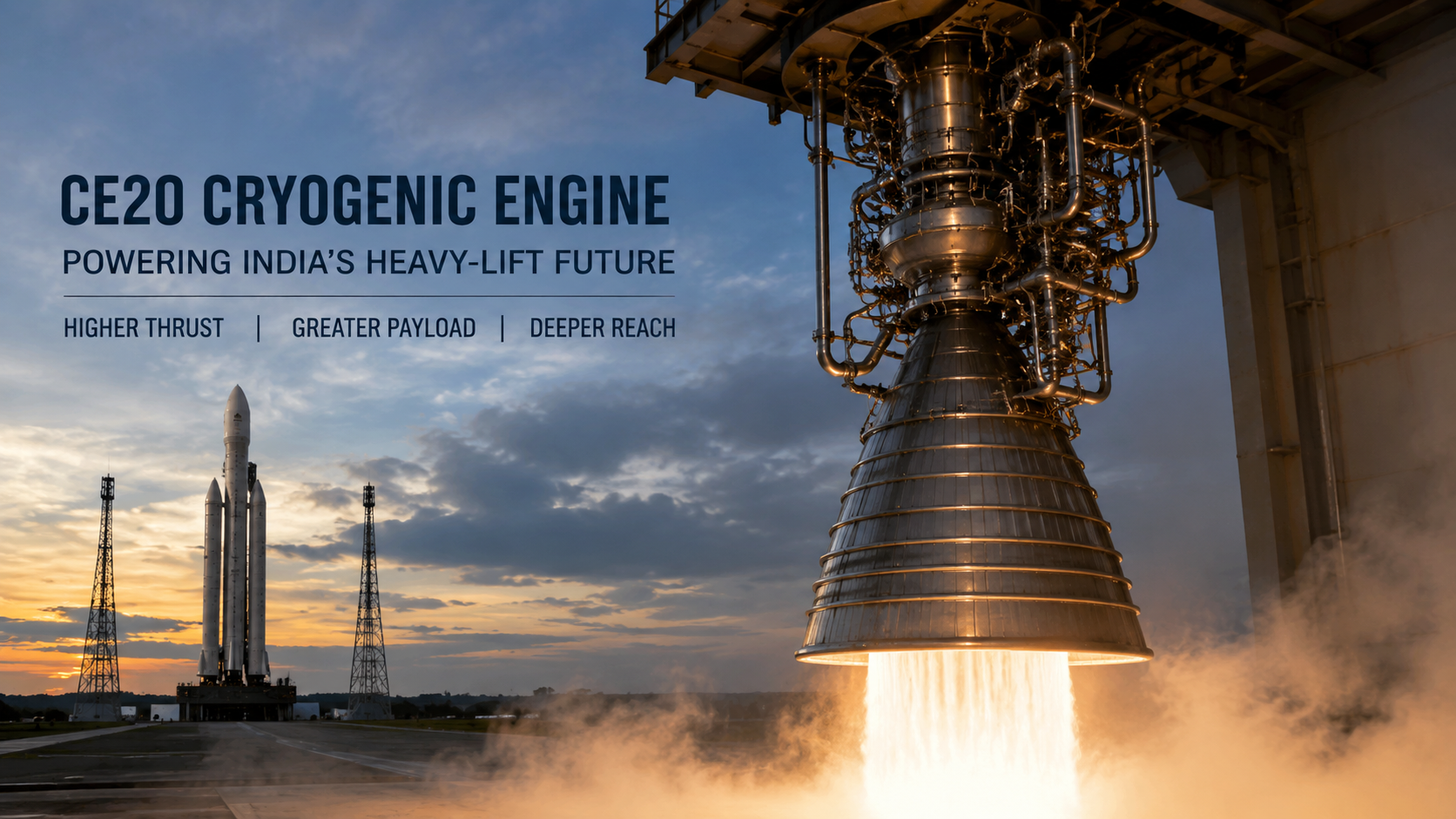
ISRO has officially set the launch date for March 29, 2028, utilizing the heavy-lift LVM-3 (GSLV Mk III) rocket. The spacecraft will undertake a 112-day journey to enter Venusian orbit on July 19, 2028.
The Union Cabinet approved a total budget of ₹1,236 crore for the mission, out of which ₹824 crore is dedicated specifically to the development of the spacecraft.
Studying Venus's thick, carbon dioxide-rich atmosphere and its runaway greenhouse effect provides vital clues about climate evolution. Understanding why Earth's "twin" became so hostile helps scientists model Earth's future climate and assess habitability conditions on Earth-sized exoplanets.




© 2026 iasgyan. All right reserved