India’s poverty debate contrasts 5.3% extreme poverty with 23.9% economic vulnerability using World Bank benchmarks. The government now emphasizes the Multidimensional Poverty Index (MPI) over old monetary lines. Experts argue MPI should complement income measures, calling for better data, accountability, and a transparent policy dashboard.
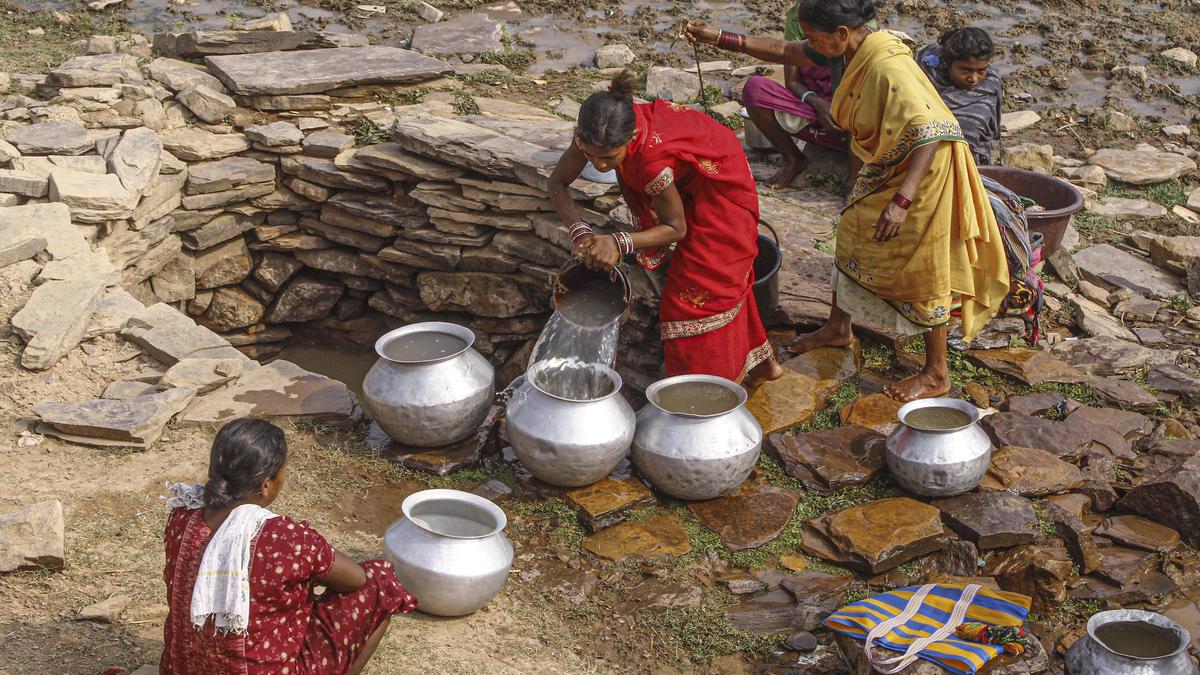
Copyright infringement not intended
Picture Courtesy: THEHINDUBUSINESSLINE
A debate has emerged over India’s poverty estimates due to different measurement methods and data sources.
|
Read all about: POVERTY IN INDIA: EVIDENCE, CHALLENGES AND WAY FORWARD l TRUTH ABOUT POVERTY IN INDIA l INDIA'S EXTREME POVERTY HITS 5.3% l GLOBAL MULTIDIMENSIONAL POVERTY INDEX(MPI) 2025 REPORT |
The debate originates from two different international poverty lines set by the World Bank. These are not contradictory but are designed to measure different levels of economic distress.
|
Metric |
Poverty Line (2021 PPP terms) |
Poverty Rate (2022-23) |
Policy Focus |
|
Extreme Poverty |
$3.00 per person per day |
5.3% (down from 27% in 2011-12) |
Measures the population living at a bare survival level. India has made remarkable progress in reducing this. |
|
Economic Vulnerability |
$4.20 per person per day |
23.9% (342 million people) |
Identifies a population that is not destitute but remains insecure and highly vulnerable to economic shocks (e.g., inflation, job loss). This is considered more relevant for lower-middle-income countries like India. |
The gap between 5% and 24% reflects two different policy concerns: celebrating success against extreme poverty while acknowledging the vast population yet to achieve economic security.
The government has highlighted the National Multidimensional Poverty Index (MPI) as the primary tool for poverty measurement, rather than updating monetary-based poverty lines.
What is the National Multidimensional Poverty Index (MPI)?
India's Progress as per MPI
MPI vs Monetary Poverty Lines
While the MPI is a valuable tool, it is not designed to replace consumption-based poverty lines. They answer different, equally important questions:
International best practice, including guidance from the developers of the global MPI (OPHI and UNDP), suggests that both measures should be used together to provide a comprehensive view of poverty.
 Methodological & Procedural Issues of Poverty Measurement
Survey Methodology Changes
The latest Household Consumption Expenditure Survey (HCES) for 2022-23 used a Modified Mixed Reference Period (MMRP), which, while potentially more accurate, complicates direct comparisons with previous surveys and may artificially lower poverty estimates.
The "Vulnerable" Population
The Global MPI 2024 report noted that besides the 16.4% of Indians who are MPI-poor, an additional 18.7% are classified as "vulnerable to multidimensional poverty," meaning they live just above the cutoff and are at high risk of falling back.
Targeting Social Safety Nets
An accurate poverty line is vital for designing and targeting welfare schemes like food subsidies and cash transfers to prevent exclusion errors.
Informing Minimum Wages
It serves as a benchmark for setting minimum wages to ensure a basic standard of living for workers.
Evolving with Aspirations
As India aims to become a 'Viksit Bharat' (Developed India) by 2047, its definition of poverty must evolve beyond mere subsistence to reflect a dignified standard of living. The last widely accepted line was based on the Tendulkar Committee methodology for 2011-12.
Adopt a Dashboard Approach
India should use a dashboard of indicators, including an updated monetary poverty line, the National MPI, and income-based measures, to get a complete picture of poverty and vulnerability.
Update the Official Poverty Line
An expert committee should be formed to define a new official monetary poverty line that reflects contemporary consumption patterns, prices, and economic realities.
Leverage New Data
The upcoming National Household Income Survey (NHIS), set to launch in 2026, will be India's first pan-India survey on household income. Its data can provide a robust foundation for a new poverty estimation framework.
Strengthen Transparency
Ensuring transparency in survey methodologies and providing direct, data-backed answers in Parliament are crucial for statistical credibility and democratic accountability.
Achieving an inclusive and secure society requires redefining poverty beyond extreme deprivation to focus on economic vulnerability, ensuring national growth benefits all citizens as the nation develops.
Source: THEHINDUBUSINESSLINE
|
PRACTICE QUESTION Q. How does India's shift from consumption-based poverty lines to the Multidimensional Poverty Index (MPI) impact the efficacy of social safety net targeting? (150 words) |
The international poverty line is a monetary threshold used to measure extreme poverty. As of recent World Bank updates, extreme poverty is often defined as surviving on less than $2.15 per day. Other thresholds, such as $3.65 or $6.85 per day, are used to measure poverty in higher-income contexts.
An official, updated poverty line is crucial for accurately identifying beneficiaries for key welfare schemes like the National Food Security Act (NFSA), Ayushman Bharat, and Pradhan Mantri Awas Yojana. Without it, millions of genuinely needy households risk being excluded from essential social safety nets. It also informs economic policies such as minimum wage setting.
While extreme poverty (bare survival) is nearly eliminated at 5.3%, the World Bank notes that for a "lower-middle-income country" like India, a higher threshold ($4.20/day) might be more appropriate. At this higher standard, about 24% of the population would still be considered poor.



© 2026 iasgyan. All right reserved