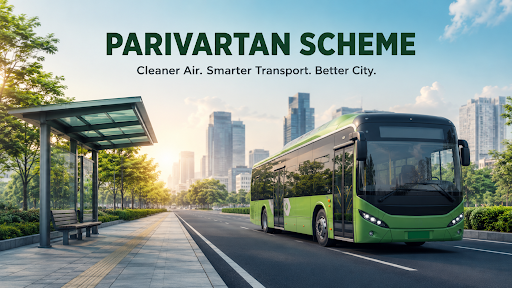
The PARIVARTAN Scheme, approved by MoHUA, accelerates the replacement of old, polluting commercial vehicles in the Delhi-NCR with BS-VI or electric vehicles. Backed by a ₹9,585 crore outlay, it provides tax waivers, subsidies, and OEM discounts to improve air quality.
Why In News?
The Ministry of Housing and Urban Affairs (MoHUA) approves the operational guidelines for the PARIVARTAN Scheme.
What is the PARIVARTAN Scheme?
PARIVARTAN (Programme for Accelerated Renewal and Incentivization of Vehicle Assets for Reducing Transport Air Pollution and Network Emissions) facilitates the replacement of older, highly polluting trucks and buses in the NCR with cleaner Bharat Stage (BS)-VI compliant or Electric Vehicles (EVs).
Financial Outlay: The scheme operates with a total financial outlay of ₹9,585 crore, which includes direct budgetary support of ₹5,041 crore from the Central Government.
Institutional Funding: The National Capital Region Planning Board (NCRPB) routes the funding, while the Ministry of Road Transport and Highways (MoRTH) implements the scheme.
Objectives
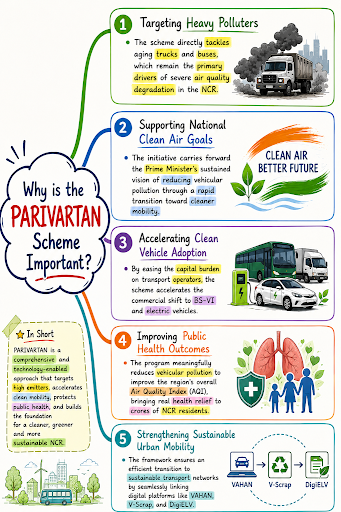
Key Features of the PARIVARTAN Scheme
Replacement of End-of-Life Trucks and Buses: The scheme focuses on removing end-of-life commercial vehicles from NCR roads and replacing them with modern alternatives.
Financial Incentives: The guidelines offer a 5% interest subvention on vehicle loans alongside a minimum 8% Original Equipment Manufacturer (OEM) discount on eligible new vehicles.
Fuel and EV Support: The program provides monthly fuel voucher support for diesel/CNG replacements and one-time financial assistance for electric replacement vehicles.
Focus on NCR Air Quality Improvement: Coordinated by the NCRPB, the scheme enforces an integrated approach to tackle trans-boundary air pollution across Delhi and neighboring states.
Vehicle Scrappage-Linked Modernisation: The system integrates with V-Scrap and DigiELV to transparently manage vehicle scrapping and supports Certificate of Deposit (CoD) trading.
Industry Collaboration: 11 OEMs, representing over 95% of the commercial vehicle market share, sign Memoranda of Understanding (MoUs) with MoRTH to guarantee discounts to eligible beneficiaries.
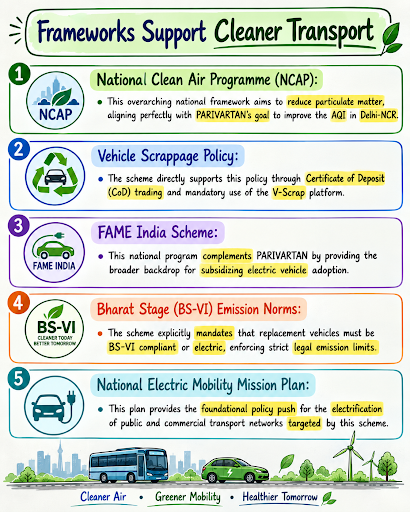
What Benefits Can the PARIVARTAN Scheme Offer?
Reduction in PM2.5 and NOx Emissions: Replacing highly polluting trucks with BS-VI compliant engines drastically cuts down particulate matter and nitrogen oxide emissions.
Improved Urban Air Quality: The transition directly contributes to a marked improvement in the AQI across the Delhi-NCR.
Lower Health Costs: The scheme creates a healthier living environment for citizens, inherently reducing the medical and economic burden caused by respiratory ailments.
Increased Fuel Efficiency: Modern BS-VI vehicles and EVs consume less energy, lowering operational costs for freight and transport networks.
Growth of Green Mobility Ecosystems: Financial assistance for electric replacements directly stimulates the manufacturing and adoption of EVs in the commercial sector.
Contribution to Climate Mitigation Goals: The framework aligns with broader climate goals by building a healthier, more sustainable National Capital Region.
What are the Major Concerns Associated with the Scheme?
High Cost of Fleet Replacement: Despite 8% OEM discounts and 5% interest subventions, the absolute upfront cost of new commercial EVs or BS-VI trucks remains steep for small-scale operators.
Financing Constraints for Operators: Routing funds requires seamless interfacing with the Public Financial Management System (PFMS) and participating lenders to prevent disbursement delays.
EV Charging Infrastructure Gaps: Adoption of electric trucks and buses relies heavily on the availability of heavy-duty EV charging stations, which remain limited.
Effective Scrappage Monitoring: Preventing leakages requires flawless digital execution across the VAHAN, V-Scrap, and DigiELV platforms to ensure operators genuinely dismantle old vehicles.
Interstate Coordination Challenges: Managing execution across borders remains complex; however, Rajasthan, Haryana, Uttar Pradesh, and the NCT of Delhi successfully issue notifications granting 10-year Motor Vehicle Tax concessions and registration fee waivers to align with the scheme.
Measures to Strengthen the PARIVARTAN Scheme
Expanding EV Infrastructure: Increasing the density of charging hubs makes the one-time financial assistance for electric vehicles more attractive to commercial operators.
Strengthening Scrappage Ecosystems: Ensuring 100% digital compliance via the integrated platform (VAHAN, V-Scrap, DigiELV) eliminates administrative bottlenecks.
Providing Affordable Green Financing: Expanding the network of participating lenders via the PFMS ensures the 5% interest subvention reaches grassroots transport operators quickly.
Integrating Urban Mobility Planning: Leveraging the NCRPB synchronizes freight corridors and public transport upgrades across state borders.
Enhancing Air Quality Monitoring: Deploying real-time monitoring continuously measures the AQI improvements brought about by the removal of highly polluting trucks.
The PARIVARTAN Scheme acts as a transformative catalyst for the Delhi-NCR, leveraging ₹9,585 crore in digital, financial, and tax incentives to replace aging fleets and secure a sustainable, low-emission urban environment.
Source: INDIANEXPRESS
|
PRACTICE QUESTION Q. "Vehicular pollution remains a major contributor to deteriorating urban air quality in India." Discuss. 150 words |





© 2026 iasgyan. All right reserved