Motilal Nehru was a prominent lawyer, nationalist leader, and constitutional thinker who played a crucial role in India’s freedom struggle. Beginning as a constitutional moderate, he gradually aligned with mass nationalism under Gandhian influence while continuing to believe in constitutional methods. As Congress president, Swarajya Party leader, and chairman of the Nehru Report (1928), he significantly shaped early Indian constitutional ideas. His life reflects the transition of the national movement from elite politics to broader political mobilisation.
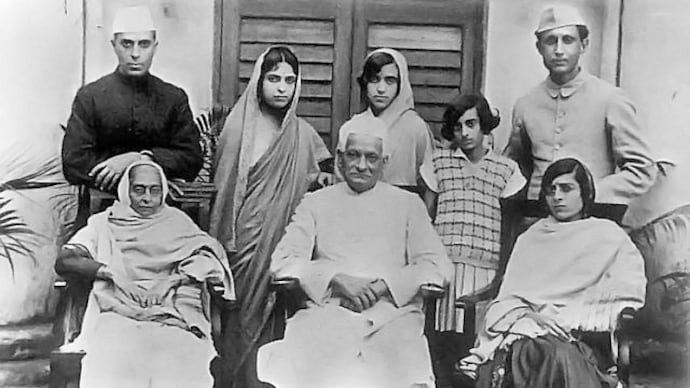
Copyright infringement not intended
Picture Courtesy: India Today
Context:
Motilal Nehru's death on 6 February 1931 was a pivotal and high-stakes period for India’s struggle for independence. His contribution will always be remembered for his report and legislative role.
|
Must Read: IMPORTANT COMMITTEES | |
Motilal Nehru:
Early Life: Motilal Nehru was born in Agra to Gangadhar Nehru and Jeorani. His father, who had served as the Kotwal of Delhi, migrated to Agra following the Revolt of 1857 and passed away shortly before Motilal’s birth. Raised under the care of his elder brother, the family later moved to Allahabad, a shift that would shape Motilal’s educational and professional journey.
Education: Motilal Nehru received his early education in Allahabad and qualified for the High Court in 1883. He subsequently went to Cambridge University to train as a barrister. After returning to India, he began his legal practice in Kanpur and later settled in Allahabad, where he emerged as one of the most successful lawyers of his time. His flourishing practice brought him considerable wealth and a westernised lifestyle in his early years.
Personal life: Despite being raised in modest circumstances, Motilal ensured a life of comfort and high-quality education for his children, including Jawaharlal Nehru. Notably, he supported the education of his daughters at a time when it was socially uncommon, reflecting his progressive outlook.
Entry into the National Movement: Motilal Nehru joined the Indian National Congress and gradually became an influential figure in the freedom struggle. He served as the Congress President twice—first in 1919 (Amritsar session) and later in 1928 (Calcutta session). He was also associated with the Home Rule Movement and led the Allahabad branch of the Home Rule League founded by Annie Besant.
Ideological shift and Gandhian influence: Initially aligned with moderate constitutional politics, Motilal moved towards more assertive demands after 1918, though he continued to favour constitutional methods. Under the influence of Mahatma Gandhi, he renounced his western lifestyle in 1920 and actively participated in the Non-Cooperation Movement, for which he was arrested along with his son.
Swarajya Party and legislative role: Following the withdrawal of the Non-Cooperation Movement after the Chauri Chaura incident, Motilal Nehru parted ways with the Congress and co-founded the Swarajya Party with C. R. Das. He entered the Central Legislative Assembly in 1923 and served as the Leader of the Opposition, using constitutional forums to challenge colonial policies.
Nehru Report (1928):
Background: The Nehru Report was drafted in 1928 as a response to the challenge posed by the British government after the boycott of the Simon Commission. An all-party conference decided to prepare a constitutional framework for India, demonstrating that Indians were capable of framing their own constitution.
A subcommittee was constituted in February 1928 under the chairmanship of Motilal Nehru.
Composition of the committee: The committee included prominent leaders cutting across ideological lines, such as Jawaharlal Nehru, Ali Imam, Tej Bahadur Sapru, M. S. Aney, Mangal Singh, Shuaib Qureshi, Subhas Chandra Bose, and G. R. Pradhan.
The report was finalised and presented in August 1928. While it was largely unanimous, differences existed on the ultimate political goal—most members supported dominion status, whereas a section favoured complete independence.
Constitutional Recommendations:
Form of Government: The report proposed a federal system with residuary powers vested in the Centre. It recommended a bicameral legislature at the Centre, consisting of a Senate elected by provincial councils and a House of Representatives elected on the basis of adult suffrage. The Governor-General was to function on the advice of an executive council responsible to Parliament.
Fundamental Rights: It listed nineteen fundamental rights, including equality before law, equal rights for women, and universal adult franchise. It also clearly advocated the separation of religion from the state, making the framework explicitly secular.
Provincial Organisation: The report supported the reorganisation of provinces on linguistic lines, recognising language as a key basis of administrative efficiency and cultural identity.
Electoral system and minority safeguards: Separate electorates were to be replaced by a joint electorate system, with reserved seats for Muslims at the Centre and in provinces where they constituted a minority. The report also promised protection of the religious and cultural rights of minorities, particularly Muslims.
Political responses:
Conclusion:
Motilal Nehru was a key architect of India’s early constitutional and nationalist thought who bridged elite constitutional politics and mass-based nationalism. His leadership in the Indian National Congress, role in the Swarajya Party, and chairmanship of the Nehru Report (1928) reflect his lasting contribution to India’s freedom struggle and constitutional development, making him a foundational figure in modern Indian political history.
Source: India Today
|
Practice Question Q. Motilal Nehru is often described as a bridge between constitutional politics and mass nationalism in India’s freedom struggle. Examine. (150 words) |
Motilal Nehru was a prominent leader of India’s freedom struggle, a distinguished lawyer, and a leading constitutional thinker. He was also the father of Jawaharlal Nehru.
He served as the President of the Indian National Congress twice, in 1919 and 1928, and played a key role in shaping its constitutional and political strategies.
He is best known for chairing the committee that drafted the Nehru Report (1928), one of the earliest Indian attempts to frame a constitutional structure for self-government.


© 2026 iasgyan. All right reserved