Louis Mountbatten served as the last Viceroy of India and oversaw the final phase of British rule. He introduced the Mountbatten Plan (3 June 1947), which provided the framework for the partition of British India into the two independent dominions of India and Pakistan. Independence was granted on 15 August 1947, after which Mountbatten became the first Governor-General of India, serving until June 1948. His tenure marked the end of colonial rule and the beginning of independent governance, though the rapid transfer of power also led to large-scale migration, violence, and long-term geopolitical challenges.
Copyright infringement not intended
Picture Courtesy: The Sunday Guardian
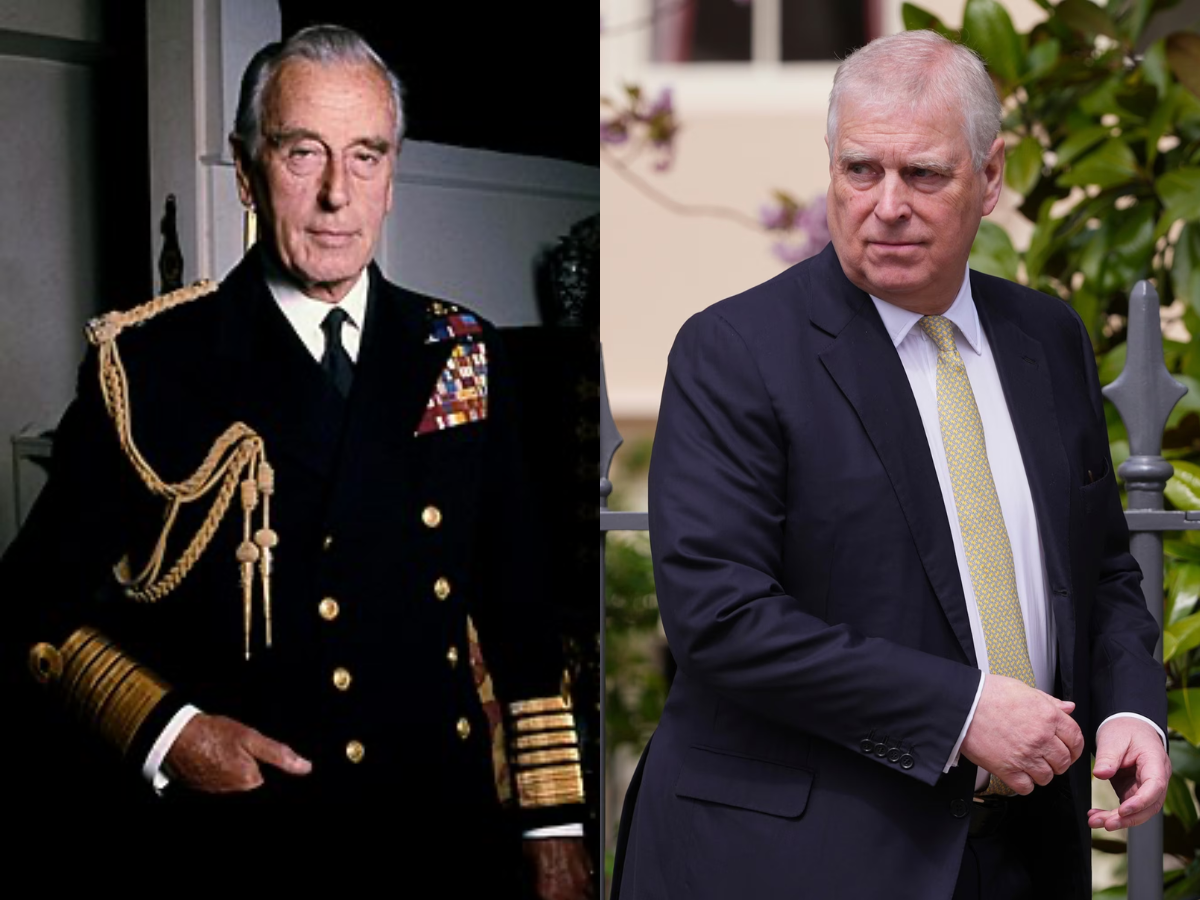
Andrew Windsor Mountbatten, arrest on the suspicion of misconduct in a public office, who is also a relative of Lord Mountbatten.
|
Must Read: VICEROYS | 1947 BOUNDARY COMMISSION AWARDS | |
Lord Mountbatten:
Louis Mountbatten, formally known as Louis Francis Albert Victor Nicholas Mountbatten, was a British naval officer, statesman, and member of the royal family who played a crucial role in the final phase of British rule in India.
Mountbatten served as the last Viceroy of British India from 12 February 1947 to 15 August 1947. He was assigned the challenging task of overseeing the British withdrawal and ensuring a timely and orderly transfer of power to Indian leadership. His tenure took place during a period of intense political negotiations and growing communal tensions.
Under his supervision, British rule formally ended on 15 August 1947, and the subcontinent was divided into two independent dominions, India and Pakistan. Although Mountbatten initially explored options to maintain a united India, deep political divisions and escalating violence made partition unavoidable. The transfer of power was carried out within a short timeframe, which created significant administrative difficulties and humanitarian challenges.
Following independence, Mountbatten continued as the first Governor-General of India, serving from 15 August 1947 to 21 June 1948. In this role, he worked closely with Indian leaders to support the functioning of the new government and to ensure administrative continuity during the early phase of nation-building, until an Indian successor took office.
The Mountbatten Plan, also known as the 3 June Plan, was the final constitutional proposal that laid the foundation for the end of British rule in India. Introduced by Louis Mountbatten, the last Viceroy, the plan aimed to address escalating communal tensions and ensure a rapid transfer of power. It ultimately led to the creation of two independent dominions India and Pakistan on 15 August 1947.
Background to the plan:
By early 1947, the political situation in India had become increasingly unstable. The failure of the Cabinet Mission Plan, deepening mistrust between the Indian National Congress and the Muslim League, and widespread communal violence, especially after Direct Action Day (1946), convinced the British government that an early withdrawal was necessary. Mountbatten’s primary objective was to transfer power quickly while attempting to limit administrative collapse and civil disorder.
Partition of British India: The plan accepted the division of the country into two dominions—India and Pakistan.
Decision on Punjab and Bengal: The Legislative Assemblies of Punjab and Bengal were to vote separately on whether their provinces should be partitioned. If a simple majority supported division, the provinces would be split.
Sindh: The Sindh Legislative Assembly was given the authority to decide whether to join India or Pakistan.
North-West frontier province: A referendum was conducted to determine whether the province would accede to India or Pakistan.
Sylhet Referendum: The Sylhet district of Assam voted through a referendum on whether to remain with Assam or join East Bengal (Pakistan).
Boundary commission: In case of partition, a Boundary Commission under Sir Cyril Radcliffe was appointed to demarcate the borders of Punjab and Bengal.
Dominion status: Both India and Pakistan were to become independent dominions with their own Constituent Assemblies to frame separate constitutions.
Princely states: The princely states were required to accede to either India or Pakistan based on geographical and political considerations. The option of full independence was not recognised.
Early transfer of power: The date for independence was advanced to 15 August 1947 to ensure a swift British exit.
Interim administration: Until independence, governance was to continue through an Interim Government composed of Indian leaders.
The plan was accepted by major political parties, including the Congress and the Muslim League, though reluctantly. Its implementation resulted in:
The “Dickie Bird Plan” was an early and informal proposal considered by Louis Mountbatten soon after he arrived in India in March 1947. The idea represented a radical alternative to both a united India and a simple division into India and Pakistan.
Core idea of the plan: The proposal suggested that British India should not be transferred to a single central authority or divided only into two dominions. Instead, each province would become an independent successor state after the British withdrawal.
Under this framework:
Opposition:
The proposal faced strong resistance from Indian leaders, particularly Jawaharlal Nehru. Nehru warned that such a plan would lead to the fragmentation or “Balkanisation” of the subcontinent, creating numerous weak states and increasing the risk of conflict, instability, and violence.
Recognising the serious political objections and the potential for chaos, Mountbatten informed the British government that the proposal was not viable, and it was quickly abandoned.
The British Parliament passed the Indian Independence Act 1947 on 18 July 1947, giving legal effect to the Mountbatten Plan. The Act:
The Mountbatten Plan marked the final step in ending British colonial rule in India and ensured the transfer of power within a fixed and accelerated timeline. While it succeeded in achieving independence and the creation of two sovereign dominions, its hurried implementation and acceptance of partition resulted in widespread violence, mass displacement, and enduring political disputes. Thus, the plan remains a pivotal moment in South Asian history, representing both the achievement of freedom and the profound human and geopolitical costs of division.
Source: The Sunday Guardian
|
Practice Question Q. Which of the following proposal of “Dickie Bird Plan” of 1947, associated with the transfer of power in India? (a) Immediate transfer of power to a united Indian Union Answer: (c) Explanation: |
Louis Mountbatten was a British naval officer, statesman, and member of the royal family who served as the last Viceroy of India and later became the first Governor-General of independent India.
He supervised the transfer of power from British authorities to Indian leadership and implemented the Mountbatten Plan, which led to the creation of the independent dominions of India and Pakistan.
The Dickie Bird Plan proposed provincial independence first, whereas the Mountbatten Plan (3 June 1947) provided for the creation of two dominions—India and Pakistan through a structured transfer of power.

© 2026 iasgyan. All right reserved