A 2,000-year-old Megalithic laterite rock-cut burial chamber discovered at Panayal, Kerala reveals South India’s burial traditions, belief in the afterlife, social hierarchy, and engineering skills. Found during construction, it highlights the conflict between development and heritage preservation, stressing scientific excavation, stronger laws, and community participation.
Copyright infringement not intended
Picture Courtesy: THE HINDU
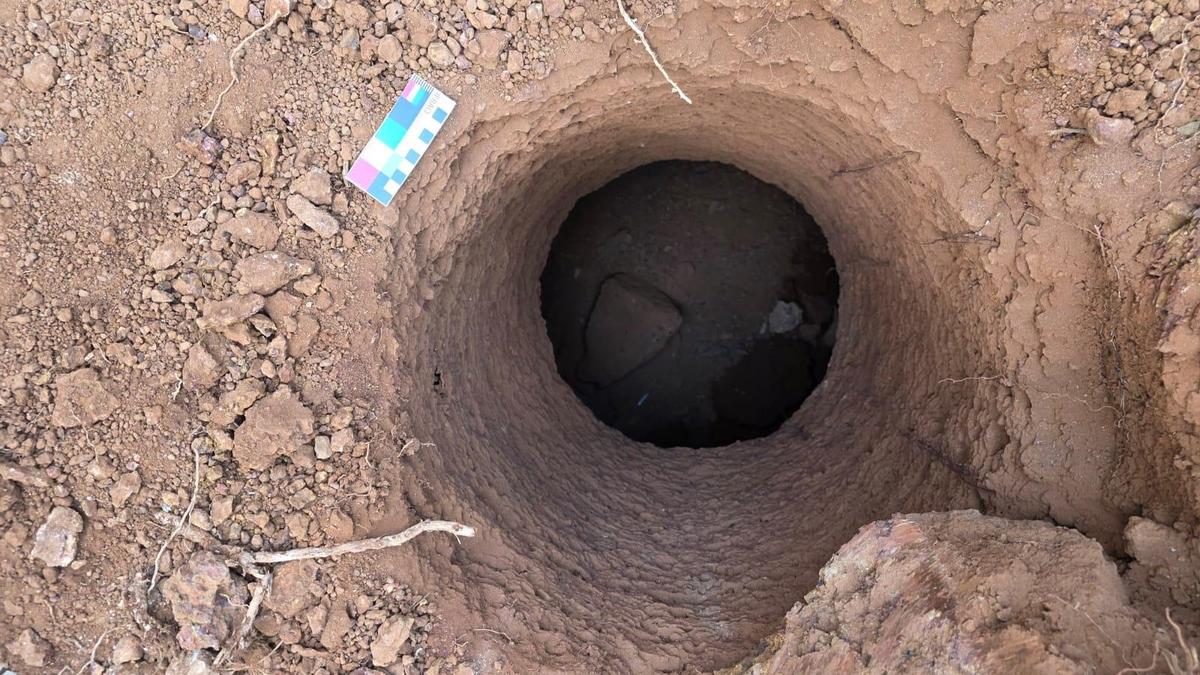
A megalithic laterite rock-cut chamber, believed to be approximately 2,000 years old, was recently unearthed on March 1, 2026, in Panayal, Kasaragod.
Structure: A circular or hemispherical underground burial chamber carved directly into laterite bedrock.
Entrance: Accessed via a vertical rectangular shaft approximately three feet deep.
"Soul Hole": A unique small circular aperture, about 5 cm in diameter, is located at the center of the top portion, possibly intended for ritual offerings.
Sealing: The entrance was originally sealed with a stone slab, which was partially damaged during the recent excavation.
Current State: The interior is presently filled with soil; systematic excavation is expected to reveal burial artefacts such as pottery, iron tools, or urns.
Regional Significance: Kasaragod is a major prehistoric cultural landscape; similar chambers have been reported in areas like Karinthalam, Pilicode, Kuttikol, and Paivalike.
The Megalithic Period refers to a prehistoric to proto-historic era defined by the construction of monumental structures using large, undressed, or roughly dressed stones.
Derived from the Greek words megas (big) and lithos (stone), it is commonly associated with elaborate burial practices, though it also includes non-sepulchral (non-burial) memorial stones.
In India, the Megalithic period is largely synonymous with the Iron Age in South India, generally dated between 1000 BCE and 100 CE.
Key Features of the Megalithic Period
Funerary Practices: Megaliths are burial sites located away from residential areas. The deceased were buried with grave goods like pottery, iron weapons, and ornaments, indicating a strong belief in an afterlife.
Iron Age Association: The period is defined by the widespread use of iron tools, weapons, and agricultural implements.
Pottery: The most common pottery found is Black and Red Ware (BRW), usually wheel-turned and high-quality.
Social Structure: The construction of massive stone structures suggests a well-organized society with community effort, specialized labor (smiths, artisans), and potential social hierarchies.
Economy: The people were agro-pastoralists who practiced farming (rice, millet, ragi), domesticated animals (cattle, horses, sheep), and engaged in hunting and fishing.
Major Types of Megalithic Structures
Excavations have revealed several types of burials and monuments:
Regional Distribution and Sites
While megaliths exist globally, in India they are concentrated in the Deccan and South India.
Living Tradition: In some parts of India, such as among the Gonds, Gadabas, and Nagas, the tradition of building megaliths continues, offering insight into ancient rituals.
Source: THEHINDU
|
PRACTICE QUESTION Q. 'Kasaragod’, recently seen in the news, is a prominent megalithic site located in which state? A. Kerala B. Tamil Nadu C. Karnataka D. Maharashtra Answer: A Explanation: Recent news highlights the discovery of a 2,000-year-old laterite rock-cut burial chamber at Panayal in Kasaragod district, Kerala, in March 2026. |
The term 'Megalith' refers to structures built with large stones. In the Indian context, it represents a culture from the Iron Age to the early Historic period (c. 1500 BCE - 500 CE), predominantly associated with elaborate burial sites and commemorative monuments.
They reveal several aspects: a strong belief in an afterlife (indicated by grave goods), social stratification (seen in the varying complexity of tombs), advanced technological skills (in quarrying and iron metallurgy), and a mixed economy based on agriculture and pastoralism.
The main types include Rock-Cut Chambers (common in Kerala), Umbrella Stones (Topikkallu) and Hood Stones (Kudakkallu) unique to Kerala, Cist Burials (underground stone boxes), Dolmens (above-ground tomb-like structures), and Urn Burials.



© 2026 iasgyan. All right reserved