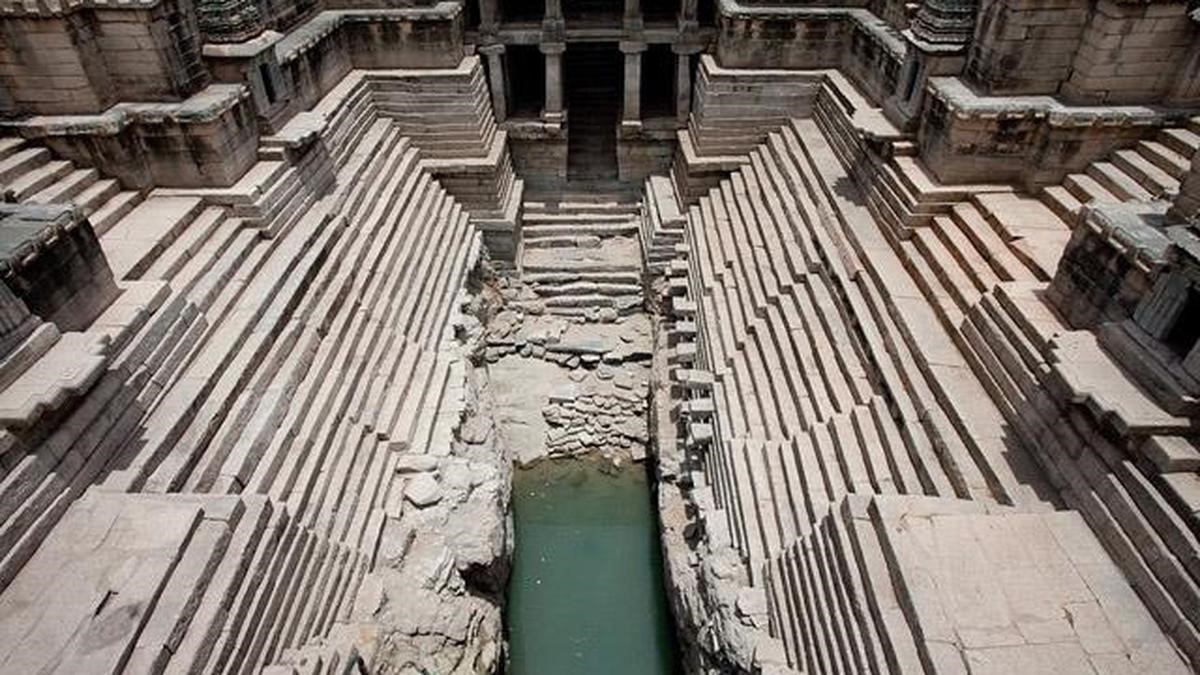
Lakkundi in Karnataka is an important medieval heritage town known for its rich cultural, religious, and architectural legacy. Flourishing under the Western Chalukyas and Hoysalas, it became famous as the “village of a hundred temples and wells.” The site reflects religious pluralism, with strong associations with Shaivism, Vaishnavism, Jainism, and the Virashaiva Bhakti movement.
Its beautifully carved temples and stepwells, built in the distinctive Kalyana Chalukya style, highlight both artistic excellence and sacred utility. Recent archaeological excavations, including evidence of much earlier habitation, have strengthened efforts to include Lakkundi in UNESCO’s World Heritage tentative list, underscoring its enduring historical significance.
Copyright infringement not intended
Picture Courtesy: The Hindu
Context:
Archaeologists have unearthed relics dating back to the Neolithic period, including artefacts that strongly suggest human occupation long before the well-known medieval structures at the Kote Veerabhadreshwar Temple site in Lakkundi village.
Historical background:
Lakkundi (historically Lokkigundi) was an important centre from the 10th to 12th centuries, particularly under the Western Chalukyas and Hoysalas.
Architectural importance:
Lakkundi’s monuments showcase Western Chalukya (Kalyana Chalukya) temple architecture, a distinct style influential in medieval South India.
Over a dozen documented temples and intricately carved stepwells, with many more believed buried beneath current village structures.
Some key historic structures include:
These are central to the World Heritage nomination proposal.
Cultural legacy of Lakkundi:
Lakkundi, historically known as Lokkigundi, emerged as a major religious, cultural, and artistic centre in Karnataka between the 10th and 12th centuries, particularly under the Western Chalukyas and later the Hoysalas. Its legacy reflects a remarkable coexistence of Shaivism, Vaishnavism, and Jainism, making it a symbol of medieval India’s pluralistic religious landscape.
Prominent temples such as the Kashi Vishveshwara Temple, Nanneshwara Temple, and Mallikarjuna Temple reflect the dominance of Shaivism, while temples dedicated to Vishnu highlight Vaishnavite traditions.
The town is closely associated with Queen Attimabbe, a celebrated Jain patron and philanthropist known as “Daana Chintamani”. She funded the construction of numerous Jain basadis (temples) and is said to have commissioned thousands of copies of Jain religious texts. Her contributions underline Lakkundi’s role as a major Jain cultural centre.
Conclusion:
Lakkundi stands as a shining example of medieval India’s cultural richness and religious harmony, where Shaivism, Vaishnavism, Jainism, and the Bhakti tradition flourished side by side. Its magnificent temples, Jain basadis, and intricately carved stepwells reflect both spiritual devotion and architectural excellence. This layered heritage highlights Lakkundi’s importance as a major centre of faith, art, and social reform in the Deccan.
Source: The Hindu
|
Practice Question Q. With reference to Lakkundi in Karnataka, consider the following statements: 1. It flourished under the Western Chalukyas and later the Hoysalas. 2. The site is associated with Shaivism. 3. It is known for intricately carved stepwells that had both utilitarian and ritual significance. Which of the statements given above is/are correct? A. 1 and 3 only Answer: A Explanation: |
Lakkundi was a major cultural, religious, and architectural centre between the 10th and 12th centuries under the Western Chalukyas and Hoysalas. It was once known as the “village of a hundred temples and wells.”
It is renowned for the Kalyana Chalukya (Western Chalukya) style of temple architecture, known for ornate carvings, lathe-turned pillars, and intricate doorframes. This style represents a transition between early Chalukyan and Hoysala architecture.
The stepwells (kalyanis/pushkarnis) were not only water-harvesting structures but also had ritual and social importance. They are famous for their detailed stone carvings.


© 2026 iasgyan. All right reserved