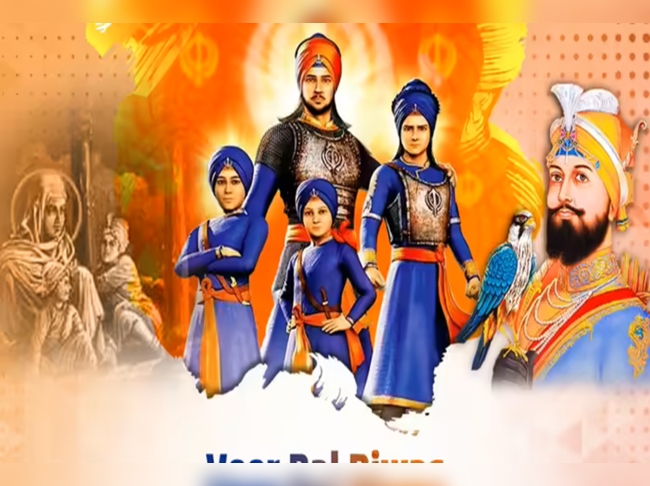
Veer Bal Diwas, observed on 26 December each year, commemorates the supreme sacrifice of the four Sahibzadas, the sons of Guru Gobind Singh Ji, especially the younger two—Sahibzada Zorawar Singh Ji and Sahibzada Fateh Singh Ji—who were bricked alive at Sirhind for refusing to renounce their faith. Announced in 2022, the day highlights key events such as the siege of Anandpur Sahib, Parivar Vichhora, the Battle of Chamkaur, and the martyrdom of the Sahibzadas. It serves as a national reminder of moral courage, resilience, and unwavering commitment to truth, inspiring children and youth through stories of bravery and ethical strength.
Copyright infringement not intended
Picture Courtesy: Economic Times
Every year on December 26, Veer Bal Diwas is observed to remember and honour the extraordinary courage and supreme sacrifice of the four Sahibzadas, the sons of Guru Gobind Singh Ji, the tenth Sikh Guru. Veer Bal Diwas, translated as the Day of Brave Children, honours the courage and valour of the youngest sons of Guru Gobind Singh Ji.
|
Must Read: VEER BAL DIWAS | |
Veer Bal Diwas is observed every year on 26 December to honour the martyrdom of the Sahibzadas, the sons of Guru Gobind Singh Ji, whose courage and steadfast faith have become symbols of supreme sacrifice in Indian history.
On 9 January 2022, during the celebration of the Prakash Purab of Sri Guru Gobind Singh Ji, the Prime Minister announced that 26 December would be commemorated annually as Veer Bal Diwas to remember the sacrifice of the Sahibzadas.
Remembrance of Martyrdom: The day is observed to remember and honour the sacrifices of the sons of Guru Gobind Singh Ji. It evokes both deep pride and sorrow within the Sikh community and the nation.
Creating Awareness Among Children: The observance aims to educate young generations about the bravery, moral courage, and unshakeable faith of the Sahibzadas and instill values of resilience and righteousness.
Nationwide Commemoration: Activities include:
Digital displays are also organised at airports, railway stations, and public places to spread awareness.
Guru Gobind Singh Ji, the tenth Sikh Guru, lived in Anandpur Sahib along with his family and devoted followers. The creation of the Khalsa by the Guru significantly challenged Mughal authority and was perceived as a direct threat to their control. Mughal forces therefore made repeated attempts to capture Anandpur Sahib but were unable to dislodge the Sikhs. Eventually, they laid a prolonged siege, cutting off essential supplies and making survival within the fort extremely difficult. Under these circumstances, Guru Gobind Singh Ji agreed to vacate the fort after formal assurances of safe passage were given; however, these assurances were later violated.
Parivar Vichhora (Separation of the Family): On the night of 20 December, Guru Gobind Singh Ji and his family began their departure from Anandpur Sahib. As they moved near the Sarsa rivulet, Mughal forces treacherously attacked them in violation of their earlier promise of safe passage. Amid the confusion and the fierce attack, the family of the Guru was separated, an episode remembered in Sikh history as Parivar Vichhora. Guru Gobind Singh Ji, accompanied by his two elder sons and a group of Sikhs, proceeded towards Chamkaur and reached there safely.
Battle of Chamkaur Sahib: At Chamkaur Sahib, Guru Gobind Singh Ji and his companions soon found themselves surrounded by a very large Mughal army. Negotiations with the Mughal commanders failed, leading to an intense and heroic battle. During this battle, the elder Sahibzadas, Ajit Singh aged 18 and Jujhar Singh aged 14, fought with exceptional bravery and attained martyrdom while defending their faith and community.
Capture of the Younger Sahibzadas: During the turmoil, Mata Gujari Ji and the two younger Sahibzadas, Zorawar Singh and Fateh Singh, were separated from the rest of the Sikhs. A former servant initially offered them shelter but later betrayed them to Mughal officials out of greed. As a result, they were arrested and confined in the Thanda Burj, the cold tower at Sirhind, where they were forced to endure the severe winter without basic comfort.
Bricking Alive of the Sahibzadas: The two young Sahibzadas were eventually brought before Wazir Khan, the Governor of Sirhind. They were asked to renounce Sikhism and adopt Islam in return for their lives. The Sahibzadas firmly refused to abandon their faith despite their tender age. Consequently, Wazir Khan ordered that they be bricked alive, and they attained martyrdom with unshaken courage. Upon hearing about the martyrdom of her grandsons, Mata Gujari Ji passed away due to shock and grief.
|
Guru Gobind Singh Ji Guru Gobind Singh Ji was the tenth and the last human Guru of the Sikhs. He was born on 22 December 1666 at Patna Sahib. After the martyrdom of his father, Guru Tegh Bahadur Ji, he assumed the Guruship at the young age of nine and led the community through one of the most challenging periods of its history. Major Contributions of Guru Gobind Singh Ji Creation of the Khalsa (1699): Guru Gobind Singh Ji created the Khalsa in 1699, establishing a community of saint-soldiers committed to defending religious freedom, justice and human dignity. The Five K’s: He introduced the five external symbols of the Khalsa — Kesh, Kangha, Kara, Kirpan and Kachera — to give Sikhs a distinct identity and to instill discipline and unity. Religious and Literary Contributions: Guru Gobind Singh Ji is associated with the compilation of the Dasam Granth, and his teachings and compositions played a major role in strengthening Sikh rituals, philosophy and collective identity. Baptism Ceremony: He introduced the Amrit initiation ceremony for entry into the Khalsa order, and those who were initiated received the title “Singh”, symbolising courage and equality. Resistance to Oppression: Guru Gobind Singh Ji firmly opposed unjust policies and discriminatory taxes such as jizya, standing up for the rights of persecuted communities and promoting the ideals of justice and resistance to tyranny. |
Veer Bal Diwas stands as a solemn reminder of the unparalleled courage and sacrifice of the Sahibzadas, whose steadfast faith and moral strength continue to inspire the nation. The day not only commemorates their martyrdom but also reinforces timeless values of resilience, righteousness, and commitment to truth, especially among the younger generation. By remembering their bravery, Veer Bal Diwas strengthens collective respect for India’s spiritual and cultural heritage and underscores the power of unwavering conviction in the face of oppression.
Source: Economic Times
|
Practice Question Consider the following statements about Guru Gobind Singh Ji: 1. He founded the Khalsa in 1699. 2. He compiled the Guru Granth Sahib in its final form. 3. He introduced the Five K’s for the Khalsa. Which of the statements given above is/are correct? A) 1 and 3 only Answer: A Explanation:
|
Veer Bal Diwas is observed on 26 December every year to commemorate the martyrdom of the Sahibzadas, the sons of Guru Gobind Singh Ji, especially the younger two—Sahibzada Zorawar Singh Ji and Sahibzada Fateh Singh Ji.
Veer Bal Diwas was announced by the Prime Minister in January 2022 on the occasion of the Prakash Purab of Guru Gobind Singh Ji.
The day highlights moral courage, sacrifice, and commitment to faith and righteousness, and inspires children and youth to stand for truth even in adversity.




© 2026 iasgyan. All right reserved