The Archaeological Survey of India has approved fresh excavations at Balirajgarh fort in Bihar, believed to be ancient Mithila’s capital. The move highlights decades of neglect, exposing systemic issues in heritage management such as resource shortages, procedural delays, centralization, and lost socio-economic potential from poor conservation.
Copyright infringement not intended
Picture Courtesy: THEHINDU
The Archaeological Survey of India (ASI) has approved a new excavation at Balirajgarh fort in Bihar.
Balirajgarh Fort, locally known as Raja Bali Ka Garh, is an archaeological site located in the Madhubani district of Bihar.
It is considered one of the earliest urban civilization ruins in the Mithila region, representing a fortified complex with a history spanning over 2,000 years.
Historical Significance and Timeline
Identification: The site was first identified in 1884 by George Abraham Grierson, the then Madhubani sub-divisional magistrate.
Chronology: Archaeological findings suggest continuous habitation from around the 2nd century BCE (or earlier) through the Pala period (8th-9th century AD).
Cultural Periods: Excavations have revealed five distinct cultural periods, including Northern Black Polished Ware (NBPW) phase, Shunga, Kushan, Gupta, and Pala periods.
|
Period |
Approximate Timeline |
Key Features |
|
Northern Black Polished Ware (NBPW) |
c. 700–200 BCE |
Represents the earliest layer of settlement. |
|
Sunga Period |
c. 185–73 BCE |
Continued urban development. |
|
Kushan Period |
c. 30–375 CE |
Shows sustained occupation and trade. |
|
Gupta Period |
c. 320–550 CE |
Evidence of classical age settlement. |
|
Pala Period |
c. 750–1161 CE |
Marks the later stages of settlement at the site. |
Mythological Connection: Regional legend associates the site with the Pauranic (mythological) Asura King Bali, known for his generosity.
Ancient Mithila: Some scholars believe it was the capital of the ancient Janaka Dynasty or an early urban center of Mithila.
Archaeological Findings
Antiquities: Over 400 antiquities have been found, including beads of semi-precious stones (carnelian, jasper), terracotta objects, and punch-marked coins.
Iron Objects: Investigations of 2300-year-old iron objects (circa 300 BCE) excavated from the site suggest advanced metallurgy.
Brick Size: The ancient baked bricks found in the walls measuring roughly 1ft x 1.5ft x 4 inches.
Current Status
Protected Site: It is a centrally protected site of national importance under the ASI (Patna Circle) since 1938.
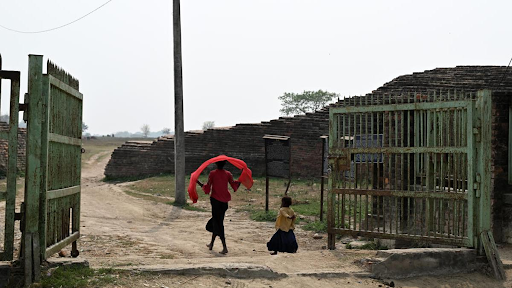
Neglect and Encroachment: Despite its historical value, reports from 2026 describe significant neglect, with the site being used for grazing cattle and pigs, and the presence of trash-filled ponds.
Fresh Excavation: In early 2026, the ASI granted fresh approval for excavation to explore the deeper, unexplored layers of the site.
Development Potential: Efforts are underway to develop it as a tourist destination, with proposals to link it to the Buddha Circuit.
Source: THEHINDU
|
PRACTICE QUESTION Q. With reference to the archaeological site of Balirajgarh, consider the following statements: 1. It is located in the Madhubani district of Bihar. 2. The site has yielded cultural sequences starting from the Northern Black Polished Ware (NBPW) period to the Pala period. 3. The fortifications at the site are primarily made of mud-brick and date back to the Mauryan era. Which of the statements given above is/are correct? A) 1 and 2 only B) 2 and 3 only C) 1 and 3 only D) 1, 2, and 3 Answer: A Explanation: Statement 1 is correct: Balirajgarh is an archaeological site located in the Babubarhi block of the Madhubani district in Bihar. Statement 2 is correct: Excavations at the site have revealed a five-fold cultural sequence ranging from the Northern Black Polished Ware (NBPW) period (c. 600–200 BCE) through the Sunga, Kushana, and Gupta periods, up to the Pala period (c. 8th–12th century CE). Statement 3 is incorrect: While there is a massive fortification at the site, it is primarily associated with the Sunga period (c. 2nd century BCE) rather than the Mauryan era. The excavations revealed structural remains of burnt bricks laid in mud mortar, which were a key feature of the ramparts. |
Balirajgarh is historically significant as it potentially represents the capital of the ancient Videha kingdom (Mithila). Previous excavations have revealed a rare, continuous cultural sequence from around 700 BCE through the Sunga, Kushan, Gupta, and Pala periods, making it a crucial site for understanding the history of the middle Ganga plains.
The Ancient Monuments and Archaeological Sites and Remains (AMASR) Act, 1958, empowers the central government, via the ASI, to declare sites as "protected monuments of national importance." This act centralizes control, legally preventing state governments from intervening in the conservation or development of these sites, which can lead to jurisdictional deadlocks and inaction, as seen in the case of Balirajgarh.
The main challenges include institutional incapacity and resource shortages within the ASI, a highly centralized management framework under the AMASR Act that causes Centre-State friction, procedural delays leading to incomplete projects, and a lack of community involvement in conservation efforts.





© 2026 iasgyan. All right reserved