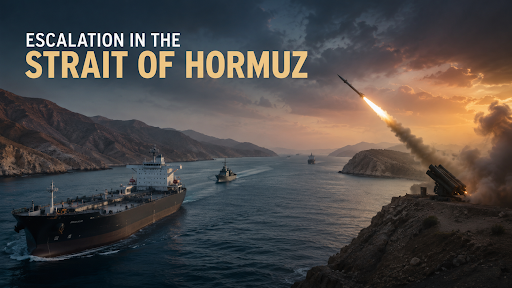
The 2026 Strait of Hormuz crisis threatens India's energy security and the lives of Indian seafarers in the Gulf. In response, India escalated diplomatic protests, issued safety circulars, and deployed naval task forces under Operations Sankalp and Urja Suraksha.
Why In News?
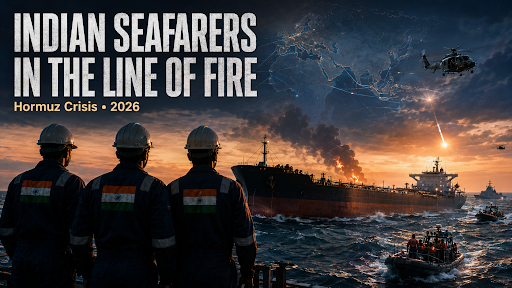
The recent deaths of three Indian seafarers aboard the Palau-flagged MT Settebello following a U.S. missile strike near the Strait of Hormuz highlight the extreme risks Indian maritime personnel face during the escalating 2026 West Asia conflict.
What is the Current Maritime Crisis?
Regional Instability: The 2026 Iran War disrupts the Strait of Hormuz, a critical chokepoint that facilitates 20% of global LNG and 25% of global seaborne oil trade.
Direct Threats: U.S. naval forces target merchant tankers, including MT Marivex, MV Jalveer, and MT Settebello, resulting in the deaths of Indian crew members.
Regulatory Response: The Directorate General of Shipping (DGS) issues Circular 31 of 2026, which restricts the deployment of Indian seafarers in conflict zones unless emergency crew changes occur with explicit consent.
India’s Global Maritime Workforce
Workforce Scale: India currently supplies over 3.23 lakh skilled seafarers, making approximately 12% of the entire global seafaring workforce powering international shipping lines.
Regional Concentration: Nearly 23,000 Indian maritime workers serve in the Gulf region, primarily in the United Arab Emirates (UAE).
Economic Impact: These professionals drive India’s service export economy and stabilize the Current Account Deficit (CAD) while operating vessels under Flags of Convenience (FOC) like Panama, Liberia, or Palau.
Threats to Seafarers
Armed Conflict: Both U.S. and Iranian forces target commercial shipping lanes, creating lethal crossfire environments.
Piracy: Somali pirates exploit regional instability to hijack oil tankers, necessitating complex rescue operations like the INS Kolkata MARCOS mission.
Projectile Attacks: Unidentified projectiles sink vessels such as the Indian-flagged cargo ship Haji Ali off the coast of Oman on May 13, 2026.
Legal Limbo: Families of deceased seafarers struggle with Protection & Indemnity (P&I) insurance protocols due to a lack of awareness regarding maritime labor conventions.
Legal and Security Framework
Maritime Anti-Piracy Act (MAPA) 2022: India empowers the Indian Navy to board, search, and apprehend pirates, granting legal immunity to personnel acting in good faith.
UNCLOS Limitations: While the United Nations Convention on the Law of the Sea governs transit, it lacks an enforcement body because the U.S. and Iran refuse to sign or ratify the convention.
Naval Operations: The Indian Navy executes Operation Urja Suraksha to escort tankers and maintain a permanent presence in the Arabian Sea via destroyers like INS Visakhapatnam, INS Chennai, and INS Trikand.
Maritime Domain Awareness: The Information Fusion Centre for Indian Ocean Region (IFC-IOR) in Gurugram monitors traffic and shares real-time data with over 20 partner countries.
Challenges
Jurisdictional Constraints: India lacks direct territorial jurisdiction over FOC vessels, complicating diplomatic interventions for crews on foreign-registered ships.
Military-Grade Threats: Traditional anti-piracy measures fail against the military-grade weaponry utilized in the U.S.-Iran missile warfare.
Diplomatic Reliance: Protection efforts depend heavily on Mutual Legal Assistance Treaties (MLATs), which falter when major powers unilaterally blockade international straits.
Way Forward
Expanded Escorts: The government must scale Operation Urja Suraksha using P-8I Neptune aircraft and SeaGuardian drones to cover all vessels carrying Indian crews.
International Advocacy: India must lead an inter-ministerial maritime-security framework and pressure the International Maritime Organization (IMO) to establish binding protocols shielding civilian crews from state-sponsored strikes.
Mandatory Safety Protocols: The DGS must mandate transparent risk disclosures, P&I insurance awareness, and strict war-risk allowances for all deployments to high-conflict zones.
Source: THEHINDU
|
PRACTICE QUESTION Q. "India's energy security is deeply hostage to global maritime chokepoints." Analyze. 150 words |
Indian seafarers face extreme vulnerability due to the escalating West Asia conflict, targeted drone and missile strikes by Houthi rebels, illegal ship seizures, and abandonment by financially distressed vessel owners in Gulf ports.
The International Labour Organization's Maritime Labour Convention, 2006 (MLC) guarantees mandatory structural rights, including compulsory financial security for abandonment, safe working conditions, medical care, and regular, guaranteed wage repatriation.
The Ministry of Ports, Shipping and Waterways actively protects mariners through the e-Migrate system to eliminate rogue recruitment agents, coordinates immediate diplomatic rescues via embassies, and provides financial aid through the Seafarers Welfare Fund Society.
It is a narrow body of water situated in the Middle East. It separates the Arabian Peninsula from Iran, connecting the Persian Gulf in the west to the Gulf of Oman and the Arabian Sea in the east.

© 2026 iasgyan. All right reserved