Prime Minister Narendra Modi received Seychelles' 'Guardian of the Blue Horizon' award, highlighting India’s leadership in climate action and ocean governance. This milestone reinforces the MAHASAGAR vision, deepening maritime security, Blue Economy initiatives, and development partnerships across the Indian Ocean.
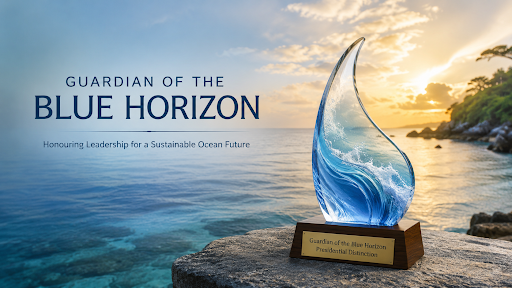
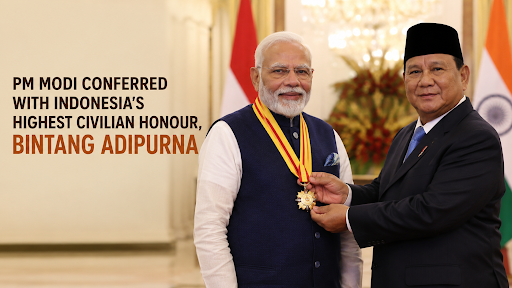
Prime Minister Shri Narendra Modi receives the inaugural 'Guardian of the Blue Horizon' Presidential Distinction from Seychelles President Dr. Patrick Herminie.
Highest Environmental Honour: Seychelles institutes this new Presidential Distinction to reward steadfast commitment to environmental conservation and the advancement of Small Island Developing States (SIDS).
Climate Justice Focus: The Prime Minister dedicates this award to developing nations, asserting that countries contributing the least to global emissions must not bear the heaviest consequences of climate change.
Green Leadership: It honors India’s foundational role in launching the International Solar Alliance (ISA) and the Coalition for Disaster Resilient Infrastructure (CDRI).
Sustainable Lifestyles: The award highlights grassroots initiatives like Mission LiFE (Lifestyle for Environment) and "Ek Ped Maa Ke Naam," which integrate community habits with climate mitigation.
Biodiversity Conservation: It recognizes India’s leadership in establishing the International Big Cat Alliance (IBCA) to preserve ecosystems.
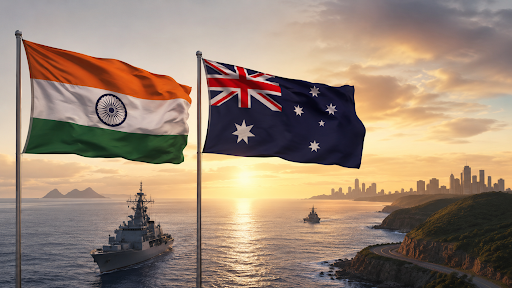
SAGAR Doctrine: The Security and Growth for All in the Region (SAGAR) doctrine positions India as a trusted first responder and security guarantor in the Indian Ocean.
Vision MAHASAGAR: India promotes Mutual and Holistic Advancement for Security and Growth Across Regions (MAHASAGAR), treating the Indian Ocean as a "shared home" rather than a geopolitical theater.
Indo-Pacific Strategy: India advocates for a rules-based order, freedom of navigation, and peaceful dispute resolution governed by the United Nations Convention on the Law of the Sea (UNCLOS).
SIDS Partnership: India integrates island nations into its strategic calculus through demand-driven development partnerships based on mutual respect.
The Blue Economy promotes the sustainable use of ocean resources to improve livelihoods and economic growth while preserving ocean health.
Combating IUU Fishing: India builds regional capacity to counter Illegal, Unreported, and Unregulated (IUU) fishing, which threatens the livelihoods of over 4 million global mangrove fishers.
Coastal Development: India links port modernization with climate-resilient frameworks to shield communities from extreme weather and rising sea levels.
Blue Bioeconomy: India harnesses macroalgae and microalgae for sustainable protein, cosmetics, and pharmaceuticals.
Blue Finance: India encourages global investments in zero-emission shipping and offshore renewable energy to meet Sustainable Development Goal 14 (Life Below Water).
Blue Justice: The framework ensures that industrial growth does not infringe upon the historical fishing rights of small-scale coastal communities.
Maritime Security: India conducts the biennial LAMITYE military exercise with Seychelles and contributes to the Combined Maritime Forces (CMF) to counter narcotics and smuggling.
Defence Asset Provision: India gifts a fast patrol vessel, 10 utility vehicles, and 5 Laser Radial boats, while completing the refit of the PS Zoroaster for the Seychelles Coast Guard.
HADR Operations: India deploys rapid-response naval assets equipped with BHISHM cubes (portable hospitals) to assist neighbors during natural disasters.
Special Economic Package: India extends a USD 175 million package (USD 125M Line of Credit, USD 50M Grant) to Seychelles for social housing and maritime infrastructure.
Digital and Healthcare Integration: India exports Digital Public Infrastructure (DPI) models, including UPI-based payments, and incorporates Seychelles into the Jan Aushadhi scheme for affordable medicine.
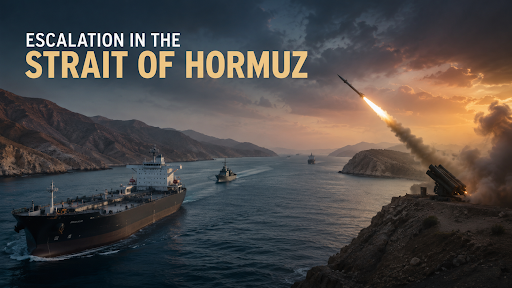
Strategic Importance: India secures crucial chokepoints like the Bab el-Mandeb and the Strait of Hormuz to prevent supply chain blockages and energy inflation.
Source: pib
|
PRACTICE QUESTION Q. With reference to the "Blue Economy," consider the following statements: 1. It encompasses traditional sectors like fisheries and maritime transport, as well as emerging sectors like marine biotechnology and offshore renewable energy. 2. "Blue Finance" strictly refers to the financial assistance provided by the World Bank to landlocked developing countries for river interlinking projects. Which of the statements given above is/are correct? A) 1 only B) 2 only C) Both 1 and 2 D) Neither 1 nor 2 Answer: A Explanation: Statement 1 is correct: The Blue Economy encompasses both traditional sectors (such as capture fisheries, maritime transport, and port activities) and emerging sectors (such as marine biotechnology, aquaculture, and offshore renewable energy like wind and tidal power). Statement 2 is incorrect: "Blue Finance" is not strictly for river interlinking in landlocked countries. Rather, it refers to a broad array of financial instruments and investments (such as blue bonds and blue loans) dedicated to supporting ocean protection, sustainable marine resource use, and improved water management. |
The Guardian of the Blue Horizon is a newly established, premier presidential distinction conferred by the President of Seychelles on June 28, 2026, to recognize global leaders for exceptional environmental conservation, green governance, and sustainable ocean resource management.
SAGAR (Security and Growth for All in the Region) is India's flagship maritime doctrine launched in 2015 to advance strategic security cooperation, disaster relief capabilities, and sustainable economic development across the Indian Ocean neighbourhood.
The Blue Economy defines a comprehensive economic framework focused on the sustainable utilization of ocean resources for economic growth, improved livelihoods, and job creation while strictly preserving the baseline health of marine ecosystems.
The Indian Ocean is strategically vital because it carries over 70% of India's international trade by value, serves as the primary transit highway for the country's energy and crude oil imports, and acts as a critical security arena to protect national maritime borders.

© 2026 iasgyan. All right reserved