The escalating US-Iran conflict in the Strait of Hormuz threatens global energy supply chains and maritime trade. For India, this chokepoint crisis risks inflating crude oil prices, widening the current account deficit, and endangering strategic assets like the Chabahar Port.
Why In News?
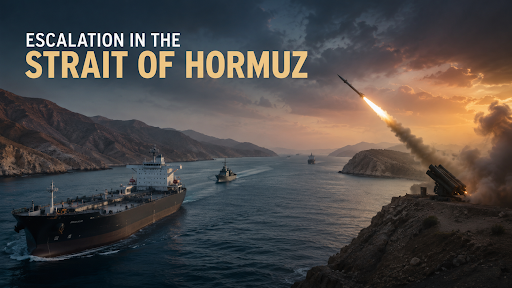
The United States launched airstrikes against Iranian military installations near the Strait of Hormuz, triggering retaliatory Iranian missile and drone strikes on US bases in Bahrain and Kuwait.
What is the Strait of Hormuz?
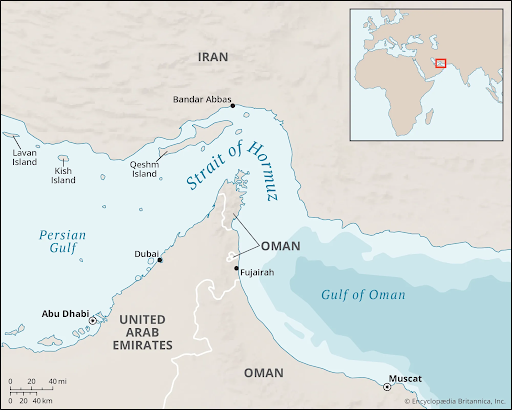
Maritime Chokepoint: The strait acts as a narrow maritime corridor linking the Persian Gulf to the open ocean.
Legal Status: The United Nations Convention on the Law of the Sea (UNCLOS) mandates "transit passage" through the strait because the territorial waters of Oman and Iran overlap at its narrowest point.
Geographical Connectivity: It connects the Persian Gulf directly with the Gulf of Oman and the Arabian Sea.
Strategic Location: It lies geographically between Iran to the north and Oman to the south.
Global Energy Chokepoint: The strait handles approximately one-fifth (20%) of the global petroleum trade, making it the world's most critical energy transit bottleneck.
Primary Export Route: It serves as the main maritime gateway for major oil producers including Saudi Arabia, Iraq, Kuwait, the UAE, Qatar, and Iran.
Why is the Strait of Hormuz Strategically Important for India?
West Asian Energy Dependence: India imports nearly 2.80 million barrels per day (mbpd) of crude oil from the Middle East, relying on West Asia as its largest energy supplier.
Protection of Sea Lines of Communication (SLOCs): India routes 95% of its trade volume and 70% of its trade value through maritime channels, making the security of these SLOCs vital for economic stability.
Vulnerable Strategic Petroleum Reserves (SPR): India maintains limited emergency reserves that provide only 9.5 days of cover, meaning any blockade triggers an immediate crude and LPG crisis.
Chabahar Port Investment: The conflict directly threatens India's $120 million strategic investment in the Shahid Beheshti terminal at Chabahar Port in Iran.
Bilateral Trade Exposure: A blockade imperils ₹15,000 crore in bilateral trade between India and Iran, heavily impacting exports of basmati rice, tea, and pharmaceuticals.
Indian Diaspora and Remittances: The regional conflict endangers millions of Indian citizens working in the Gulf and threatens the steady flow of vital foreign remittances back to India.
What are the Implications of Escalation in the Strait of Hormuz?
Spike in Global Oil Prices: Geopolitical risks immediately inflate energy costs, driving Brent crude prices.
Threats to Maritime Trade: Drone and missile strikes violate the freedom of navigation, driving up shipping freight rates and insurance premiums.
Energy Supply Vulnerabilities: Rerouting alternative supplies takes significant time; Russian crude can only offset 40% to 50% of the volume lost during a complete Persian Gulf shutdown.
Global Inflationary Pressures: Elevated crude prices cascade through global supply chains, rekindling severe inflation and complicating monetary policy.
Geopolitical Instability: Tit-for-tat retaliation expands the conflict zone to US bases in Bahrain and Kuwait, while interlinking with parallel conflicts involving Israel and Hezbollah in Lebanon.
How India Is Affected by Strait of Hormuz Crisis?
Swelling Import Bill: Spiking crude prices inflate oil import bill, exerting severe fiscal pressure on government finances.
Widening Current Account Deficit (CAD): The combination of a higher import bill and disrupted export pipelines structurally worsens Current Account Deficit.
Domestic Fuel Price Shocks: A persistent blockade triggers domestic fuel shortages and forces oil marketing companies (OMCs) to pass high costs directly to consumers.
Erosion of Russian Discount: Replacing Middle Eastern crude with Russian Urals becomes expensive as Russian barrels sell at a premium of $2 to $4 per barrel over Brent.
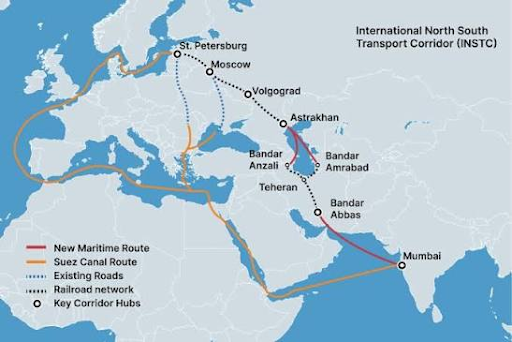
Threats to Economic Growth: The geopolitical crisis threatens critical trade infrastructure, specifically the International North-South Transport Corridor (INSTC), which India uses to bypass Pakistan.
What Measures India Taken to Strengthen Energy Security?
Strategic Petroleum Reserves (SPR): India builds and maintains underground strategic reserves to cushion against sudden supply disruptions.
Diversification of Energy Sources: India broadens its import basket by purchasing crude from Russia and utilizing alternative routes like the Suez Canal.
Expansion of Renewable Energy: The government scales up renewable energy installations and green hydrogen production to reduce long-term fossil fuel dependence.
Strengthening Maritime Security: The Indian Navy deploys warships under Mission-based Deployments to maintain maritime domain awareness and protect commercial shipping.
Diplomatic Engagement: India leverages SAGAR (Security and Growth for All in the Region) doctrine to deepen maritime and security cooperation with Gulf partners.
What are the Major Concerns Associated with the Strait of Hormuz Crisis?
Intense Geopolitical Rivalries: The strait remains a flashpoint for hostile interactions between the United States, Iran, Israel, and regional proxy groups.
Asymmetric Maritime Threats: The proliferation of hybrid warfare, precision-guided missiles, and drone swarms militarizes international waters and directly threatens commercial seafarers.
Volatile Energy Markets: Sudden attacks trigger immediate market speculation, while the revocation of US oil waivers on Iranian crude causes sharp price shocks.
Severe Supply Chain Disruptions: Blockades halt cargo flows across the INSTC corridor, trapping millions of barrels of oil and causing global delays.
Regional Conflict Spillovers: Hostilities easily spill across borders, linking Israel's conflict with Hezbollah in Lebanon directly to the broader US-Iran proxy war.
What Measures Can Improve India’s Energy and Maritime Resilience?
Diversifying Import Sources: Nations must secure non-Gulf energy suppliers and establish robust trade mechanisms that bypass unilateral sanctions.
Expanding Strategic Reserves: Governments must scale up the physical capacity of SPR to withstand prolonged, multi-month blockades.
Strengthening Naval Presence: Enhancing naval capabilities and maritime diplomacy ensures the safety of commercial vessels and upholds the freedom of navigation under international law.
Accelerating Clean Energy Transition: Transitioning rapidly to a clean energy economy neutralizes the geopolitical leverage of petrostates.
Enhancing Regional Diplomatic Engagement: Global powers must prioritize peaceful dispute resolution through institutions like the International Maritime Organization (IMO) and the United Nations Security Council (UNSC).
Conclusion
The Strait of Hormuz crisis exposes the severe vulnerabilities of global energy supply chains, requiring India to accelerate clean energy transition, diversify crude sources, and strengthen naval diplomacy to safeguard strategic and economic sovereignty.
Source: THEHINDU
|
PRACTICE QUESTION Q. The escalating militarization of the Strait of Hormuz exposes the structural vulnerabilities in India's energy security framework." Analyze. 150 words |
The Strait of Hormuz is a vital global chokepoint connecting the Persian Gulf to the Arabian Sea. It handles approximately 20% of the world's petroleum trade, serving as the sole maritime export route for massive energy producers like Saudi Arabia, Iran, the UAE, and Iraq.
India is heavily reliant on Middle Eastern oil imports. Any disruption in the strait threatens to cut off India's primary energy supply, causing fuel shortages, spiking domestic inflation, and widening the country's Current Account Deficit (CAD).
Geopolitical tensions threaten the physical infrastructure of oil production and transport. The fear of supply blockades, paired with rising insurance and freight costs for tankers navigating conflict zones, prompts immediate price spikes in global oil benchmarks like Brent crude.
Strategic Petroleum Reserves (SPR) are massive, government-controlled stockpiles of crude oil. They act as an emergency buffer designed to maintain a country's energy security and stabilize domestic markets during sudden global supply chain disruptions or geopolitical crises.

© 2026 iasgyan. All right reserved