The 2025 Munich Re report warns that lower disaster losses reflect chance, not reduced risk. Climate extremes are intensifying, protection gaps persist, and frequent smaller disasters dominate. Urgent focus is needed on risk reduction, insurance coverage, resilient infrastructure, and global climate cooperation.
Copyright infringement not intended
Picture Courtesy: THE HINDU
Context
Munich Re, a German multinational reinsurance company, recent report reveals a dangerous paradox: despite lower total financial losses from natural disasters, the growing frequency and intensity of climate events signal heightened global vulnerability.
Highlights of the 2025 Munich Re Report
|
|
2025 Data |
Details |
|
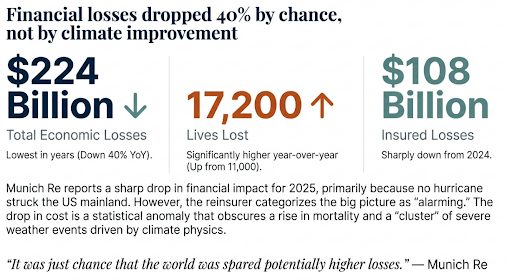
Economic Losses |
$224 billion |
Nearly 40% down from the previous year, due to chance factors. |
|
Insured Losses |
$108 billion |
Represents less than half of the total losses, indicating a massive global protection gap. |
|
Human Cost (Fatalities) |
17,200 lives lost |
Higher than in 2024, but remained below the 10-year average. |
Why Did Financial Losses Drop?
A Fortunate Anomaly: Absence of a major hurricane making landfall in the US, highlighting how a single high-impact event in a wealthy region can skew global statistics.
A Matter of Chance: Lower figure is not a result of decreased risk but a statistical variation based on the geographical path of major storms.
Why is the Picture Still "Alarming"?
Climate Change Impact: The 2025 report strongly links extreme events to climate change, suggesting "the planet has a fever" and that a warming climate was a likely cause.
Increased Extreme Weather: There was an increase in the severity and frequency of floods, severe storms, and wildfires globally.
Scientific Mechanism: More heat increases humidity, which intensifies tropical cyclones and other storms by fueling stronger rainfall and higher wind speeds.
Bridge the Protection Gap
Promote innovative financial tools like parametric insurance, catastrophe bonds, and sovereign risk pools, especially in vulnerable regions.
Invest in Proactive DRR
Shift focus from post-disaster relief to pre-disaster risk reduction, investing in climate-resilient infrastructure, robust early warning systems, and integrated land-use planning.
Leverage Nature-Based Solutions (NbS)
Utilize natural ecosystems for protection, such as restoring mangrove forests for coastal defense and developing green infrastructure in cities to manage floods.
Strengthen International Cooperation
Enhance global frameworks like the Sendai Framework for DRR and the Paris Agreement to support adaptation in developing countries.
Munich Re's 2025 report warns against complacency despite temporary disaster loss reduction. The clear trend of escalating climate disasters demands a shift from reactive to proactive strategies, requiring robust infrastructure, inclusive financial protection, and commitment to global climate goals.
Source: THE HINDU
|
PRACTICE QUESTION Q. "While total economic losses from disasters showed a downward trend in 2025, the underlying climate indicators remain alarming." Critically analyse. 150 words |
The decrease was due to a combination of improved disaster preparedness, such as better early warning systems and evacuation protocols, and fortuitous weather patterns, notably the absence of hurricane landfalls in the United States.
The 'protection gap' refers to the significant difference between the total economic losses caused by a disaster and the amount that is covered by insurance. This gap represents the uninsured financial burden that falls upon individuals, businesses, and governments.
The NDMA is the apex body for disaster management in India, chaired by the Prime Minister. It is responsible for laying down policies, plans, and guidelines for disaster management to ensure a timely and effective response to disasters.

© 2026 iasgyan. All right reserved