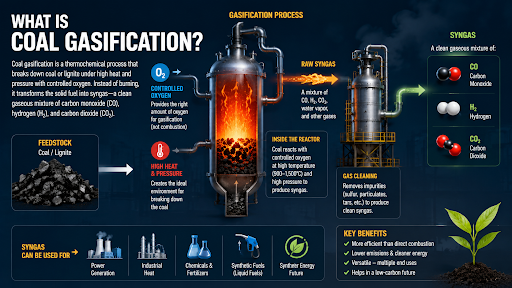
The 2026 Bundibugyo Ebola outbreak in the DRC and Uganda is a WHO-declared global emergency. Lacking an approved vaccine, this highly fatal zoonotic virus spreads via bodily fluids, severely complicating containment efforts across conflict-affected and highly mobile regional borders.
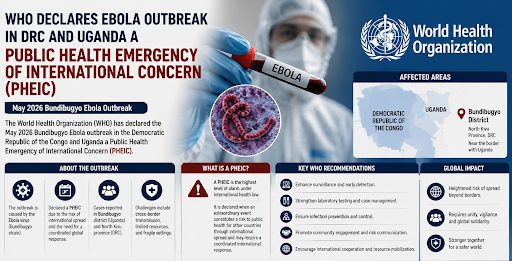
The World Health Organization (WHO) has declared the Bundibugyo Ebola outbreak in the Democratic Republic of the Congo and Uganda a Public Health Emergency of International Concern (PHEIC).
Bundibugyo virus belongs to the genus Orthoebolavirus within the family Filoviridae.
Scientists first identified the species in 2007 following an outbreak in the Bundibugyo District of western Uganda.
The virus is zoonotic, meaning it transmits from animals to humans, with fruit bats (Pteropodidae family) serving as the natural reservoir.
BDBV exhibits lower fatality rates (historically 30% to 50%) compared to the Zaire strain, which can reach 60% to 90%..
The incubation period for the disease ranges from 2 to 21 days.
Infected individuals only become contagious after they develop active symptoms.
Transmission Mechanisms
Animal-to-Human Transmission: Occurs through contact with the blood, secretions, organs, or bodily fluids of infected animals, including fruit bats, monkeys, gorillas, and chimpanzees.
Human-to-Human Transmission: Spreads via direct contact with:
Symptoms
Early Symptoms: These are often non-specific, making early diagnosis difficult. They include fever, fatigue, muscle pain, headache, and sore throat.
Advanced Symptoms: The disease progresses to vomiting, diarrhea, rash, and impaired kidney and liver function. Some cases involve internal and external hemorrhagic bleeding.
Long-term Sequelae: Survivors may experience health issues, including ocular deficits (blurred vision, retro-orbital pain), hearing loss, arthralgias (joint pain), and memory loss for more than two years post-infection.
Treatment
Currently, no licensed vaccine exists specifically for the Bundibugyo strain (Source: WHO). Existing vaccines like Ervebo only target the Zaire ebolavirus.
There are no approved monoclonal antibody therapies for BDBV.
Early rehydration and symptomatic treatment improve survival rates
Source: GAVI
|
PRACTICE QUESTION Q. Consider the following statements about the Bundibugyo ebolavirus:
Which of the statements given above is/are correct? A) 1 only B) 1 and 2 only C) 2 and 3 only D) 1, 2, and 3 Answer: A Explanation: Statement 1 is CORRECT: The Bundibugyo ebolavirus is a zoonotic virus, and like other ebolaviruses, fruit bats are suspected to be its natural reservoir. Statement 2 is INCORRECT: The Ervebo (rVSV-ZEBOV) vaccine is specifically designed to provide protection against the Zaire ebolavirus. While limited studies suggest it might offer some partial cross-protection, it is generally not expected to fully protect against the Bundibugyo strain. Vaccines targeted specifically at the Bundibugyo virus remain under clinical development. Statement 3 is INCORRECT: In the human body and cell culture studies, the Bundibugyo ebolavirus (BDBV) has actually been observed to replicate slower (delayed growth kinetics and lower peak viral titers) compared to the more deadly Zaire ebolavirus (EBOV). |
It is a rare species of Orthoebolavirus that causes severe Ebola disease in humans. Discovered in 2007, it has a case fatality rate ranging from 25% to 50% and is distinct from the more common Zaire strain.
Currently, there is no approved or licensed vaccine specifically for the Bundibugyo strain. Existing vaccines like Ervebo are designed for the Zaire strain, and scientists are urgently assessing if they provide any cross-protection.
Ebola is a zoonotic disease with fruit bats acting as the natural reservoir. It spreads to humans through contact with infected animals and transmits between humans via direct contact with the blood, secretions, or bodily fluids of an infected person.



© 2026 iasgyan. All right reserved