The first detection of the fatal Parrot bornavirus 4 (PaBV-4) in India threatens captive exotic bird populations by causing Proventricular Dilatation Disease. Driven by unregulated global bird trade, it necessitates stringent quarantine, advanced RT-PCR diagnostics, and enhanced biosecurity protocols.
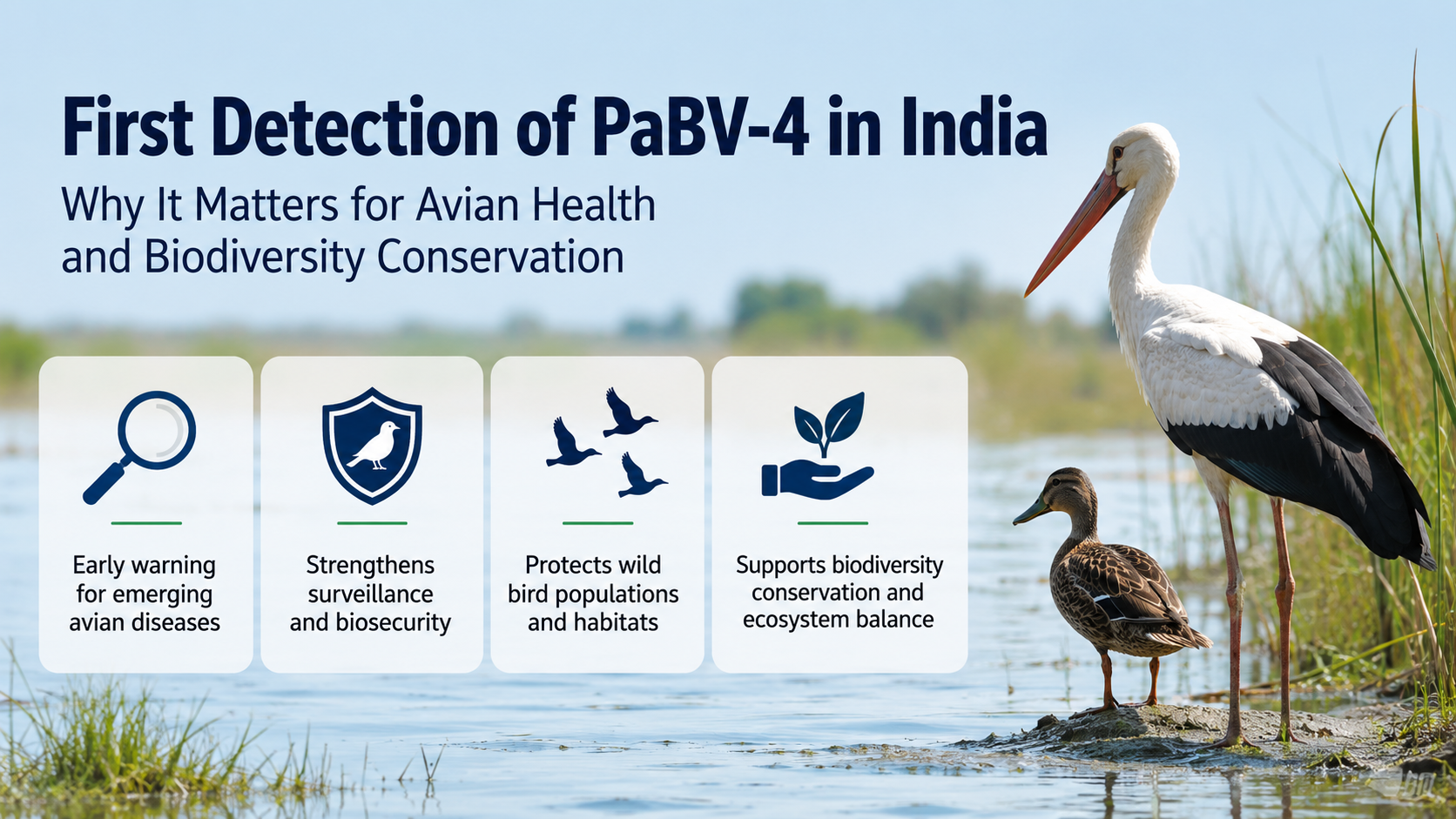
Researchers from the Assam Veterinary and Fishery University officially confirm the presence of Parrot bornavirus 4 (PaBV-4) in India for the first time.
Parrot Bornavirus 4 (PaBV-4) is a highly contagious, single-stranded RNA virus that primarily infects psittacine birds (the parrot family, including macaws, parakeets, cockatoos, and lovebirds).
Classification: It belongs to the genus Orthobornavirus under the Bornaviridae family.
Associated Disease: It is the primary causative agent of Proventricular Dilatation Disease (PDD), a progressive and largely fatal wasting syndrome. PDD was historically known as "Macaw Wasting Disease".
Mechanism (Pathogenesis): It causes a systemic non-cytolytic infection. The virus does not directly destroy host cells; instead, it triggers immune-driven inflammation that destroys the nerves controlling the bird's central nervous system and digestive tract.
Zoonotic Potential: It is an avian health concern and not known to be zoonotic (it does not jump from birds to humans).
Symptoms and Impact on Avian Health
The virus damages the gastrointestinal and nervous systems of birds, resulting in:
Transmission Vectors
Cure & Prevention
There is currently no vaccine or specific antiviral treatment available. Management depends entirely on supportive care and strict aviary biosecurity.
Source: THEHINDU
|
PRACTICE QUESTION Q. Consider the following statements regarding Parrot bornavirus 4 (PaBV-4):
Which of the statements given above is/are correct? (a) 1 and 2 only (b) 2 only (c) 2 and 3 only (d) 1, 2 and 3 Answer: (b) Explanation: Statement 1 is incorrect. PaBV-4 is an enveloped single-stranded RNA virus (not a DNA virus) belonging to the family Bornaviridae. Furthermore, it primarily targets psittacine birds (such as parrots, macaws, cockatoos, and cockatiels) rather than exclusively targeting domestic poultry like chickens and ducks. Statement 2 is correct. PaBV-4 is identified as the primary etiological agent responsible for causing Proventricular Dilatation Disease (PDD), a fatal condition affecting the nervous and digestive systems of birds. Statement 3 is incorrect. Visual screening is not highly effective because infected birds are often asymptomatic carriers. They can shed the virus and spread the disease while appearing clinically healthy, or they may die suddenly without showing prior severe neurological symptoms. |
PaBV-4 (Parrot bornavirus 4) is a highly contagious, single-stranded RNA virus that specifically attacks the nervous systems of psittacine birds like parrots, macaws, and cockatoos.
It causes Proventricular Dilatation Disease (PDD), also known as Macaw Wasting Disease. PDD is a fatal syndrome that destroys the bird's digestive and central nervous systems.
The virus spreads horizontally through direct or indirect contact with infected fecal matter, urine, and feather dander. It rapidly contaminates shared food, water, and air (aerosolized dust) in cramped aviaries.
Currently, there is no specific antiviral cure or commercially available vaccine for PaBV-4. Management relies heavily on strict biosecurity, quarantine, and supportive care for symptoms.





© 2026 iasgyan. All right reserved