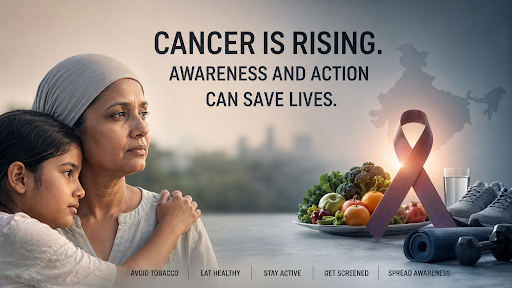
India faces a surging cancer epidemic, driven by lifestyle changes, tobacco, and pollution, with 15.6 lakh new cases recorded in 2024. Addressing this requires robust infrastructure, the scaling up of early screening, nationwide HPV vaccination, and sustained behavioral change campaigns.
Why In News?
The World Health Organization (WHO) reports that one in 10 Indians faces a lifetime risk of developing cancer before age 75.
Current Cancer Scenario in India
Rising Burden: India recorded 15.6 lakh new cases and 8.74 lakh deaths in 2024. The WHO projects annual new cases will reach 2.8 million by 2050.
Gender Disparity: Women represent 51.1% of cases but only 45% of deaths, as breast and cervical cancers allow for earlier detection compared to male-prevalent cancers.
Regional Variations: The Northeast region reports the highest incidence, with Mizoram recording a lifetime risk of 21.1% for men and 18.9% for women.
Common Cancers: Breast cancer remains the most common (192,020 cases in 2022). Oral cancer has overtaken lung cancer as the primary malignancy in Indian men, while cervical cancer accounts for 25% of global deaths from the disease.
Major Risk Factors
Tobacco Consumption: Smokeless tobacco drives the oral cancer epidemic. Despite a decline in adult usage from 34.6% to 28.6%, long-term carcinogen latency sustains high rates.
Air Pollution: Prolonged exposure to severe pollution acts as a direct carcinogen, fueling lung cancer in metropolitan areas.
Unhealthy Diet and Obesity: Sedentary lifestyles and processed foods contribute to rising colorectal, breast, and ovarian cancer rates.
Alcohol Consumption: Alcohol increases the risk of seven cancer types, with dual tobacco-alcohol use compounding the danger.
Infections: Human Papillomavirus (HPV) causes over 80% of cervical cancers, while Hepatitis B and H. Pylori drive liver and gastric cancers.
Why Does Cancer Pose a Major Public Health Challenge in India?
Late Diagnosis: Patients often ignore early symptoms, leading to late-stage diagnoses even among younger demographics in their 20s and 30s.
Unequal Access: Oncology infrastructure concentrates in cities, creating significant barriers for rural patients.
High Treatment Costs: 45% of patients face severe financial hardship, and 77% of citizens view treatment as prohibitively expensive, leading to catastrophic out-of-pocket spending.
Infrastructure Shortage: India lacks sufficient Tertiary Cancer Care Centres to manage the annual influx of 1.5 million cases.
Demographic Pressures: An aging population increases vulnerability, threatening to overwhelm healthcare capacity by 2050.
What Initiatives Has India Taken to Address Cancer?
National Programme for Prevention and Control of Non-Communicable Diseases (NP-NCD): The government operates 770 district NCD clinics and 364 day-care cancer centres for decentralized management.
Ayushman Bharat (PM-JAY): This scheme supports over 68 lakh patients with over ₹13,000 crore in funding.
Screening Programmes: Nationwide initiatives target oral, breast, and cervical cancers for individuals aged 30 and above.
HPV Vaccination: The government provides the Gardasil-4 vaccine free-of-cost to 1.15 crore girls aged 14.
Tobacco Control: Regulatory measures utilize taxation and mandatory health warnings to curb consumption.
Way Forward
Strengthen Screening: Accelerate decentralized, evidence-based screening to detect cancers early and improve survival.
Expand Infrastructure: Establish more ACT (Partnership In Cancer Survivorship Optimization) clinics and district day-care hubs.
Behavioral Change: Execute year-round campaigns against tobacco and alcohol rather than relying on sporadic awareness days.
Digital Literacy: Deploy tools like the Rise Against Cancer app and utilize community health workers to dispel myths.
Vaccination Scaling: Ensure 100% coverage of single-dose HPV vaccines and expand Hepatitis B drives.
AI Integration: Adopt technologies like the Navya AI platform to standardize diagnostic accuracy across remote regions.
Source: INDIANEXPRESS
|
PRACTICE QUESTION Q. "India's growing cancer burden is both a public health challenge and a developmental concern." Examine (250 Words, 15 Marks) |
Breast cancer is the most common cancer overall in India, while oral cancer is the most common among Indian men, largely driven by smokeless tobacco use.
The WHO states that 30% to 50% of cancers are preventable by modifying risk factors like tobacco, alcohol, unhealthy diets, and receiving vaccines for HPV and Hepatitis B.
The Indian government has launched a nationwide vaccination drive offering the quadrivalent HPV vaccine (Gardasil-4) free of cost to 1.15 crore adolescent girls aged 14.
Oncologists attribute the rise in cancer among individuals in their 20s and 30s to sedentary lifestyles, poor diets, high pollution, tobacco use, and a tendency to ignore early symptoms.



© 2026 iasgyan. All right reserved