GLP-1 receptor agonists actively revolutionize obesity and Type-2 diabetes treatments by mimicking natural gut hormones to suppress appetite and control blood sugar. Despite profound cardiometabolic benefits, rapid weight loss triggers adverse effects, prompting strict global regulatory crackdowns against unauthorized usage.

Why In News?
The Drug Controller General of India (DCGI) raided unauthorized wellness clinics and online pharmacies to stop the illegal sale of GLP-1 weight-loss drugs.
What are GLP-1s?
Glucagon-Like Peptide-1 (GLP-1) acts as a naturally occurring hormone that the intestines release after food consumption to regulate blood sugar and appetite.
Synthetic GLP-1 Receptor Agonists (RAs) mimic the natural hormone to stimulate glucose-dependent insulin secretion, halt unnecessary sugar release from the liver, and slow gastric emptying. Common Examples
Use of GLP-1 Drugs
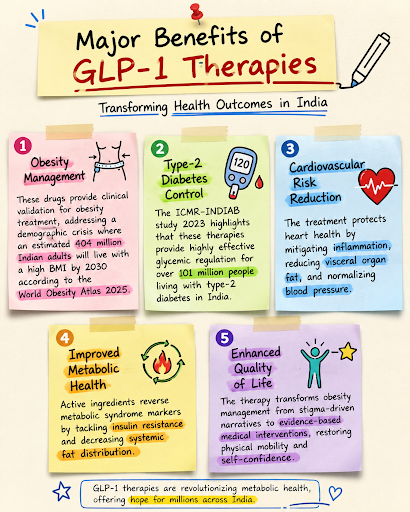
Effective Weight Management: Clinical trials in the New England Journal of Medicine reveal that adults with obesity achieve an average weight reduction of 15% over 68 weeks using once-weekly semaglutide, which tricks the brain to suppress appetite and curb food cravings.
Improved Blood Sugar Control: GLP-1 therapies revolutionize diabetes management by prompting the pancreas to release more insulin precisely when blood glucose levels spike.
Reduction in Cardiometabolic Risks: These medications lower blood pressure, reduce renal workload, and improve lipid profiles, which actively decreases major cardiovascular events.
Potential Benefits Beyond Diabetes: Innovator companies invest heavily in R&D to utilize GLP-1 pathways for treating liver disease, kidney disease, sleep apnea, and alcoholism.
Expanding Applications in Preventive Healthcare: India serves as a massive consumer market and global generic supplier, with CARE Ratings projecting the Indian GLP-1 market to expand 5x to ₹4,500–5,000 crore by 2030.
How Can GLP-1 Drugs Affect Skin, Hair, and Nails?
Hair Shedding: Approximately 12% of patients on GLP-1 RA therapy experience new-onset diffuse hair loss, medically termed telogen effluvium, as rapid caloric restriction shocks hair follicles into a resting phase; Tirzepatide links most frequently to this condition due to its high magnitude of weight loss.
Changes in Facial Appearance: Patients lose approximately 7% of midfacial volume for every 10 kilograms of total weight loss, resulting in hollowed cheeks and sagging jowls—a phenomenon dubbed "Ozempic Face" that accelerates visible skin aging by decreasing collagen and elastin production.
Potential Improvement in Skin Conditions: Systemic anti-inflammatory effects of GLP-1 drugs actively improve chronic inflammatory skin diseases like psoriasis and hidradenitis suppurativa (HS).
Nail Health Impacts: Significant weight loss shifts nutrient repartitioning away from non-essential appendages, which leads to brittle nails and slowed nail growth.
What are the Major Concerns Associated with GLP-1 Drugs?
Gastrointestinal Side Effects: The drugs commonly induce nausea and vomiting, while severe unsupervised overdoses paralyze the stomach, causing a dangerous condition known as gastroparesis.
High Treatment Costs: Monthly therapy costs in India range between ₹8,500 to ₹16,500, which severely limits widespread public access.
Nutritional Deficiencies: Reduced appetite triggers deficits in vital micronutrients (iron, zinc, B-vitamins) and macronutrients (proteins, essential fats), impairing cellular energy metabolism.
Hair and Skin-Related Concerns: The medication alters lipid metabolism and depletes epidermal ceramides, which compromises the skin barrier and causes severe dehydration.
Limited Long-Term Data: Clinical studies document rare but severe risks, including pancreatitis, kidney injury, and thyroid C-cell tumours observed in animal trials.
Measures to Ensure Safe Use
Medical Supervision: Stringent clinical oversight to prevent fatal blood sugar drops (hypoglycemia) and monitor pancreatic health.
Monitoring Nutritional Status: Patients must maintain adequate protein intake and supplement with targeted vitamins (Biotin, Folate, Zinc) to support keratin formation and prevent telogen effluvium.
Gradual and Sustainable Weight Loss: Pacing weight reduction provides the dermal extracellular matrix time to contract, minimizing skin laxity and severe facial deflation.
Dermatological Monitoring: Dermatologists recommend daily application of ceramide-rich moisturizers to repair the skin barrier and utilize antioxidants like Methylene Blue (MB) to rejuvenate mitochondrial function and stimulate collagen.
Long-Term Safety Research: Extensive post-market studies to establish long-term safety profiles regarding weight regain upon discontinuation and chronic organ impacts.
Source: INDIANEXPRESS
|
PRACTICE QUESTION Q. With reference to GLP-1 (Glucagon-Like Peptide-1) agonist drugs, consider the following statements: 1. They induce weight loss primarily by accelerating the rate of digestion and gastric emptying. 2. In India, they are classified as Schedule H drugs to prevent unauthorized over-the-counter sales. 3. Rapid weight loss associated with these drugs frequently induces telogen effluvium. Which of the statements given above is/are correct? (a) 1 and 2 only (b) 2 and 3 only (c) 1 and 3 only (d) 1, 2, and 3 Answer: (b) Explanation: Statement 1: Incorrect. GLP-1 agonists induce weight loss primarily by slowing down the rate of digestion and gastric emptying. This delayed emptying—combined with central nervous system effects—prolongs the feeling of fullness and suppresses appetite. Statement 2: Correct. In India, GLP-1 drugs are classified as Schedule H prescription drugs. Regulatory authorities like the Central Drugs Standard Control Organisation (CDSCO) require a valid prescription from a registered medical practitioner to prevent unauthorized, over-the-counter sales. Statement 3: Correct. Rapid weight loss often subjects the body to metabolic and physical stress, frequently leading to telogen effluvium. This is a temporary condition characterized by excessive hair shedding that generally resolves once the body stabilizes. |






© 2026 iasgyan. All right reserved