Shigellosis is a highly contagious bacterial infection causing bacillary dysentery. Transmitted via the faecal-oral route, it requires a minimal infectious dose. Symptoms include bloody diarrhoea and fever. Prevention demands strict hygiene, safe water, and robust public health surveillance systems.
Why In News?
Kerala faces a severe Shigellosis outbreak, reporting over 85 cases, prompting strict public health alerts across the state.
What is Bacillary Dysentery?
Bacillary dysentery is a severe form of shigellosis, causing intensive inflammation of the large intestine.
This highly contagious gastrointestinal condition requires an extremely low infectious dose to trigger illness.
Causative Organism: Shigella Bacteria
Symptoms of Shigellosis
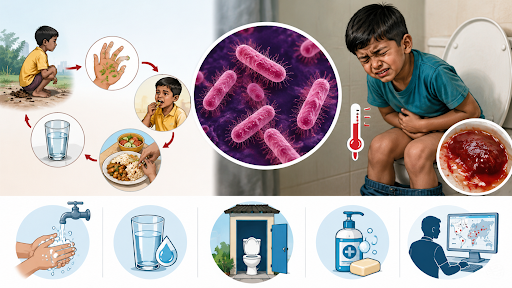
Bloody Diarrhoea: Pathogens destroy the intestinal mucosa, causing bloody diarrhoea with mucus.
Fever: A high-grade fever usually develops 1 to 4 days after exposure.
Abdominal Pain: Infection causes severe cramps and tenesmus, a painful, persistent urge to pass stool.
Dehydration: Severe fluid loss leads to dehydration, especially endangering young children and the elderly.
Mode of Transmission
Contaminated Food and Water: The bacteria use the faecal-oral route via contaminated food or water.
Poor Sanitation: Houseflies spread pathogens from faeces to food in areas with poor sewage disposal.
Person-to-Person Spread: Physical contact enables transmission; only 10 to 100 organisms can cause infection.
Treatment
Rehydration Therapy
Doctors prioritize Oral Rehydration Therapy (ORS) and zinc tablets to restore life-saving fluids and rapidly correct electrolyte imbalances.
Antibiotic Management
Physicians prescribe targeted antibiotics like ciprofloxacin strictly for severe cases to effectively mitigate the rapid emergence of Extensively Drug-Resistant (XDR) strains.
Source: THEHINDU
|
PRACTICE QUESTION Q. With reference to 'Shigellosis', consider the following statements:
Which of the statements given above is/are correct? A) 1 and 2 only B) 2 and 3 only C) 3 only D) 1 and 3 only Answer: B Explanation: Statement 1 is incorrect: Shigellosis is a bacterial infection caused by a group of bacteria called Shigella, not a virus. Furthermore, it primarily affects the digestive system (intestines), leading to symptoms like diarrhea, stomach cramps, and bacillary dysentery, rather than the respiratory system. Statement 2 is correct: Shigella has an exceptionally low infectious dose. Ingestion of as few as 10 to 100 bacterial cells is sufficient to evade stomach acid and cause full-blown disease. Statement 3 is correct: The rise of Extensively Drug-Resistant (XDR) strains of Shigella is an escalating global health emergency. These strains are increasingly resistant to all standard first-line and alternative oral antibiotics (such as azithromycin and ciprofloxacin), significantly complicating treatment clinical options. |
Bacillary dysentery is an acute, highly contagious bacterial intestinal infection characterized by severe diarrhea containing blood and mucus, intense abdominal cramps, and high fever.
The disease is primarily caused by Gram-negative bacteria belonging to the Shigella genus, including S. dysenteriae, S. flexneri, S. sonnei, and S. boydii.
The pathogen spreads rapidly through the fecal-oral route via contaminated food and drinking water, poor hand hygiene, physical contact with an infected person, or direct sexual exposure.
Infection risks are minimized by practicing strict handwashing with soap, drinking only treated or boiled water, washing raw produce thoroughly, and avoiding food preparation while symptomatic.





© 2026 iasgyan. All right reserved