Polycystic Ovary Syndrome (PCOS) has been renamed Polyendocrine Metabolic Ovarian Syndrome (PMOS) following a global consensus. This change reflects the condition's multisystemic metabolic and hormonal nature, reducing stigma and improving holistic diagnosis beyond mere reproductive and ovarian symptoms.
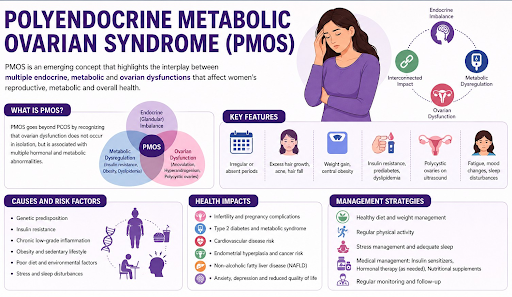
Medical experts, including professionals from AIIMS Delhi, officially renamed Polycystic Ovary Syndrome (PCOS) to Polyendocrine Metabolic Ovarian Syndrome (PMOS).
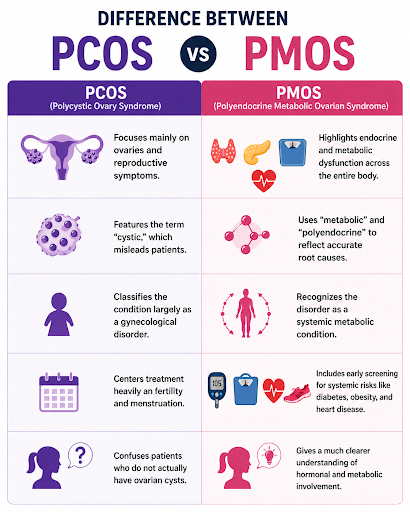
The term PCOS mischaracterizes the condition as a purely reproductive disorder defined by irregular periods, excess androgens (masculine hormones), and the appearance of cysts on the ovaries.
The medical community clarifies that the term PCOS remains medically inaccurate because the so-called "cysts" actually represent arrested follicles (immature eggs that fail to mature and release), not true pathological cysts.
The updated terminology “PMOS” acknowledges that the syndrome involves the body’s endocrine (hormonal), metabolic (energy processing), reproductive, and psychological systems.
Primary Causes of PMOS
Insulin Resistance: Cells resist insulin, raising blood sugar. The resulting insulin spike forces ovaries to overproduce male hormones (androgens).
Hormonal Imbalance: High levels of androgens and Luteinizing Hormone (LH) stall the normal ovulation process.
Genetic Factors: A strong hereditary link passes the condition down through families.
Low-Grade Inflammation: Chronic body-wide inflammation continuously stimulates the ovaries to create excess androgens.
Symptoms & Health Impacts
Reproductive Health
Metabolic Function
Skin & Hair (Dermatological)
Mental Wellbeing
Source: INDIANEXPRESS
|
PRACTICE QUESTION Q. Why was Polycystic Ovary Syndrome (PCOS) recently recommended to be renamed as Polyendocrine Metabolic Ovarian Syndrome (PMOS)? A) Because the presence of ovarian cysts is now required for a definitive diagnosis. B) To better reflect that it is a systemic hormonal and metabolic disorder rather than just a condition defined by ovarian cysts. C) Because the condition exclusively affects women in their postmenopausal years. D) To differentiate between fertility issues and dermatological symptoms. Answer: B Explanation: Experts advocated for the name PMOS to highlight that the condition involves multiple endocrine and metabolic systems, shifting focus away from the ovary-centric term "PCOS," as not all patients develop cysts. |
PMOS is a common, chronic, and complex disorder affecting women of reproductive age. It is defined as a multifaceted condition characterized by high androgen levels, irregular ovulation, and systemic metabolic issues, affecting approximately 1 in 8 women globally.
The term PCOS was misleading because it wrongly implied the presence of pathological ovarian cysts. The 14-year global consensus process led to the name PMOS to accurately reflect the condition's broad endocrine and metabolic pathophysiology and to prevent delayed diagnoses and patient stigma.
PMOS goes far beyond reproductive issues; it carries a high risk of metabolic complications including insulin resistance, Type 2 diabetes, obesity, hypertension, dyslipidemia, and cardiovascular diseases.






© 2026 iasgyan. All right reserved