Strengthening CAR T-Cell Therapy

Researchers at the Indian Institute of Technology Bombay have developed a gentler method to recover lab-grown T-cells, a crucial step in CAR T-cell therapy. Using the mild enzyme Accutase instead of harsher alternatives helps improve cell survival and preserve immune function. The approach enhances the reliability and efficiency of immunotherapy production, supports cost reduction, and strengthens India’s efforts to make advanced cancer treatments more affordable and accessible.
Description

Copyright infringement not intended

Picture Courtesy: Indian Express

Context:

Researchers at Indian Institute of Technology Bombay, led by Prof. Prakriti Tayalia, tested recovery methods for cell recovery for cancer immunotherapy, particularly CAR T-cell therapy.

Must Read: CAR T-CELL THERAPY | NexCAR19 |

 What are T-cells?

T-cells are specialised white blood cells that form a crucial part of the body’s adaptive immune system. They continuously circulate through the blood and tissues, scanning for pathogens, infected cells, or abnormal cells such as cancer.
When a threat is identified, some T-cells directly kill the diseased cells, while others release chemical signals that activate and coordinate the broader immune response. Their ability to recognise specific targets and remember them makes T-cells central to modern immunotherapy.

Functions of T-cells

  • Identify and destroy infected or cancerous cells (Cytotoxic T-cells).
  • Coordinate immune responses by activating other immune cells (Helper T-cells).
  • Maintain immune memory, by enabling faster response during future infections.
  • Regulate immune activity to prevent excessive or autoimmune reactions (Regulatory T-cells).

Because they can specifically recognise abnormal cells, T-cells play a central role in modern cancer immunotherapy.

What is CAR T-cell Therapy?

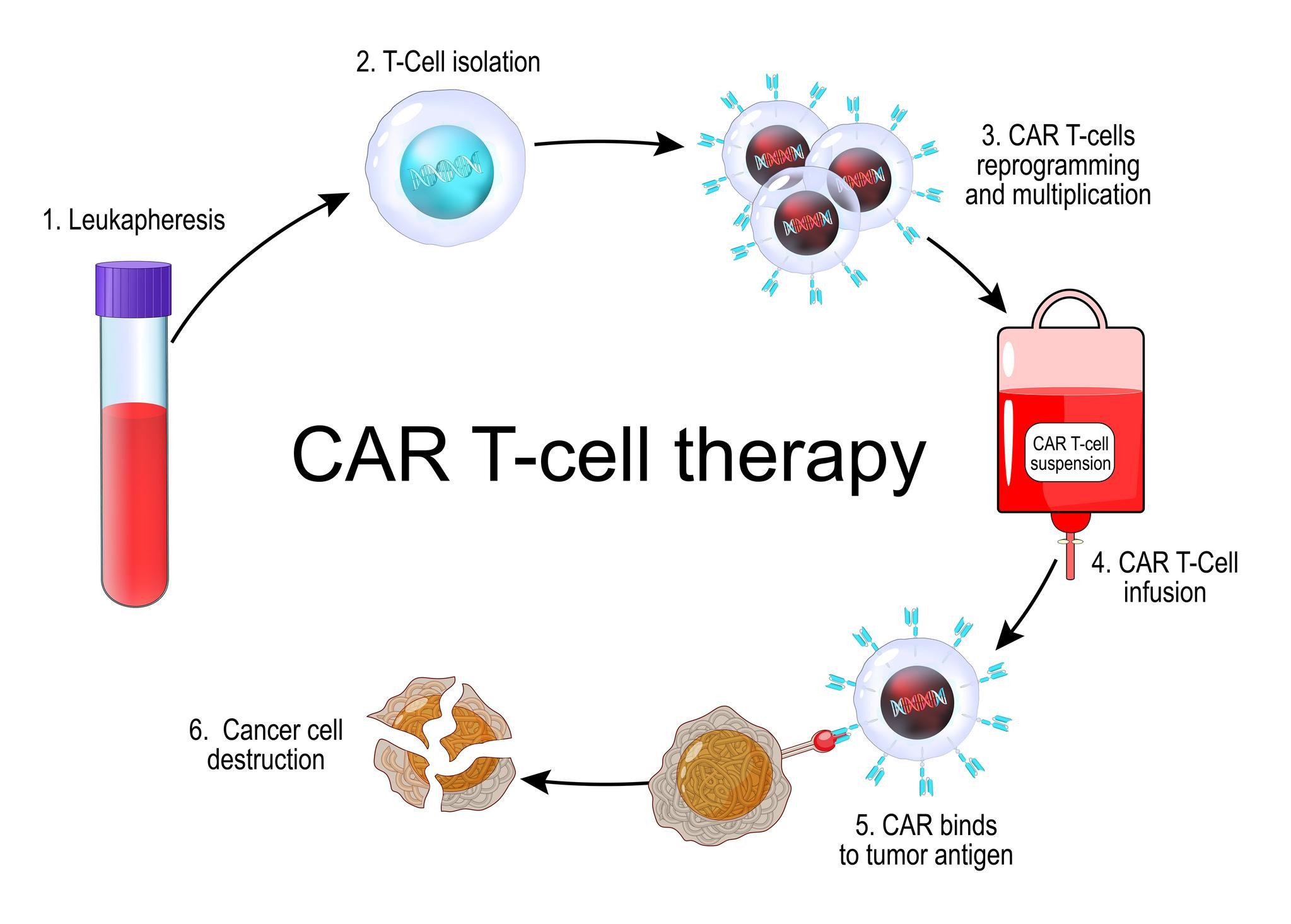
CAR T-cell therapy is an advanced form of personalised cancer treatment that enhances the patient’s own immune cells. In this process, T-cells are extracted from the patient and genetically modified in a laboratory.
Scientists insert a gene that enables the cells to produce Chimeric Antigen Receptors (CARs) engineered molecules that help T-cells identify and attach to specific proteins present on cancer cells.
The modified cells are then multiplied in large numbers and infused back into the patient, where they actively seek out and destroy cancer cells.
This therapy is currently approved for certain blood cancers, particularly leukemia and lymphoma, and is being explored for other cancer types.
 

Working mechanism:

  • Collection: T - cells are taken from the patient’s blood.
  • Genetic engineering: In the laboratory, a gene is added so the cells produce chimeric antigen receptors (CARs) that recognise specific cancer markers.
  • Expansion: The modified T - cells are multiplied into millions.
  • Infusion: These engineered cells are returned to the patient, where they seek out and destroy cancer cells. 

In 2023, NexCAR19 became India’s first domestically developed CAR T-cell therapy. It was created through a collaboration between the Indian Institute of Technology Bombay, Tata Memorial Centre, and ImmunoACT.
Designed to be significantly more affordable than global alternatives, NexCAR19 marks a major step toward accessible advanced cancer treatment and strengthens India’s presence in the field of cell and gene therapy.
 

Key highlights of IIT Bombay study on CAR T-cell therapy:

  • Improving a critical processing step: Researchers at the Indian Institute of Technology Bombay focused on a crucial but often overlooked stage in immunotherapy, the safe recovery of lab-grown T-cells. Since the effectiveness of CAR T-cell therapy depends not only on growing large numbers of cells but also on retrieving them intact and functional, refining this step is essential for ensuring consistent clinical outcomes. 
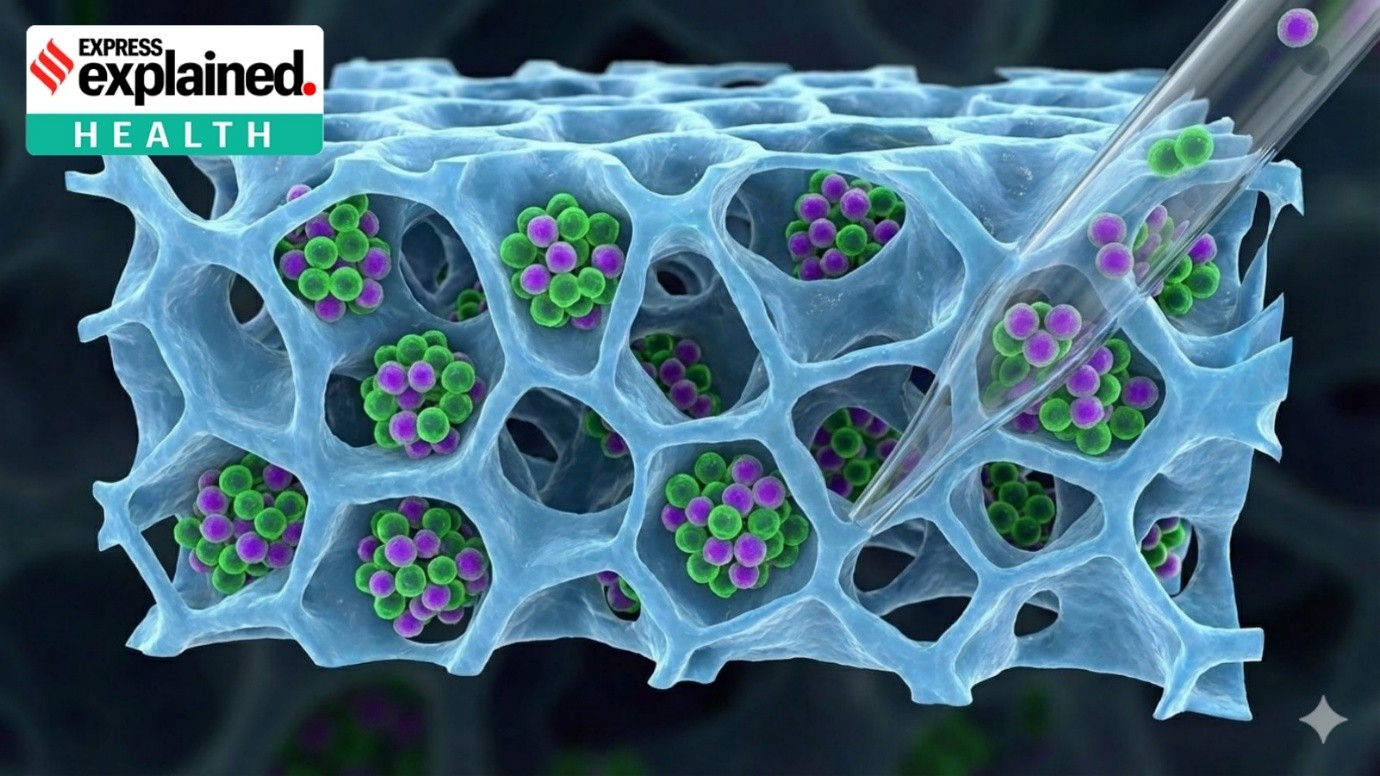
  • Evaluation of different recovery techniques: To address this challenge, the team compared three methods for extracting T-cells grown on three-dimensional fibrous scaffolds: manual flushing with culture medium, enzymatic treatment using TrypLE, and recovery using the milder enzyme Accutase. Although all three approaches produced comparable cell yields, the quality of the recovered cells differed significantly. 
  • Enhanced cell survival with gentle treatment: The study found that cells treated with Accutase showed higher survival rates. In contrast, exposure to harsher enzymes such as TrypLE increased cell death, indicating that aggressive processing can compromise cell integrity. 
  • Better preservation of immune function: Importantly, Accutase-treated T-cells retained their biological activity. These cells continued to form clusters, proliferate efficiently, and maintain their immune responsiveness. On the other hand, cells exposed to stronger enzymatic conditions showed signs of reduced functionality, likely due to damage to surface proteins required for immune signalling. 
  • Benefits of three-dimensional scaffold culture: The researchers also observed that T-cells expanded within three-dimensional fibrous scaffolds demonstrated superior cancer-killing potential compared to those grown on conventional flat culture surfaces, highlighting the advantage of a more body-like growth environment. 
  • Implications for affordability and clinical reliability: By improving cell viability and function while reducing processing-related losses, the Accutase-based recovery method can enhance the reliability of CAR T-cell manufacturing. Greater efficiency at this stage may also help lower production costs, supporting efforts to make advanced immunotherapies more accessible in India.  

Importance of the IIT Bombay study:

  • Improving the quality of advanced cancer therapy: The study is important because it strengthens a critical step in CAR T-cell preparation. By enabling gentle recovery of lab-grown T-cells, the method preserves their viability, surface proteins, and cancer-fighting ability. This ensures that patients receive high-quality and functionally active therapeutic cells, improving treatment outcomes. 
  • Enhancing manufacturing consistency: Cell-based therapies demand strict quality standards at every stage. The Accutase-based approach helps reduce cell damage and processing-related losses, leading to greater consistency and standardisation. This is essential for reliable large-scale clinical production. 
  • Reducing the cost of immunotherapy: Poor recovery methods often lead to wastage and repeated processing, increasing costs. By improving cell survival and production efficiency, the technique can help lower manufacturing expenses. This is particularly significant as CAR T-cell therapy remains one of the most expensive cancer treatments globally. 
  • Strengthening India’s indigenous capability: The findings support India’s growing ecosystem in advanced cancer therapies led by institutions such as the Indian Institute of Technology Bombay, Tata Memorial Centre, and ImmunoACT. Such process innovations contribute to self-reliance, domestic manufacturing, and reduced dependence on imported technologies. 
  • Expanding access to precision medicine: By improving both efficiency and affordability, the study supports the broader goal of making personalised and advanced cancer treatments accessible to more patients, especially in resource-constrained settings.  

Conclusion:

The IIT Bombay study shows that small improvements in cell-processing techniques can significantly enhance the quality, reliability, and affordability of CAR T-cell therapy. By enabling gentle recovery and better survival of therapeutic T-cells, the research strengthens India’s efforts to develop cost-effective, accessible, and globally competitive advanced cancer treatments. 

Source: Indian Express 

Practice Question

Q. CAR T-cell therapy represents a major advancement in cancer treatment, but its large-scale adoption faces technical and cost-related challenges. In this context, discuss the significance of process innovations such as improved T-cell recovery techniques for strengthening India’s immunotherapy ecosystem. (150 words)

Frequently Asked Questions (FAQs)

CAR T-cell therapy is a form of personalised immunotherapy in which a patient’s T-cells are genetically modified to recognise and destroy specific cancer cells before being infused back into the body.

After expansion in the laboratory, T-cells must be collected without damage. Gentle recovery ensures high cell survival and preserved immune function, which is critical for treatment effectiveness.

India has developed its first indigenous therapy, NexCAR19, through efforts by the Indian Institute of Technology Bombay, Tata Memorial Centre, and ImmunoACT, aiming to make advanced cancer treatment more affordable and accessible.

Free access to e-paper and WhatsApp updates

Let's Get In Touch!