Cyclosporiasis outbreak, linked to contaminated Mexican iceberg lettuce, exposes critical flaws in global food safety. With thousands infected, this crisis highlights severe challenges in pathogen traceability, diagnostic delays, and the urgent need for modernized public health surveillance.
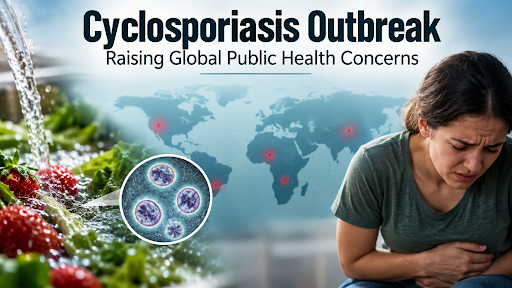
Why In News?
A massive multi-state Cyclosporiasis outbreak linked to contaminated iceberg lettuce from Mexico infected thousands across the United States.
What is Cyclosporiasis?
It is a severe intestinal infection that triggers frequent, explosive bowel movements and long-lasting gastroenteritis
Causative Agent: The microscopic, single-celled coccidian parasite, Cyclospora cayetanensis, acts as the primary causative agent for this illness.
How Does Cyclosporiasis Spread?
Contaminated Food Consumption: Individuals ingest the parasite by eating raw, unwashed fresh produce, with outbreaks frequently linking to iceberg lettuce, cilantro, basil, and raspberries.
Contaminated Water Consumption: The parasite travels and spreads aggressively via fecally contaminated water utilized for human consumption or agricultural irrigation.
Poor Sanitation and Hygiene: Infected humans shed unsporulated oocysts in feces, which require 1 to 2 weeks in favorable environmental conditions to mature and sporulate, making direct person-to-person transmission highly unlikely.
Agricultural Production Contamination: Farms introduce the parasite when they apply contaminated agricultural water or human feces as fertilizer during crop production cycles.
What are the Symptoms of Cyclosporiasis?
Prolonged Watery Diarrhoea: Patients suffer from severe, relapsing watery diarrhoea that lasts from a few days to over a month if left untreated.
Nausea and Vomiting: Infected individuals experience sharp nausea, though vomiting remains a less common clinical feature.
Abdominal Cramps: The intestinal infection induces intense abdominal cramping and bloating.
Loss of Appetite: Patients report a sudden and significant loss of appetite immediately following the incubation period.
Weight Loss: Consistent gastrointestinal distress leads to substantial and rapid weight loss.
Low-Grade Fever: Some cases present with a low-grade fever alongside flu-like muscle aches.
Treatment
Easily treated with a 7–10 day course of the antibiotic trimethoprim-sulfamethoxazole, which disrupts the microbe's folic acid production needed for replication. Hydration is also recommended.
Source: INDIANEXPRESS
|
PRACTICE QUESTION Q. With reference to food safety frameworks, the "Codex Alimentarius Commission" often seen in the news is established by: A) World Trade Organization (WTO) B) Food and Agriculture Organization (FAO) and World Health Organization (WHO) C) United Nations Environment Programme (UNEP) D) World Economic Forum (WEF) Answer: B Explanation: The Codex Alimentarius Commission (CAC) was established jointly by the FAO and the WHO in 1963. Its primary purpose is to protect the health of consumers, ensure fair practices in the food trade, and promote the coordination of all food standards work done by international, governmental, and non-governmental organizations. Codex standards are globally recognized and are specifically referenced by the World Trade Organization (WTO) under its Agreement on the Application of Sanitary and Phytosanitary (SPS) Measures as the international benchmark for food safety. |






© 2026 iasgyan. All right reserved