The public health crisis in Indore exposed deep urban governance failures, as sewage-contaminated water from ageing pipelines caused deaths despite prior warnings by the Comptroller and Auditor General of India. The episode reveals neglect of core water infrastructure and highlights the need for audits, monitoring, accountability, and effective implementation of AMRUT 2.0.
Copyright infringement not intended
Picture Courtesy: DOWNTOEARTH
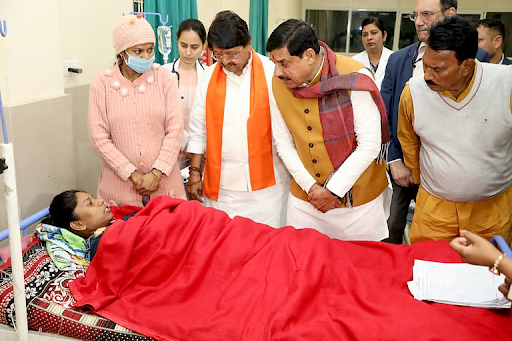
Indore, India's cleanest city, faces a public health crisis as contaminated municipal water in Bhagirathpura caused at least 15 deaths and over 200 hospitalizations, exposing major lapses in urban water management.
Contaminated water is defined as water containing physical, chemical, biological, or radiological substances that make it unfit for its intended use, such as drinking, cooking, or agriculture.
The pollutants can range from industrial chemicals and heavy metals to bacteria and viruses, posing risks to human health and ecosystems.
India holds 18% of the global population but only 4% of the world's freshwater. A 2023 NITI Aayog report states nearly 70% of its water is contaminated, risking public health and economic development.
Surface Water Pollution: The 2022 Central Pollution Control Board (CPCB) assessment identified 311 polluted river stretches on 279 rivers in 30 States/Union Territories, mainly due to untreated sewage from urban centers and industrial effluents.
Groundwater Contamination
Inadequate Wastewater Treatment: India's urban sewage treatment capacity is 36,668 MLD, only about 50% of the 72,368 Million Litres per Day (MLD) generated (CPCB, 2023). This gap results in untreated sewage being discharged into water bodies.
|
Case Studies
|
Untreated Municipal Sewage
Lack of sewage treatment infrastructure in many cities and towns leads to direct discharge into rivers and lakes. Pollutants include pathogens (bacteria, viruses), organic matter, and nutrients (nitrogen, phosphorus).
Industrial Effluents
Industries like tanneries, pharmaceuticals, textiles, and chemicals release untreated or poorly treated waste containing heavy metals (lead, mercury, cadmium), toxic chemicals, and organic sludge.
Agricultural Runoff
The overuse of chemical fertilizers and pesticides in farming leads to runoff into surface and groundwater. Key pollutants are nitrates and phosphates, which cause eutrophication.
Religious and Social Practices
Activities like idol immersion and the disposal of religious offerings into rivers contribute to the pollution load, especially during festivals.
Geogenic Contamination
Natural geological formations release harmful substances into groundwater. This is the primary source of arsenic in the Indo-Gangetic plains and fluoride in arid and semi-arid regions like Rajasthan and Gujarat.
Improper Solid Waste Management
Leachate from unscientific landfills and garbage dumps seeps into the ground, contaminating both soil and groundwater with a mix of hazardous substances.
|
Core Challenges in Urban Water Supply Ageing and Vulnerable Infrastructure
High Water Losses and Inefficiency
|
Health Impacts
Economic Impacts
Environmental Impacts
Jal Jeevan Mission (JJM): Launched in 2019, its goal is to provide a functional household tap connection to every rural household.
Namami Gange Programme: Launched in 2014, this integrated mission aims to rejuvenate the Ganga River through sewage and industrial effluent treatment, river-surface cleaning, and afforestation.
Atal Mission for Rejuvenation and Urban Transformation (AMRUT 2.0): Provide universal coverage of water supply through functional taps in all statutory towns and sewerage/septage management in 500 cities.
Atal Bhujal Yojana (ABHY): A World Bank-funded central scheme for sustainable groundwater management with community participation. It is being implemented in identified water-stressed areas of seven states.
National Water Quality Monitoring Programme (NWQMP): The CPCB monitors water quality at numerous locations across the country to assess the nature and extent of pollution.
Strengthen Infrastructure
Universalize sewage treatment, focusing on decentralized systems for smaller towns. NITI Aayog advocates reusing treated wastewater for non-potable purposes like irrigation and industry.
Enforce 'Polluter Pays' Principle
Enforce strict environmental rules, mandating Zero Liquid Discharge (ZLD) for highly polluting industries and upgrading Common Effluent Treatment Plants (CETPs) for industrial clusters.
Promote Sustainable Agriculture
Encourage natural and organic farming to reduce dependence on chemical fertilizers and pesticides. Implement policies for efficient water use and runoff management.
Community Participation
Make water management a "Jan Andolan" (People's Movement) by engaging local communities in monitoring quality and managing local resources.
Learn from Global Best Practices
Singapore's "Four National Taps" Model: Singapore, a water-scarce nation, has achieved water security through a diversified strategy comprising:
Israel's Water Technology: Israel is a world leader in wastewater recycling and drip irrigation. It treats and recycles nearly 90% of its wastewater for agricultural use and has pioneered advanced desalination technologies.
Water contamination harms public health and the economy. Existing efforts like Jal Jeevan Mission and Namami Gange need better implementation. Future water security requires a comprehensive approach: stricter rules, consistent infrastructure spending, technology, and community involvement.
Source: DOWNTOEARTH
|
PRACTICE QUESTION Q. The tragedy in Indore highlights the gap between urban cleanliness rankings and actual public health safety. Critically analyze. (250 words) |
Approximately 70% of India's surface water is estimated to be contaminated. India currently ranks 120th out of 122 countries on the global Water Quality Index. Recent data from the Central Ground Water Board (CGWB) indicates that nearly 20% of groundwater samples across more than 440 districts exceed permissible limits for at least one major pollutant.
The most prevalent contaminants include:

© 2026 iasgyan. All right reserved