India’s criminal justice system is embracing a victim-centric model through the BNSS 2023, guaranteeing structured victim compensation, active procedural participation, and timely updates. This transition successfully balances restorative justice mechanisms with retributive frameworks while protecting the accused's constitutional rights.
Why In News?
The Supreme Court recently prioritized victim rights over the accused by refusing to club 53 investment scam FIRs, reinforcing a victim-centric criminal justice approach.
|
Read all about: Criminal Justice System in India |
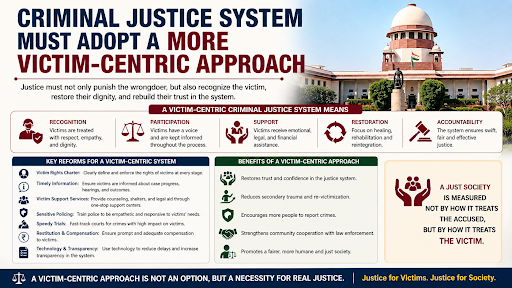
What is a Victim-Centric Criminal Justice System?
A victim-centric approach redefines the victim’s role from a passive witness or informant to an essential participant and active stakeholder in the legal process.
Recognition of Rights: It acknowledges that victims possess inherent rights to information, protection, restitution, and meaningful involvement throughout the criminal proceedings.
Restorative Justice Ethos: This system focuses on repairing harm caused by crime or violence. It prioritizes the needs of the victim while ensuring offenders take responsibility and understand the impact of their actions
Guiding Questions: Unlike traditional systems that ask what laws were broken, a victim-centric system asks:
Dignity and Voice: It embeds victim-centricity by ensuring the "silent stakeholder" has a voice in decision-making, reparations, and the overall pursuit of justice.
How India's Criminal Justice System Function?
Historically, the Indian system operated under a state-centric model inherited from colonial-era laws like the Indian Penal Code (IPC), 1860 and the Code of Criminal Procedure (CrPC), 1973.
State-Accused Dichotomy: Criminal proceedings primarily involved a contest between the state and the accused. The state acted as the main actor, often marginalizing the victim.
Victims as Witnesses: The system viewed victims merely as complainants or witnesses with limited influence over critical stages like bail hearings, plea negotiations, or the withdrawal of cases.
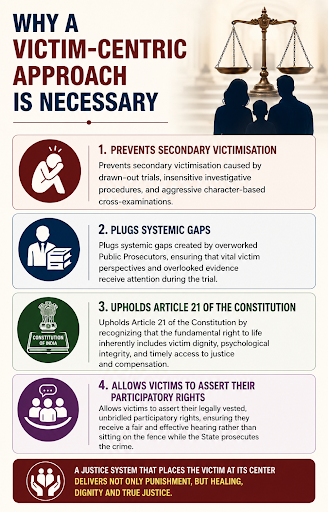
Secondary Victimization: Lengthy legal proceedings, procedural delays, and insensitive investigative practices often caused trauma and disengagement, victimizing the individual a second time through the judicial process.
Underdeveloped Compensation: While compensation clauses existed under the CrPC (such as Section 357A), they were often discretionary, irregular, and rarely implemented effectively.
Judicial Activism vs Structural Inertia: Though the Supreme Court recognized victim rights in cases like Delhi Domestic Working Women’s Forum vs Union of India (1995), these remained jurisprudential rather than inherent procedural protections.
Bharatiya Nagarik Suraksha Sanhita (BNSS) 2023
The Bharatiya Nagarik Suraksha Sanhita (BNSS), effective July 1, 2024, replaces the CrPC to restructure how criminal procedure accommodates victims.
How India Can Build a Balanced Victim-Centric Criminal Justice System?
To build a sustainable and balanced system, India must harmonize victim empowerment with the constitutional safeguards of the accused.
Preserving Due Process: Victim-centricity must not compromise the presumption of innocence or the right to a fair trial under Article 21.
Institutional Capacity and Training: Shift from a "witness-centric" to a "victim-centric" paradigm through thorough training of police and judiciary in trauma-informed practices.
Integrating Restorative Practices: Move beyond purely retributive frameworks by adopting victim-offender mediation and facilitated dialogues.
Closing the Implementation Gap: Ensure sustained financial allocations for compensation boards to prevent unfair waiting periods for relief.
Addressing the Digital Divide: Technological reforms like e-FIRs must be supported by investments in digital literacy to ensure marginalized groups are not excluded from the new digital justice framework.
Institutional Accountability: Establish standardized metrics and judicial dashboards to track investigation timelines, conviction consistency, and compensation disbursement rates.
Conclusion
India can secure an effective justice system only by carefully harmonising the active empowerment and restitution of victims with the strict procedural and constitutional safeguards guaranteed to the accused.
Source: THEHINDU
|
PRACTICE QUESTION Q. With reference to 'Restorative Justice', which of the following statements is correct? A) It focuses on ensuring the state inflicts maximum punitive sentences on offenders for breaking laws. B) It requires the victim's counsel to manage the prosecution proceedings independently. C) It seeks to repair harm by empowering both victims and offenders to restore relationships and provide restitution. D) It relies exclusively on formal court litigation without any scope for victim-offender mediation. Answer: C Explanation: Restorative justice focuses on repairing the harm caused by a crime rather than just punishing the offender. It emphasizes dialogue between victims and offenders, allowing the perpetrator to take responsibility and make restitution, which promotes healing and restores relationships. |
A Zero-FIR allows a person to register a First Information Report at any police station regardless of the jurisdiction where the actual crime occurred, greatly enhancing a victim's immediate access to justice.
Secondary victimisation refers to the additional trauma inflicted upon victims by the criminal justice system itself, resulting from insensitive police attitudes, delayed trials, and aggressive character-based cross-examinations.
While retributive justice focuses on punishing the offender for violating the state's laws, restorative justice seeks to repair the harm by facilitating an honest dialogue between the victim, the offender, and the community to achieve restitution and closure.





© 2026 iasgyan. All right reserved