The Supreme Court declined a separate anti-racial slur law, citing Article 14 equality concerns. The 2026 Anjel Chakma case revived debate over BNS adequacy versus Bezbaruah Committee proposals. Unlike Tehseen Poonawalla (2018), the Court favors aggravated sentencing and police sensitization to address bias crimes without deepening polarization.
Copyright infringement not intended
Picture Courtesy: THEHINDU
Context
The Supreme Court has voiced a concern that defining crimes as 'Hate Crimes' based on the victim's identity may contribute to the creation of societal divisions.
|
Read all about: Hate Speech And Religion l Rising Hate Crimes in India |
What are Hate Crimes?
Hate crimes are acts of violence or hostility motivated by prejudice against a person's identity (e.g., religion, gender, ethnicity). Unlike standard crimes, they target individuals as symbols to intimidate an entire community.
Common Forms of Hate Crime
Mob Lynching & Cow Vigilantism: Violent attacks by groups, often targeting Muslims or Dalits under the guise of protecting cows.
Caste-Based Violence: Brutal atrocities against Dalits, often triggered by their efforts to assert rights or achieve economic mobility.
Communal Violence: Large-scale riots or targeted attacks between religious groups (e.g., the 2020 Delhi riots).
Gender & LGBTQ+ Violence: Targeted attacks based on sexual orientation or non-normative gender identity.
Ethnic Discrimination: Attacks or slurs against people from the North-East or migrants from states like Bihar in major metros.
Key Challenges
Data Gaps: The National Crime Records Bureau (NCRB) stopped collecting specific data on lynchings and religious killings after 2017, making it difficult to track the exact scale of the problem.
Institutional Bias: Police often lack the training to identify bias motives, sometimes resulting in low conviction rates (around 20% for communal enmity cases in 2020).
Digital Dissemination: Misinformation on platforms like WhatsApp is a major catalyst for inciting mob violence and lynchings.
Judicial Intervention
The Supreme Court, in the Tehseen Poonawalla vs Union of India (2018) case, condemned mobocracy and issued mandatory guidelines:
Supreme Court observation on the need of Special law for Hate Crimes
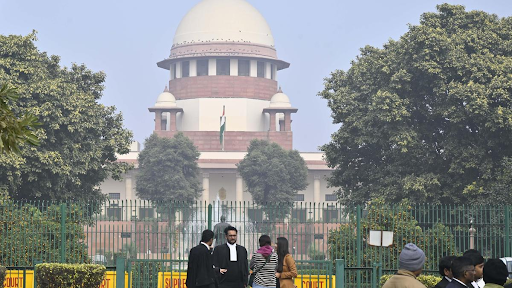
Recently, the Supreme Court raised concern over creating a special law to categorize 'racial slur' and identity-based hate crimes separately, during a hearing on the racially motivated death of Anjel Chakma, a student from Tripura.
Argument for Special Law (Petitioner's View)
Recognizes Motive: Hate crimes are "message crimes" targeting entire communities, not just individuals.
Contextual Justice: States that treating racially motivated murder as a simple murder ignores the social malice and terror it spreads.
Inadequacy of Current Laws: General laws focus on the act, often diluting the gravity of a hate crime by not acknowledging the specific racial or identity-based motive.
Argument for General Law (Supreme Court's Observation)
Upholds Equality: Principle of Article 14 (Equality before Law), stating that murder is murder, regardless of the victim's identity.
Universal Justice: Chief Justice opined that "pigeonholing crime" based on race, region, or religion could deepen social divides and fuel polarization.
Strong Deterrence: All heinous crimes must be dealt with an "iron hand" under a uniform legal framework, without creating sub-categories
Why is a Specific Hate Crime Law Demanded?
Targeting of North-East Indians
Deaths of Nido Tania (2014) and Anjel Chakma (2026) exemplify the vulnerability of North-Eastern people. An Indian Council of Social Science Research (ICSSR) study indicated 78% of North-East people felt racial discrimination in metro cities.
Lack of Deterrence
Without a dedicated law, acts like racial slurs and low-level hate aggressions often go unpunished, as there is no specific institutional response mechanism under the new criminal laws.
International Practice
Many mature democracies distinguish hate crimes. The UK’s Crime and Disorder Act, 1998, for example, provides for higher sentences for "racially or religiously aggravated" offences.
Data Deficiency
Without a legal "hate crime" category, bias-motivated violence is simply registered as 'hurt' or 'murder', preventing the collection of accurate prevalence data.
Provisions in the Bharatiya Nyaya Sanhita (BNS), 2023
The Bharatiya Nyaya Sanhita (BNS), which replaced the Indian Penal Code (IPC), has introduced some provisions that address identity-based violence.
The Gap: The BNS still lacks a specific definition for "Hate Crime" or "Racial Slur" as a standalone offence outside the context of mob violence.
Bezbaruah Committee (2014) Recommendations
New Legislative Provisions: Recommended inserting two new sections into the IPC (now BNS):
Strict Implementation: Called for creating fast-track courts and special police squads for cases involving citizens from the North-East.
Current Status: While some administrative steps like Delhi's SPUNER (Special Police Unit for North-Eastern Region) were taken, the key legislative recommendations remain unimplemented.
Way Forward
Adopt an "Aggravated Sentencing" Model
Instead of a new law, amend the BNS to allow for enhanced punishment if an ordinary crime like assault or murder is proven to be motivated by racial or religious bias.
Police Sensitization and Accountability
Implement the Bezbaruah Committee's recommendations on mandatory training for police to recognize and register the racial dimension of a crime.
Focus on Social Integration
Legal reforms must be complemented by educational initiatives. Integrating the history and culture of diverse regions like North-East India into school curricula is essential to dismantle stereotypes from a young age.
Conclusion
The Supreme Court's concern over legal polarization is valid. However, a "colour-blind" approach alone may fail to address deep social biases. The focus must be on balancing effective justice with preventing the worsening of societal divisions.
Source: THE HINDU
|
PRACTICE QUESTION Q. The 'Bezbaruah Committee', frequently mentioned in the news, was constituted by the Ministry of Home Affairs to: A) Review the sedition laws in India. B) Look into the concerns of the North-Eastern people living in other parts of India. C) Suggest reforms in the appointment of judges to the Higher Judiciary. D) Draft the new Bharatiya Nyaya Sanhita (BNS). Answer: B Explanation: The Bezbaruah Committee was a 2014 Ministry of Home Affairs panel chaired by M.P. Bezbaruah, constituted to address safety and discrimination concerns of North-Eastern people in metropolitan cities following Nido Tania’s death. It recommended stricter, non-bailable legal measures, special police units, and improved, faster legal redressal mechanisms for crimes against Northeast Indians. |
A hate crime is a standard criminal offense (like assault, vandalism, or harassment) where the perpetrator targets the victim because of their actual or perceived membership in a specific social group. Common "protected characteristics" include race, religion, sexual orientation, gender identity, and disability.
A hate incident is a display of hostility (like name-calling or offensive jokes) that is bias-motivated but does not necessarily break the law. A hate crime occurs when that hostility crosses the line into illegal activity, such as physical violence or property damage.
Hate crimes often carry "sentence enhancements," meaning the penalties are more severe than for the same crime without a bias motive. In many jurisdictions, courts can increase fines or prison time—sometimes up to 1.5 times the standard maximum—if bias is proven.


© 2026 iasgyan. All right reserved