Description
Context
The new complex housing the Prime Minister's Office (PMO), constructed under the Central Vista Redevelopment Project, has been named 'Seva Teerth'.
What is Seva Teerth?
Seva Teerth (formerly Executive Enclave) is a new, modern administrative center designed to enhance government efficiency and coordination.
It is part of the larger Central Vista redevelopment project,and replaces the old Prime Minister's Office in the South Block.
Integrated Structure: The complex is designed to house the three highest executive bodies in a single, secure location to promote coordination.
- The Prime Minister's Office (PMO).
- Offices for the Cabinet Secretariat.
- Offices for the National Security Council Secretariat.
- India House, a state-of-the-art conference centre dedicated to high-level bilateral meetings with visiting foreign dignitaries.
Purpose and Philosophy
The core purpose of the name is to instill a culture of citizen-first governance and responsibility within the highest administrative offices.
This aligns with other recent renamings of public spaces and institutions in New Delhi:
- Rajpath was renamed to Kartavya Path.
- The Prime Minister's residence street was renamed from Race Course Road to Lok Kalyan Marg.
- State Governor residences, traditionally known as Raj Bhavans (Power Houses), are being renamed as Lok Bhavans.
What is Central Vista Project?
It is a redevelopment plan, launched in 2019, to modernize the central administrative area of New Delhi, which stretches from Rashtrapati Bhavan to India Gate.
Key Objectives
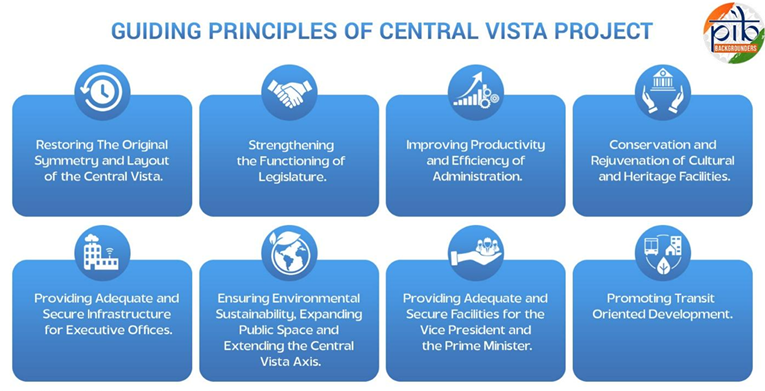
- Administrative Efficiency: The project merges 51 dispersed government ministries into ten interconnected Common Central Secretariat buildings, enhancing coordination and cutting costs.
- Infrastructure Modernization: It replaces old, structurally fatigued, fire-unsafe, and cramped buildings with modern, earthquake-resistant infrastructure meeting global standards.
- National Symbolism: The project is replacing colonial-era symbols and architecture with structures and names (like 'Kartavya Path' and 'Seva Teerth') that better reflect India's modern democratic aspirations and national identity.
- Public Amenities: It revitalizes the avenue's public spaces with new amenities, more green cover, and improved pedestrian access, making it more people-friendly and a world-class tourist attraction.
- Security and Logistics: Placing the PM and VP's critical offices and residences in the complex improves security and lessens traffic due to high-dignitary travel.
Major Components
- New Parliament Building: A modern, triangular-shaped building with a larger seating capacity was completed and inaugurated in May 2023.
- Kartavya Path: The historic street formerly known as Rajpath was revamped with new walkways, green spaces, and amenities.
- Common Central Secretariat (Kartavya Bhavan): A complex of ten new office buildings to house all central government ministries.
- Executive Enclave ('Seva Teerth'): A secure complex housing the Prime Minister's Office (PMO), the Cabinet Secretariat, the National Security Council Secretariat, and "India House" (a conference center).
- New Residences: Dedicated, secure enclaves for the Prime Minister and Vice President are being built near the complex.
- Museums: The historic North and South Blocks are slated to be converted into National Museums.
The estimated total cost is around ₹20,000 crore, with an expected completion of the entire master plan by 2026.
Frequently Asked Questions (FAQs)